The most useful baby bottles are ones your baby can feed from comfortably and your caregivers can prepare and clean correctly. Start with a small selection rather than a large matching set. Bottle material, nipple options, and the number of washable parts matter more than a promise that one shape works for every baby.
Feeding4 products, compared
Baby bottles: compare materials, parts, and a useful starter set
Compare baby bottles by material, nipple options, cleaning effort, and daily routine. Start with a small set before investing in one bottle system.
Jump to a section
The quick answer
Choose a small trial set of baby bottles by nipple flow, the baby’s feeding comfort, cleanability, and caregiver handling. Compare real materials and vent systems before buying a large bundle. No bottle shape can guarantee acceptance or solve every feeding problem.
- Start small enough to assess feeding and washing before bulk buying.
- Nipple flow labels are not standardized across brands.
- Separate vent parts add cleaning steps.
- Glass, plastic, and silicone change handling, not the need for safe feeding.
At a glance
The details that make a difference when you’re deciding.
| Bottle | Construction | Practical tradeoff |
|---|---|---|
| Dr. Brown’s Options+ Wide-Neck 5 oz | Plastic vessel; separate vent | More individual parts to clean |
| Dr. Brown’s Options+ Wide-Neck Glass 5 oz | Glass vessel; separate vent | Weight, breakage, and daycare policies |
| Comotomo Gen 2 | Silicone body; built-in nipple vents | Check fit in warmers and washer racks |
A closer look
The products, in detail
Actual product photos, manufacturer information, and direct links. Comparisons are based on published specifications; these are not hands-on test results.
01Dr. Brown’s Natural Flow® Anti-Colic Options+™ Wide-Neck Baby Bottle with Level 1 Slow Flow Nipple, 5oz/150mL02Baby Bottle Gen 203Dr. Brown’s Natural Flow® Anti-Colic Options+™ Wide-Neck Baby Bottle with Level 1 Slow Flow Nipple, 5oz/150mL04Dr. Brown’s™ Soft Touch Bottle Brush
01
Trying a vented plastic bottle
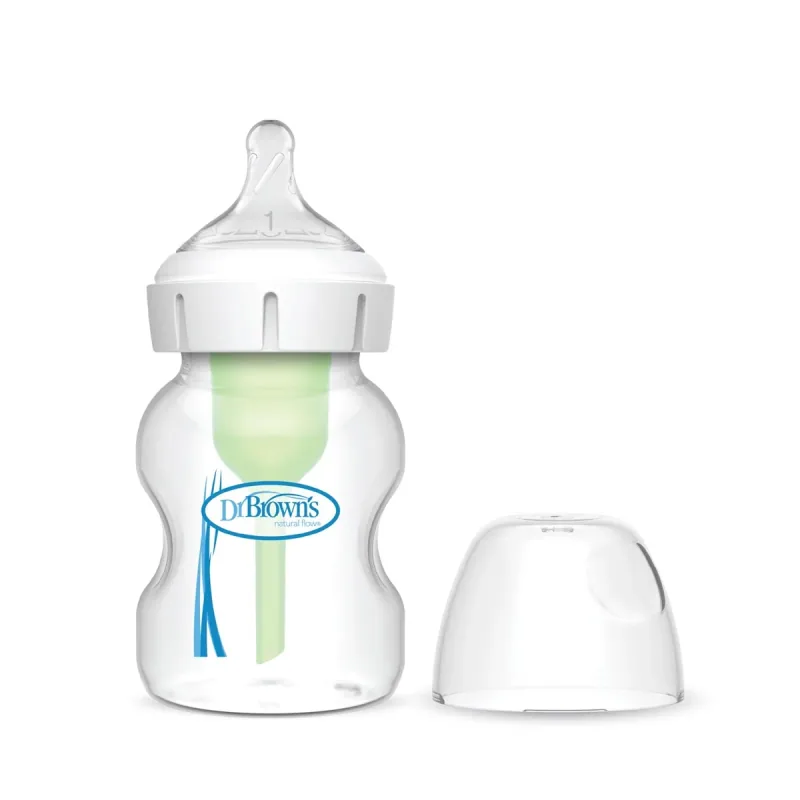
Dr. Brown’sDr. Brown’s Natural Flow® Anti-Colic Options+™ Wide-Neck Baby Bottle with Level 1 Slow Flow Nipple, 5oz/150mL
Dr. Brown’s Options+ Wide-Neck 5 oz bottle uses a separate internal vent and a shaped nipple. The practical question is whether the baby feeds comfortably and whether the adults can clean all the parts reliably. Treat the brand’s anti-colic wording as a product claim rather than a diagnosis or guarantee for your baby. Start with a small quantity and the appropriate nipple flow before committing to a complete matched system.
- 5 oz / 150 mL size
- Wide-neck design
- Separate internal vent
- Silicone nipple
Where it fits
- Compact size for smaller feeds
- Components and replacement nipples sold within the system
What to weigh up
- More small parts to wash
- Flow choice matters as much as bottle shape
02
A soft silicone bottle with a wide opening
Comotomo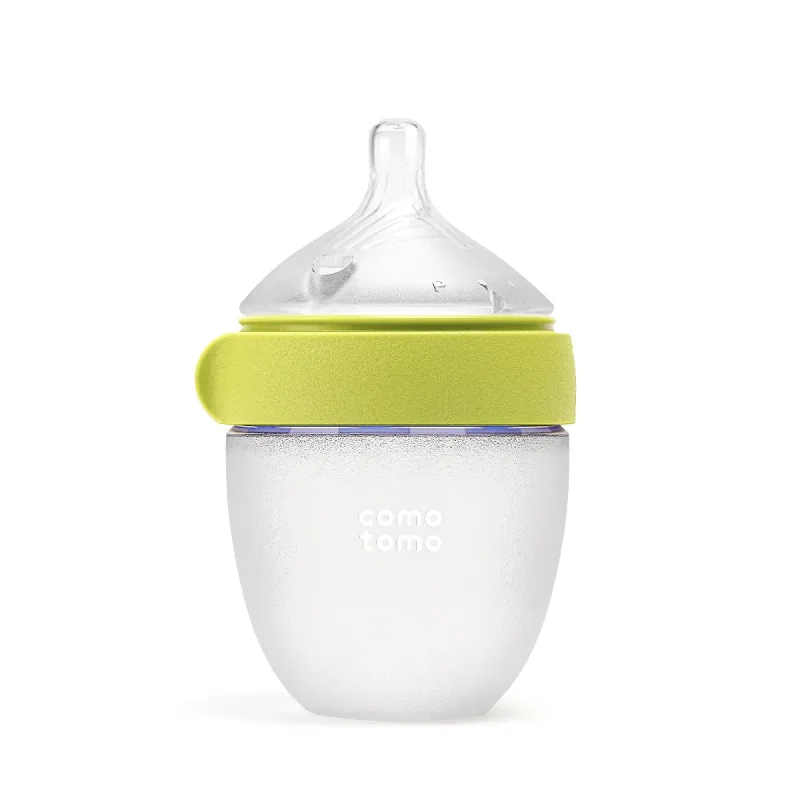
Baby Bottle Gen 2
Comotomo’s Baby Bottle Gen 2 uses a silicone body and a wide-mound nipple with built-in vents. The wide opening changes the hand-cleaning experience compared with narrower bottles, while the softer body changes how the bottle feels in the hand. It does not establish that every breastfed baby will accept it. Check current nipple-flow options, sterilization instructions, and any warmer or machine compatibility before investing in multiple bottles.
- Food-grade silicone body
- Wide opening
- Built-in nipple vents
- Wide-mound nipple
Where it fits
- Fewer separate vent pieces
- Soft bottle body
What to weigh up
- Baby acceptance cannot be predicted
- Check fit in bottle warmers and washing racks
03
Comparing glass with the same vented system
Dr. Brown’s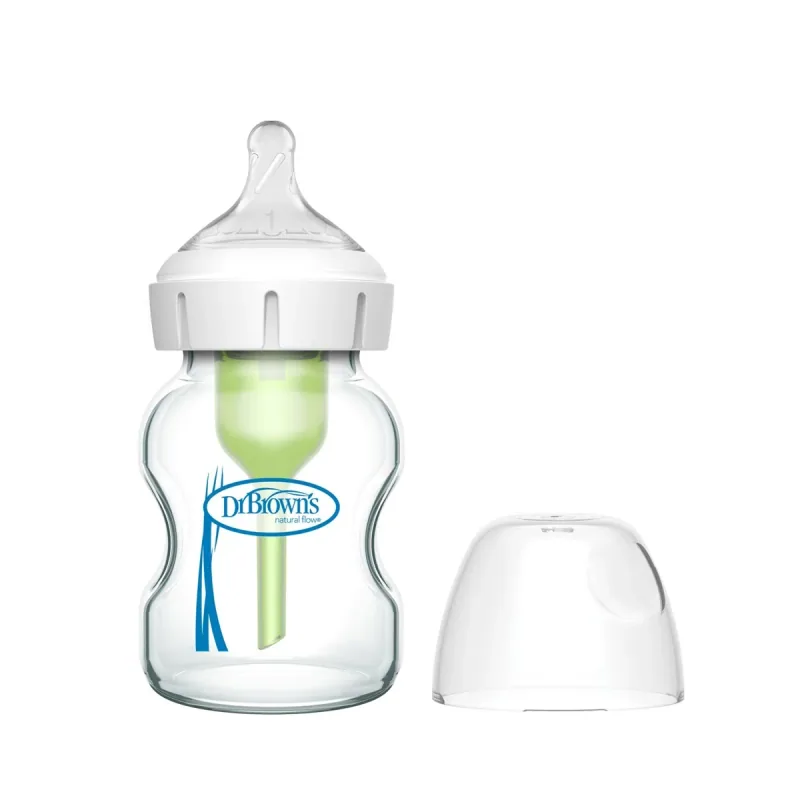
Dr. Brown’s Natural Flow® Anti-Colic Options+™ Wide-Neck Baby Bottle with Level 1 Slow Flow Nipple, 5oz/150mL
The Dr. Brown’s Options+ Wide-Neck Glass 5 oz bottle lets you compare a glass vessel with the brand’s plastic version while keeping a similar nipple-and-vent approach. Glass changes the weight and breakage considerations rather than guaranteeing better feeding. Inspect it for chips and cracks, follow temperature-change instructions, and consider whether daycare allows glass. Keep the vent and nipple compatible with the exact model rather than assuming every branded part is interchangeable.
- 5 oz / 150 mL size
- Glass bottle body
- Wide-neck design
- Separate internal vent
Where it fits
- Glass material option
- Familiar Options+ feeding system
What to weigh up
- Heavier and breakable
- Daycare glass policies vary
04
Manual cleaning with a dedicated bottle tool
Dr. Brown’s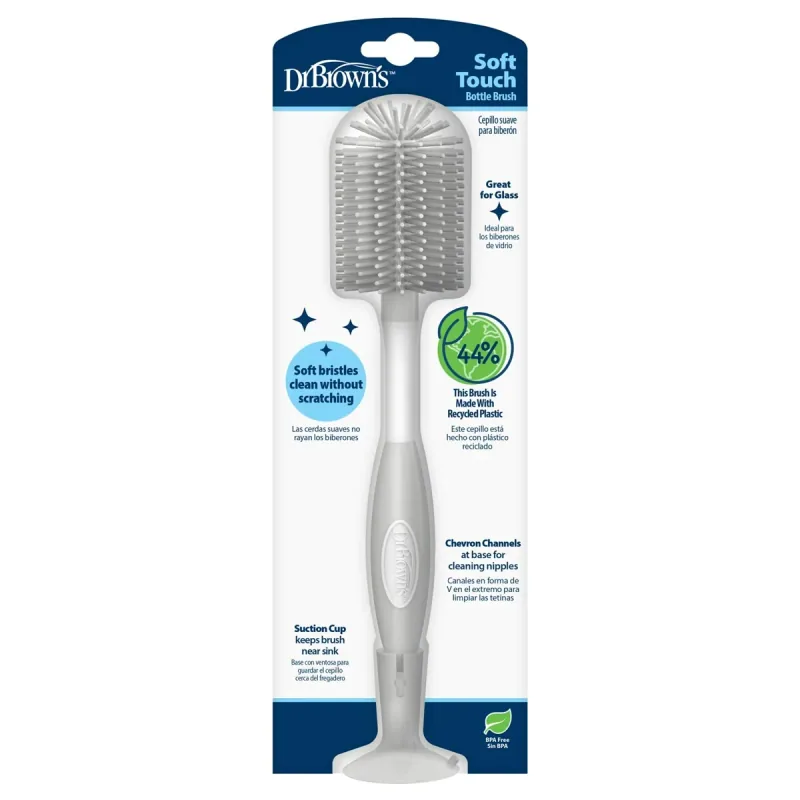
Dr. Brown’s™ Soft Touch Bottle Brush
Dr. Brown’s Soft Touch Bottle Brush uses synthetic-rubber bristles and a nipple-cleaning feature at the base. It illustrates the low-equipment alternative to a countertop bottle washer. Check that the brush reaches your bottle’s shoulders and bottom without damaging its surface, then clean and air-dry the brush itself. A brush is only one part of the process: bottles still need disassembly, washing, rinsing, and complete drying on a clean surface.
- Synthetic-rubber bristles
- Non-slip handle
- Nipple-cleaning feature at the base
- Manual cleaning tool
Where it fits
- No appliance or proprietary tablet needed
- Separate access for smaller nipple spaces
What to weigh up
- Handwashing takes active time
- Brush must also be washed and dried
Three bottle constructions worth comparing
Dr. Brown’s Options+ Wide-Neck 5 oz plastic bottle uses a separate internal vent. Its 5 oz glass counterpart lets you compare the vessel material within a similar bottle system. Glass changes weight and breakage considerations; it does not remove the need to wash the vent and nipple.
Comotomo’s Baby Bottle Gen 2 has a silicone body, wide opening, and vents built into the nipple. That design means fewer separate vent components, but the soft body and shape can affect fit in warmers, holders, or washer racks. Check compatibility with equipment you already own instead of assuming “universal” covers every arrangement.
These are documented design comparisons, not results from feeding trials. The baby’s comfort and ability to manage the flow remain more important than a brand’s claim that its nipple resembles breastfeeding or reduces colic.
Compare the materials you can manage
Plastic bottles are generally light and convenient to pack. Glass bottles can be heavier and need careful handling. Silicone designs may feel flexible but can have their own assembly and cleaning requirements.
Read the instructions for the exact bottle. Check whether it is compatible with your dishwasher, preferred sanitizing method, warmer, and any pump connection you intend to use. A material name alone does not establish compatibility.
Look at replacement-part availability as well. A system becomes less convenient if a lost ring or worn nipple requires replacing the entire bottle.
Count all the pieces before purchasing
A simple bottle can be quicker to assemble, while a vented design may involve additional valves or tubes. Lay out the parts in your mind for one feed, then multiply that work by your daily washing schedule.
Ask whether each small part is easy to inspect and whether a replacement is available. Mixing parts from different brands or model families can compromise fit, even if the pieces appear similar.
The CDC bottle-feeding guidance emphasizes responsive feeding and clean supplies. A manageable cleaning process is part of choosing the product.
Build a starter set around your day
Think about how often you will wash bottles, whether a caregiver needs a separate supply, and how much space you have for drying. Include spare nipples or rings only after you know the system works for your baby.
For occasional bottle feeds, a modest set may be enough. For exclusive bottle feeding or daycare, more bottles may reduce last-minute washing, but a full counter of dirty parts can also become hard to track.
Label daycare bottles according to the provider's instructions, using a method compatible with the bottle's cleaning process.
Observe a feed before changing nipple flow
Notice whether the baby repeatedly coughs, gulps, pulls away, dribbles heavily, or appears to tire. Those observations can help a pediatrician or feeding professional assess the routine. They are not instructions to automatically move to a faster nipple. The age printed on a nipple package is a starting point for the manufacturer’s system, not a deadline the baby must meet.
Do not enlarge nipple holes at home. Check for damage, assemble the bottle correctly, and use compatible parts. If the baby has persistent feeding difficulty, poor intake, fewer wet diapers, or concerns about growth, obtain advice before making repeated bottle changes. A bottle is a feeding tool, not a diagnostic test.
Count parts against your actual cleaning schedule
Lay out one fully disassembled bottle and count what needs washing: bottle body, collar, nipple, cap, and any vent pieces. Multiply by the feeds between cleaning opportunities. That gives a more realistic sense of the work than counting only the number of assembled bottles in a registry bundle.
The CDC feeding-equipment guide explains washing, sanitizing when needed, and thorough air-drying. A bottle that technically fits a dishwasher can still have small parts that need a suitable basket and correct orientation. Check the manufacturer’s temperature and dishwasher instructions for every part, not just the main vessel.
Make a starter purchase that is easy to revise
Buy a small number of suitable bottles, then see whether the baby feeds comfortably and the caregivers can maintain the cleaning routine. Choose spare nipples only after confirming the exact model and flow. Keep packaging and receipts until you know the parts and capacity suit the household.
If daycare will use the bottles, ask about glass rules, labeling, prepared-feed storage, and how used bottles return home. An adult who has never seen the vent system should receive a brief assembly demonstration. Include a photo of the correctly assembled bottle in the care bag if that helps.
Compare total cost without buying an unnecessary ecosystem
Consider replacement nipples, small vent pieces, brush access, and compatibility with a pump or storage container if those features matter. A bottle bundle that includes a warmer, sterilizer, and several sizes may be convenient, but it can also buy equipment you do not need. Start with the feeding and washing jobs, then add an appliance only when it removes a repeated difficulty.
A few more details
Your questions, answered
Should I buy a large baby bottle set before birth?
A smaller starter selection lets you assess feeding and cleaning before committing to one system. Expand once you know which bottles suit your routine.
Does an anti-colic label guarantee less crying?
No. Bottle design cannot diagnose the cause of crying or guarantee relief. Discuss persistent feeding distress with your clinician.
Are nipple flow levels comparable between brands?
Not reliably. Read the exact brand’s guidance and watch the baby’s feeding. Ask a clinician about persistent coughing, tiring, or discomfort instead of changing flow solely by age.
Can I send a glass baby bottle to daycare?
Ask the daycare first. Some settings restrict glass. Also confirm labeling, storage, and how staff assemble and return the exact bottle parts.
Sources & product information
Follow the original sources for current product details, instructions, and guidance.
- CDC: feeding from a bottle
- CDC: cleaning infant feeding items
- Dr. Brown’s: Dr. Brown’s Natural Flow® Anti-Colic Options+™ Wide-Neck Baby Bottle with Level 1 Slow Flow Nipple, 5oz/150mL
- Comotomo: Baby Bottle Gen 2
- Dr. Brown’s: Dr. Brown’s Natural Flow® Anti-Colic Options+™ Wide-Neck Baby Bottle with Level 1 Slow Flow Nipple, 5oz/150mL
- Dr. Brown’s: Dr. Brown’s™ Soft Touch Bottle Brush