A baby bouncer can provide a nearby seat for short periods of supervised awake time. It is optional gear, and it is not an infant sleep space. Choose one with clear instructions, a stable base and a seat you can clean, then follow the model's developmental and weight limits rather than relying on an age estimate.
Gear2 products, compared
Baby bouncer guide: useful features and clear safety limits
Learn how to choose and use a baby bouncer for supervised awake time, including floor placement, restraints, cleaning and when to stop using infant mode.
Jump to a section
The quick answer
A baby bouncer can provide a nearby seat for short periods of supervised awake time. It is optional gear, and it is not an infant sleep space. Choose one with clear instructions, a stable base and a seat you can clean, then follow the model's developmental and weight limits rather than relying on an age estimate.
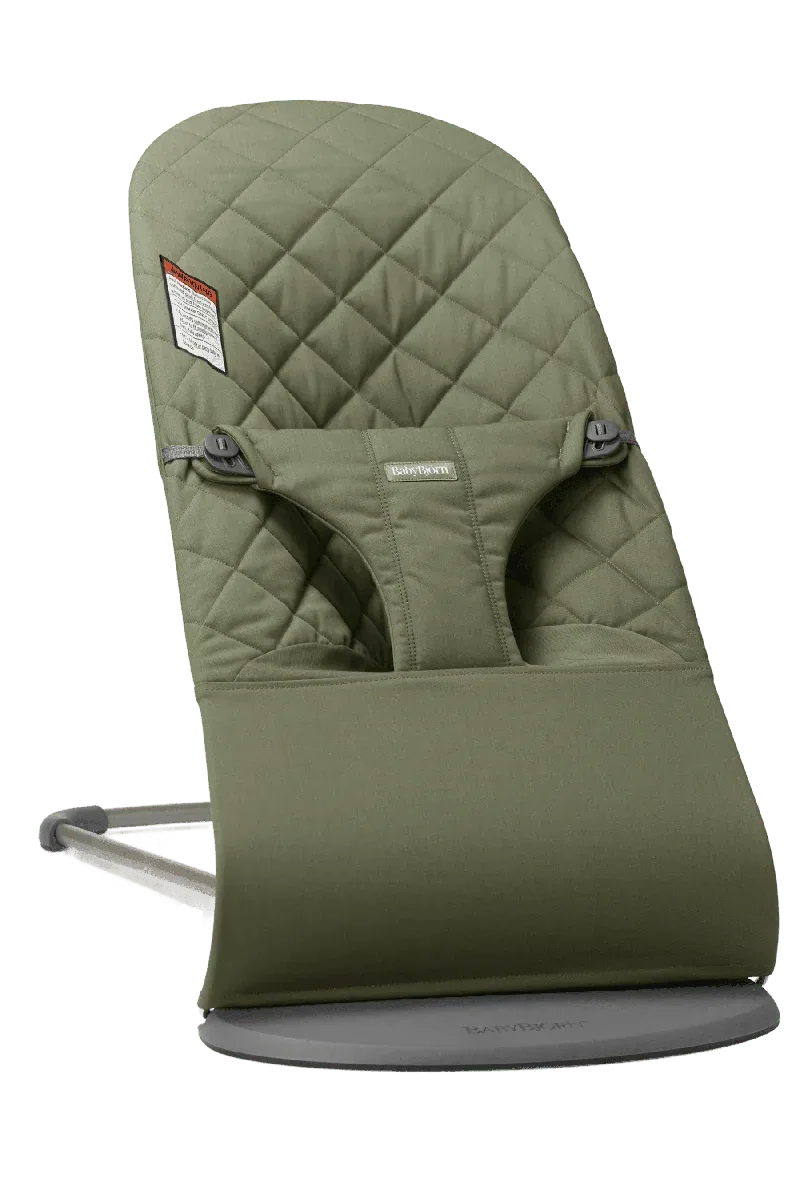
- BabyBjörn Bouncer Bliss: a naturally moving bouncer that folds flat.
- UPPAbaby Mira: a folding bouncer with a storage bag.
- Use the exact model manual, including all size and developmental limits.
- Details come from manufacturer documentation; Emily has not claimed hands-on testing.
At a glance
The details that make a difference when you’re deciding.
| Product | Useful for | Detail to know | Before buying |
|---|---|---|---|
| BabyBjörn Bouncer Bliss | A naturally moving bouncer that folds flat | Natural rocking without a motor | Infant and chair modes have different limits |
| UPPAbaby Mira | A folding bouncer with a storage bag | Product weight listed at 8 lb | Follow mode-specific limits |
A closer look
Products mentioned in this guide
Actual product photos, manufacturer information, and direct links. Comparisons are based on published specifications; these are not hands-on test results.
01
A naturally moving bouncer that folds flat
BabyBjörnBabyBjörn Bouncer Bliss
Bouncer Bliss moves with an adult’s gentle input or the baby’s movement instead of an electric swing motor. It folds for storage and has removable fabric, so it suits a comparison focused on moving a seat between rooms and cleaning it. The headline upper weight describes the later chair mode, not permission to use the infant restraint until that weight. BabyBjörn’s infant-bouncer instructions stop that mode when the child reaches its limit or starts trying to sit up. Keep the seat on the floor and use it only for supervised awake time.
- Natural rocking without a motor
- Folds flat; three height positions
- Infant bouncer: up to 20 lb or attempts to sit up
- Later chair mode has separate readiness rules and 29 lb limit
Where it fits
- No motor or charging routine
- Removable washable seat
What to weigh up
- Infant and chair modes have different limits
- Toy accessories sold separately
02
A folding bouncer with a storage bag
UPPAbaby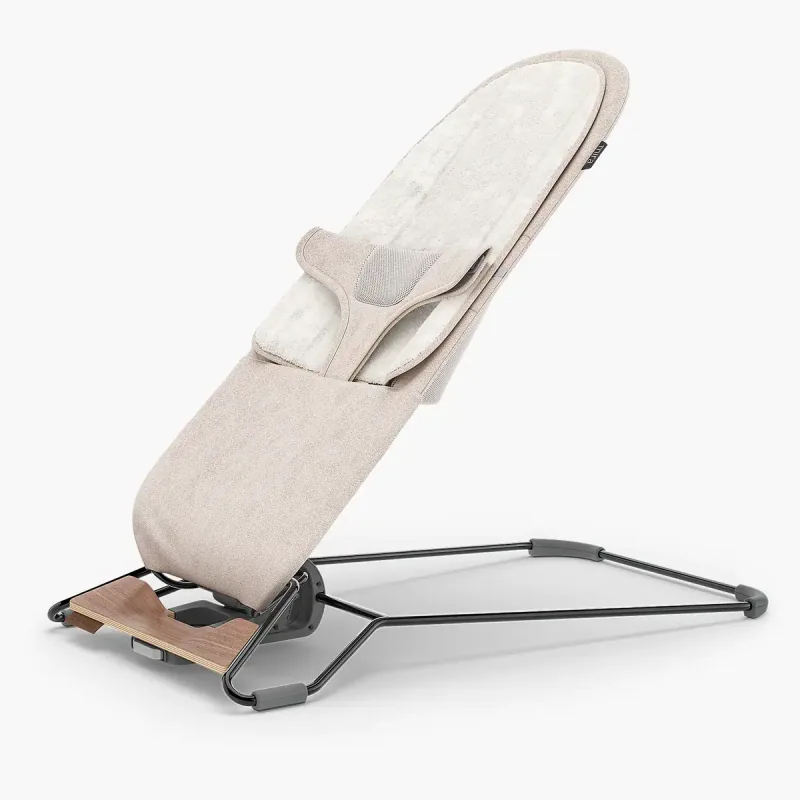
UPPAbaby Mira
Mira combines a naturally moving bouncer with a later seat configuration. Its eight-pound product weight and included carry bag are useful details if you expect to store it or take it to a relative’s house. Three recline settings let you adjust the approved awake-use position, but do not turn it into a sleep product. The conversion to toddler seating requires following the fabric orientation and developmental directions. Compare the actual recline controls and fabric-removal process with another bouncer, since those everyday tasks are more meaningful than matching a nursery color.
- Product weight listed at 8 lb
- Three recline positions
- Machine-washable fabrics
- Storage bag and cozy seat liner included
- Separate bouncer and toddler-seat configurations
Where it fits
- Carry bag included
- Folds flat for storage
What to weigh up
- Follow mode-specific limits
- Not a sleep surface
Two real bouncers to compare
BabyBjörn Bouncer Bliss and UPPAbaby Mira both use natural movement rather than an electric swing motor. Each folds for storage and has removable washable fabric, but their controls, included accessories and conversion details differ. Mira’s current package includes a storage bag and cozy seat liner, while Bliss buyers should check the exact package before assuming a toy bar or travel bag is included.
The product photographs help identify the frame shape and restraint arrangement, but try the actual adjustment controls if possible. A feature only helps if the regular caregiver can use it correctly. For a seat that moves between a bedroom and living room, compare the empty product’s carrying method and where it will be stored while not in use.
Do not confuse bouncer and toddler-chair limits
Bliss’s infant-bouncer instructions specify a maximum of 20 pounds or the point when the child starts trying to sit up. Its later chair mode has different readiness rules and a higher 29-pound limit. A headline describing use to age two does not mean a two-year-old belongs in the restrained infant-bouncer configuration.
Mira also converts into a later seat configuration. Follow its own manual for the transition, including the required fabric orientation and developmental criteria. Do not borrow the Bliss stopping rule or conversion sequence for Mira simply because the products look similar. The earliest applicable limit in the relevant manual controls.
A useful first-use routine
Set the bouncer on a clear, level floor with space around the frame. Assemble and inspect it while empty, then select a permitted recline setting. Fasten the baby as directed and check the restraint before gently allowing the movement described in the instructions. Do not use the bouncer on a bed, table, counter or sofa.
Stay close enough to observe the baby. A bouncer can be a convenient spot during supervised awake time, but it does not remove the need to respond to hunger, discomfort or tiredness. If the baby falls asleep, move them to an appropriate firm, flat sleep space. The AAP’s explanation of registry products and sleep is a useful source for that distinction.
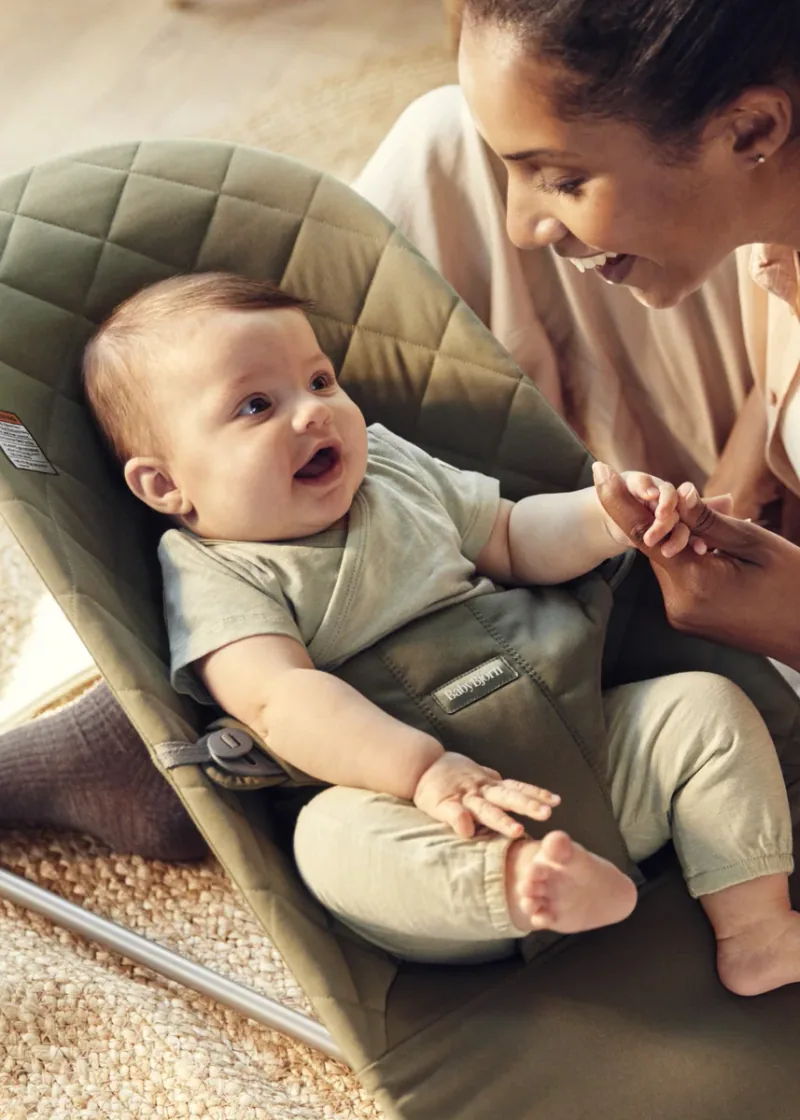
Compare cleanup with the way you will use it
Before buying a spare fabric seat, check that it fits the exact frame and model. Read the temperature, detergent and drying instructions on the actual fabric label. Keep the manual’s refitting directions nearby so the seat is attached correctly after washing; a clean cover is not enough if a fastening has been missed.
Inspect the restraint, seams, frame and adjustment mechanism regularly. For a used bouncer, establish the model, complete parts and recall status before the first session. If the original instructions are missing, obtain them from the manufacturer. If you are deciding between powered motion and natural movement, the baby swing guide compares two specific swings alongside Bliss.
Know how a bouncer differs from a swing
A bouncer typically responds to the baby's movement or a gentle push, while a swing supplies a repeated motion. Some products add powered features, so read the description of the actual model rather than assuming the name tells you everything.
Consider where you would use the bouncer and whether it will stay there. A folding design may matter in a small apartment; a easily removable cover may matter more in a busy feeding area. Neither feature changes the need to supervise the baby and use the product within its instructions.
Set it on the floor
CPSC advises using infant bouncers only on the floor, with the restraints fitted, and keeping an adult nearby. Do not place one on a counter, sofa, bed or table. Its bouncer safety guidance explains the fall and suffocation concerns.
Choose a level area where adults will not trip over the frame and other children cannot push or climb on it. Move the empty product before placing the baby inside. Do not carry a baby around in the bouncer or use a toy bar as a handle unless the instructions expressly identify an appropriate carrying method for the empty product.
Keep sleep in a separate space
If the baby falls asleep, move them to a firm, flat, approved infant sleep surface as soon as possible. CPSC explicitly includes bouncers among products that should not serve as sleep spaces. See its safe-sleep guidance.
Do not add cushions, rolled towels or blankets to change the seat angle. A comfortable-looking photograph does not establish a safe setup. Keep an appropriate sleep space ready so a transfer is easy when awake time turns into a nap.
Read the stopping criteria carefully
The infant-bouncer stage ends according to the exact manual's limits, including movement and attempts to sit up. Do not wait for the highest advertised age if an earlier stopping criterion has been met. Review the instructions whenever your baby gains a new skill.
Some products have a later chair mode with different requirements. That does not mean the infant configuration remains appropriate between stages. If the conversion instructions are unclear, contact the manufacturer before continuing use.
Buy and maintain a complete product
For a new purchase, compare how the cover removes, how long it takes to dry and whether reassembly is straightforward. For a used one, confirm the model, complete restraints, readable labels and absence of damaged parts. Check recall notices with the identifying information.
Inspect seams and fasteners during routine cleaning. Keep the manual accessible to anyone who uses the bouncer. It can be a useful occasional seat, but floor play and time interacting with caregivers remain part of the day; there is no need to buy one merely because it appears on a long registry checklist.
A few more details
Your questions, answered
Can I put a baby bouncer on the kitchen counter?
No. Use an infant bouncer only on the floor, with the restraints adjusted and an adult nearby.
When should I stop using the baby bouncer?
Follow the exact model's weight and developmental stopping criteria. Attempts to sit up can end infant-bouncer use before the maximum weight is reached.
What does Mira include that should be checked against other packages?
The current UPPAbaby listing includes a storage bag and cozy seat liner. Check exact package contents on every model; photographs may show separately sold toy accessories.
When should I stop using Bliss as an infant bouncer?
Follow the exact manual. The current maker guidance stops infant-bouncer use at twenty pounds or when the child starts trying to sit up, whichever comes first. Later chair use is a separate mode.
Sources & product information
Follow the original sources for current product details, instructions, and guidance.