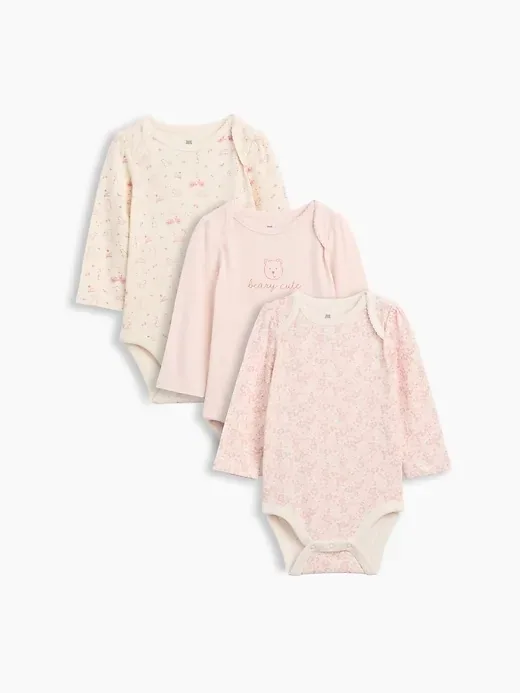
Baby clothing age labels are a starting point, not a universal fit standard. Use the exact brand’s height-and-weight chart, then check the garment’s torso, leg, and opening dimensions against the baby’s current measurements and a well-fitting piece.
Style3 products, compared
Baby clothes sizes: how to read labels and get a better fit
Understand newborn, month-range, and toddler clothing labels. Compare baby clothes sizes using measurements, garment fit, and the manufacturer’s own chart.
Jump to a section
The quick answer
Baby clothing age labels are a starting point, not a universal fit standard. Use the exact brand’s height-and-weight chart, then check the garment’s torso, leg, and opening dimensions against the baby’s current measurements and a well-fitting piece.
- Newborn, 3M, and 0–3M labels are not universal across brands.
- Use the chart for the exact garment category.
- Torso length matters in bodysuits and footed clothing.
- Snug-fit sleepwear should keep its intended fit.
A closer look
Products mentioned in this guide
Actual product photos, manufacturer information, and direct links. Comparisons are based on published specifications; these are not hands-on test results.
01Baby 4-Pack Long-Sleeve Bodysuits - White02Baby First Favorites Organic Cotton One-Piece03Kitties On Ice Organic Cotton Sleeper
01
Repeat-use long-sleeve cotton basics
Carter's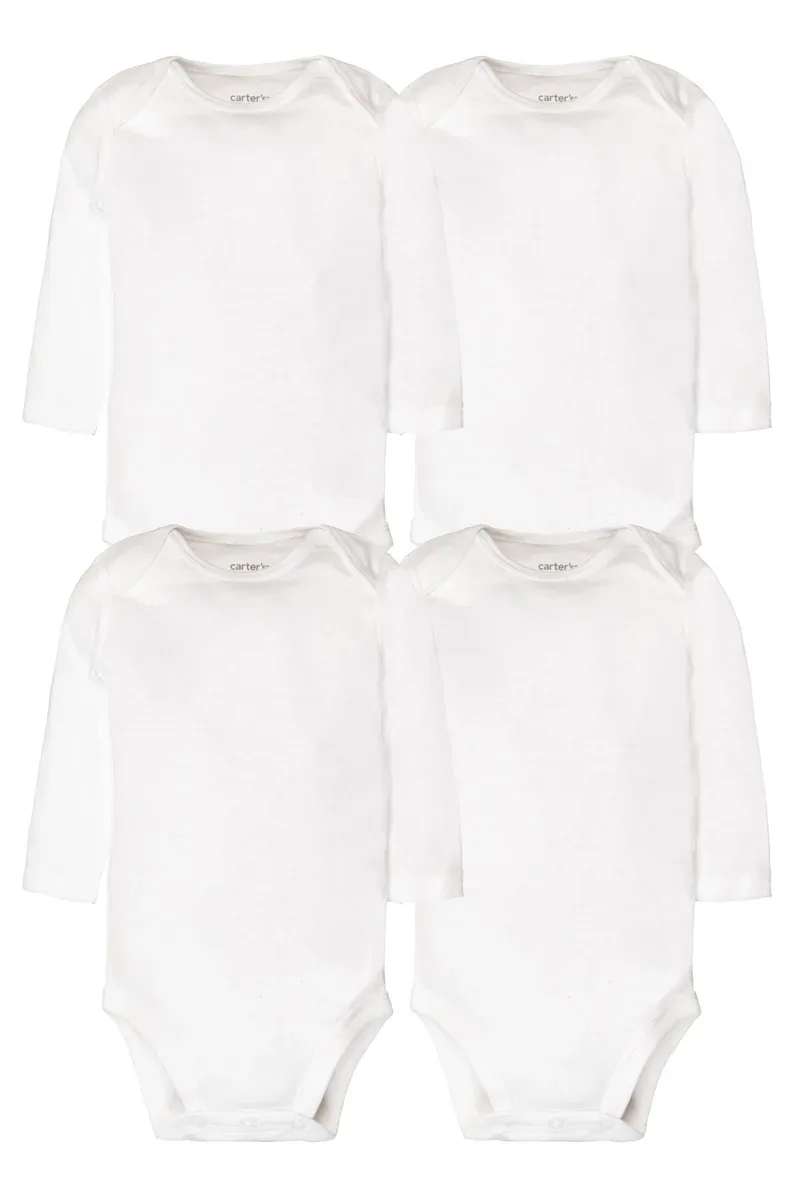
Baby 4-Pack Long-Sleeve Bodysuits - White
Carter’s white four-pack is a straightforward option for a wardrobe built around separates. The shoulder overlap and diaper snaps are the useful design details to compare, and the manufacturer identifies foldover mitts on specified small sizes. Use the live height-and-weight guide rather than ordering only by the baby’s age. The photograph is the matching 1L930610 product from Carter’s official regional catalog; the shopping link is the U.S. listing.
- Four long-sleeve bodysuits; style 1L930610
- 100% cotton; machine washable
- Overlapping shoulders and diaper-line snaps
- Foldover mitts listed for sizes up to 3M
Where it fits
- Simple pieces to mix with existing bottoms
- Multipack supports a laundry rotation
What to weigh up
- Small-size features do not apply to every size
- Regional photograph; check U.S. stock on the linked page
02
A simple zip one-piece outfit
Gap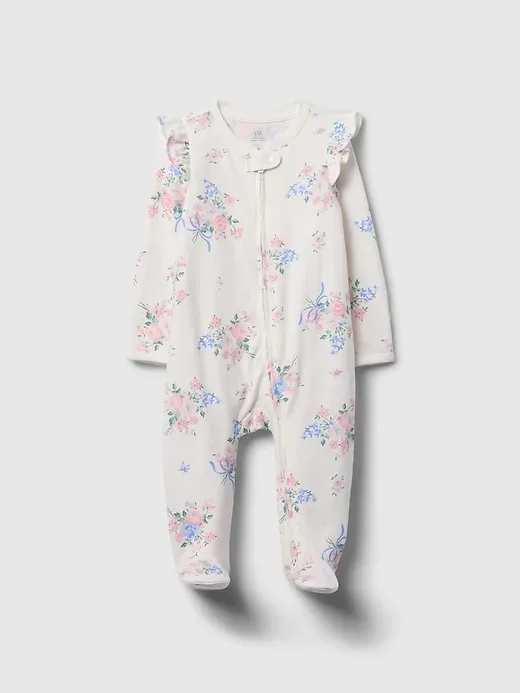
Baby First Favorites Organic Cotton One-Piece
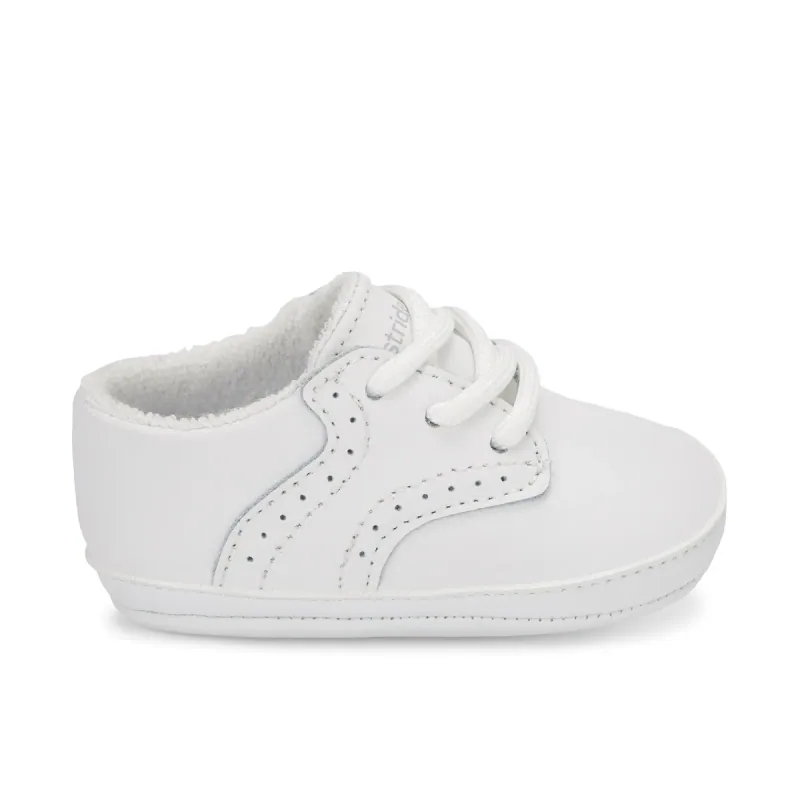
The First Favorites one-piece offers a complete garment layout with a front zipper and a snap tab near the chin. It can simplify a change when you prefer fewer separate pieces. Check the current size and chosen print on the exact page: product families can include different constructions over time. Compare the torso and leg room with a garment that already fits, then follow the label for washing.
- Long-sleeve cotton one-piece
- Zipper front with neckline snap tab
- Checked listing identifies organic cotton
Where it fits
- Fewer separate clothing pieces to manage
- Front opening for dressing
What to weigh up
- Check the selected color’s details
- Future fit cannot be predicted from age alone
03
An older-baby snug-fit sleeper example
Burt's Bees Baby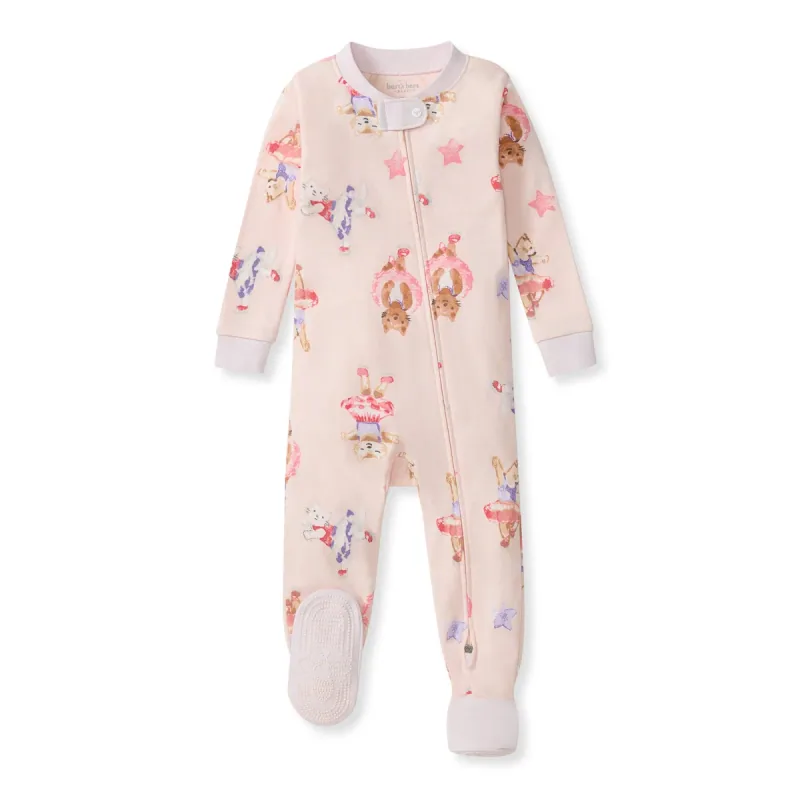
Kitties On Ice Organic Cotton Sleeper
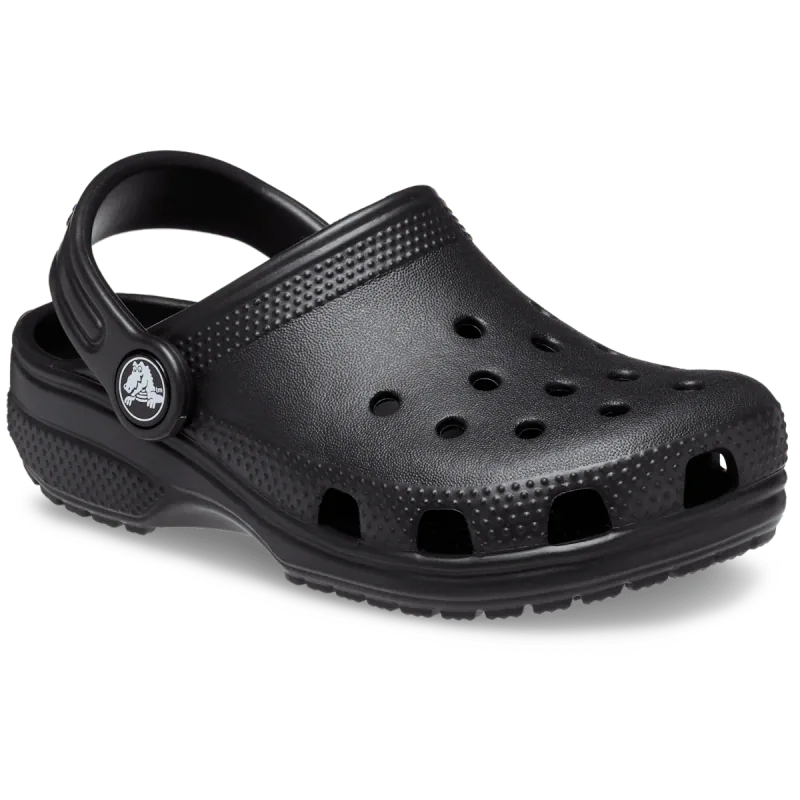
The Kitties On Ice sleeper is useful when comparing the older garment format with a newborn sleep-and-play. The manufacturer describes a snug fit for the 12–24M sleeper and foot grips, alongside a two-way zipper. Follow the size and fit directions rather than buying an oversized garment to make it loose. Check the complete fiber label, including feet and trims, and compare the child’s current measurements.
- Older sleeper format identified at 12–24M
- Snug fit specified by manufacturer
- Two-way zipper
- Gripped feet in the older sleeper description
Where it fits
- Two-way access for changes
- Foot details suited to the specified older format
What to weigh up
- Not the same cut as newborn sleep-and-play
- Do not deliberately make snug sleepwear loose
A real chart example, clearly labeled by brand
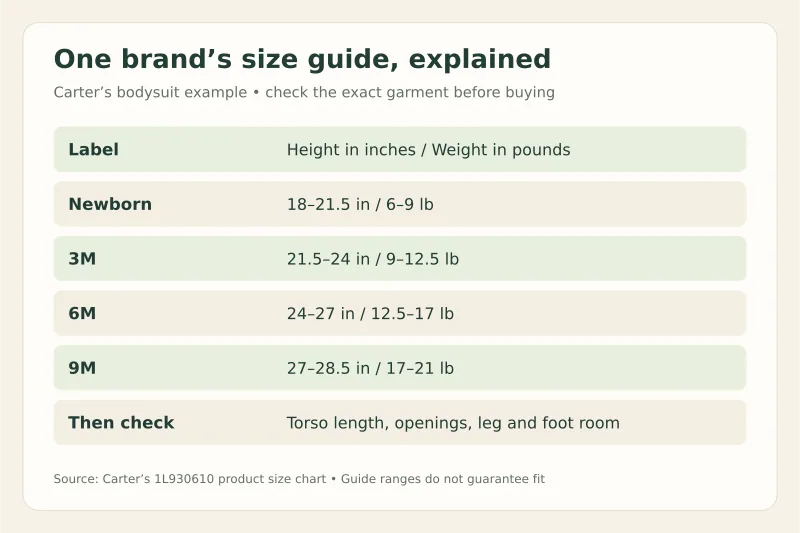
The checked Carter’s cotton bodysuit page gives these guide ranges: newborn at 18–21.5 inches and 6–9 pounds; 3M at 21.5–24 inches and 9–12.5 pounds; 6M at 24–27 inches and 12.5–17 pounds; and 9M at 27–28.5 inches and 17–21 pounds. The visual on this page identifies the brand and units so the figures are not mistaken for a universal chart.
Those numbers do not guarantee fit for every child whose measurements fall inside them. A long torso, different diaper bulk, or a narrower shoulder can change how a particular garment works. The chart is a useful first filter, followed by a practical check of the chosen item.
Bodysuit, footed one-piece, and separate trousers
A bodysuit needs adequate torso length from shoulder to diaper closure. If the snaps pull tightly when the baby moves, increasing leg length in a separate pair of trousers does not solve the problem. Check shoulder and arm comfort as well as the diaper line.
A footed one-piece connects torso fit with leg and foot room. If the toes press into the end, the garment can be outgrown even when the body looks loose. A very roomy body is not a reason to ignore compressed feet. Compare the actual cut, not only the printed age.
Separate pieces can accommodate different proportions, but the waistband and cuffs should still be comfortable. A larger top with smaller bottoms may suit a particular child better than a matching set where both pieces must share one label.
What to do when measurements point to different sizes
Choose the dimension that is limiting the actual garment, then check the rest of the fit. For a long baby near the top of the height range, the longer size may be worth trying in a one-piece. For a garment that is too loose at the neck, a different cut may be better than simply going larger.
For sleepwear, respect the manufacturer’s intended snug fit and instructions. Do not deliberately buy several sizes up to turn snug-fit pajamas into loose sleep clothing. The Burt’s Bees Baby Kitties On Ice sleeper pictured below is a specific example of a range with an older snug-fit format; it should not be assessed like a newborn relaxed sleep-and-play.
Shopping ahead without filling the wrong season
Record the current measurements and date, then keep the next likely size group small. A baby does not move through every size on a fixed monthly schedule. A heavy winter outfit can become the right size in warm weather, and a special-event dress bought months ahead can miss the event entirely.
Keep receipts and return dates with future clothing. When the current drawer starts to feel tight, compare the next size after a calm try-on and move genuinely usable items into rotation. Sorting by “fits now,” “next to try,” and “outgrown” is more practical than arranging every garment solely by its age label.
Measure first, then look at the cut
Use recent height and weight information as a starting point. If you are unsure how to measure accurately, follow the brand’s instructions or use a recent measurement from a routine appointment. You do not need to force the baby into a clothing size that matches a birthday.
Next, consider the shape of the garment. A footed one-piece has different length constraints from a separate top and bottoms. A baby with a longer torso may fit those pieces differently. Stretch, seams, and diaper space can also change how a particular cut feels.
Check the garment while it is being worn
Look for comfortable movement, fasteners that close normally, and enough space for the diaper. If a zipper is difficult to close or a seam pulls, reassess the size or cut. If excess fabric bunches significantly, a different fit may be more practical.
Follow specific fit instructions for sleepwear and wearable blankets. Choosing much larger clothing to make it last is not always appropriate for those products. Daytime clothing preferences should not be carried over automatically to products with their own safety-related fit requirements.
Buy future sizes without overcommitting
Choose a small reserve in the next likely size and store it separately from clothing that fits now. Check that reserve regularly so useful pieces do not remain hidden until they are outgrown. Add more only when you see which cuts and closures work well.
For seasonal clothing, accept that future fit is uncertain. A larger winter outfit may not fit during winter, even when its age label appears correct. Gifts with exchange options give parents more flexibility than a large collection bought far ahead on final sale.
Make a simple record of what works
Keep a short note with the brand, garment type, labeled size, and what you liked about the fit. This is more useful than writing only “wears six months.” Include whether the item has been washed according to its label, since you want to compare garments in their normal usable condition.
When an outfit becomes too small, move it out of the active drawer. Use our baby clothes guide to plan quantities around laundry rather than treating each new size as a reason to replace an entire wardrobe at once.
A few more details
Your questions, answered
Is 3M always the same as 0–3M?
No. Labels vary by brand and garment. Compare the actual height-and-weight ranges and fit.
What if a baby’s weight and height suggest different sizes?
Consider the limiting dimension of the garment, then try it and check the rest of the fit. A different cut may work better than automatically sizing up.
Can I use one brand’s chart for another brand?
No. Use the chart for the exact brand and garment. Similar age labels can cover different measurements and cuts.
Sources & product information
Follow the original sources for current product details, instructions, and guidance.