Baby eczema can make skin dry, itchy, and uncomfortable, but a rash cannot be diagnosed reliably from a shopping guide or a photo comparison. If you think your baby has eczema, ask a pediatrician to confirm it and give you a treatment plan. Daily care works best when it supports that plan consistently.
Care2 products, compared
Baby eczema: a gentler routine and when to ask for help
Learn what to track when baby eczema flares, how to simplify daily skin care, and which changes or symptoms need advice from your baby's clinician.
Jump to a section
The quick answer
Baby eczema often needs a consistent skin-care routine plus a clinician’s plan for flares. Use gentle, fragrance-free cleansing and a thick moisturizer; ask promptly about pain, spreading redness, oozing, fever, or a baby who seems unwell.
- A rash should be assessed before treating it as eczema.
- Moisturizer and prescribed flare treatment do different jobs.
- Fragrance-free does not guarantee that every ingredient will suit every baby.
- Do not eliminate foods or change formula solely because of a rash without medical advice.
A closer look
Products mentioned in this guide
Actual product photos, manufacturer information, and direct links. Comparisons are based on published specifications; these are not hands-on test results.
01
An oil-format rinse-off cleanser
Mustela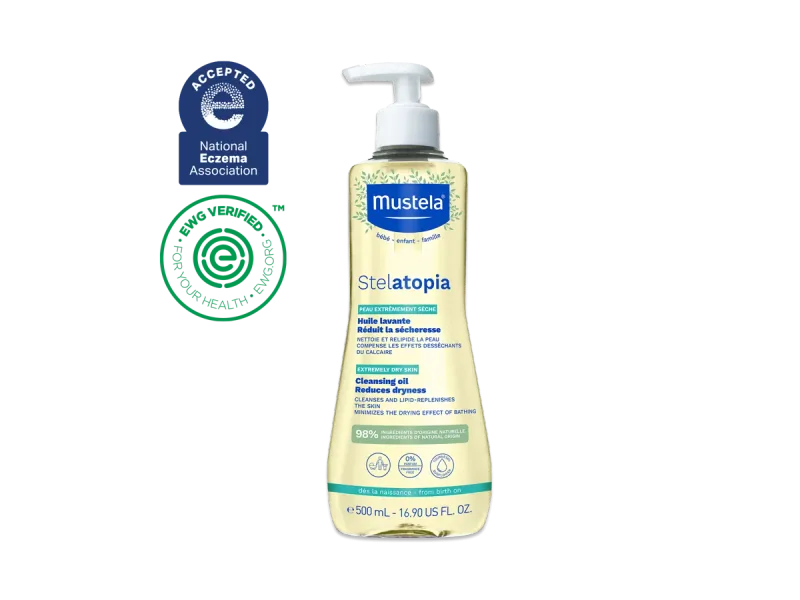
Stelatopia cleansing oil
Mustela Stelatopia Cleansing Oil is a rinse-off cleanser marketed for extremely dry and eczema-prone skin. It is different from an oil that stays on after a bath, so follow the use instructions carefully. Consider it as one example in a clinician-guided skin routine, with moisturizer and any prescribed treatment planned separately. Check the current ingredient list and stop using a product that appears to aggravate the baby’s skin.
- Rinse-off cleansing oil
- For face, hair, and body
- Marketed for eczema-prone skin
- Pump dispenser
Where it fits
- One cleansing format for several areas
- Alternative texture to a gel
What to weigh up
- Not a leave-on eczema medicine
- May make bath surfaces slippery
02
Discussing a labeled eczema skin protectant
Pipette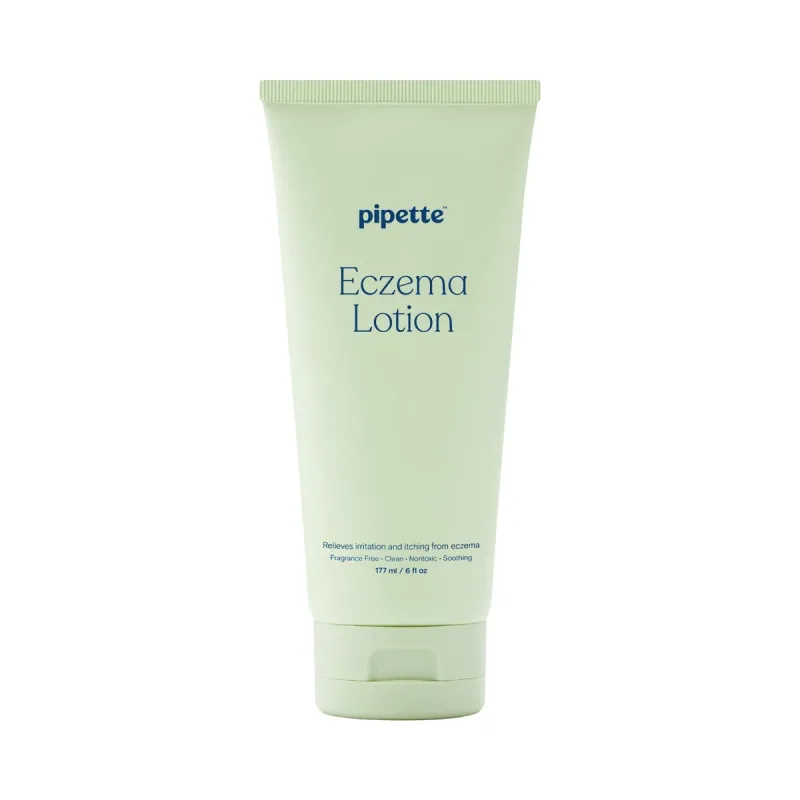
Eczema Lotion
Pipette Eczema Lotion is a fragrance-free product with 1% colloidal oatmeal. It is an example to discuss with a baby’s clinician when building an eczema plan, rather than evidence that a new rash has been diagnosed correctly. Read the complete label, including inactive ingredients and use directions. The appropriate texture and treatment depend on the baby’s skin and whether a flare needs prescribed medication as well as everyday moisturizing.
- 1% colloidal oatmeal
- Fragrance-free
- 6 fl oz / 177 mL
- National Eczema Association Seal of Acceptance
Where it fits
- Specific labeled active ingredient
- Published ingredient information
What to weigh up
- Does not replace a clinician’s flare-treatment plan
- Check known ingredient allergies
Build a simple baseline routine
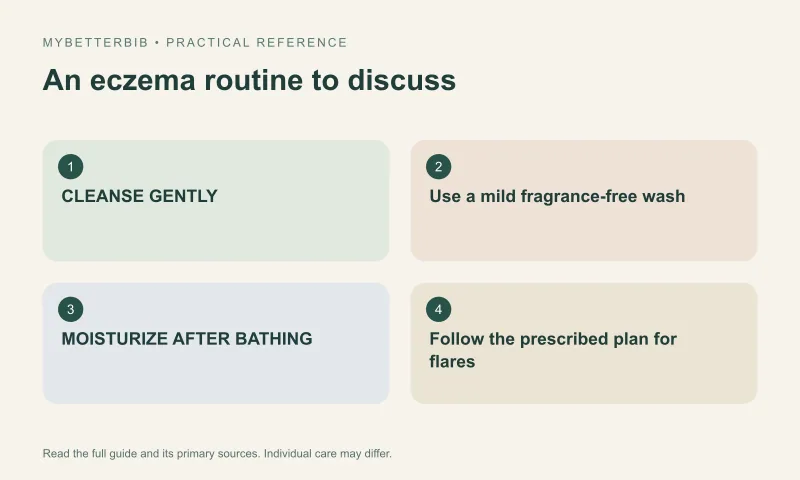
The American Academy of Dermatology's guidance for babies recommends short, lukewarm baths, a mild fragrance-free cleanser where needed, and moisturizer after bathing. A clinician can help you choose an appropriate cream or ointment and explain how often to use it.
Keep your first routine short enough that every caregiver can follow it. Write down the cleanser, moisturizer, prescribed treatments, and the order in which to use them. If an ointment is prescribed for a specific area or number of days, keep those instructions alongside the product.
More products can make it harder to identify what works. Avoid adding a new scented lotion because a label sounds soothing.
Notice patterns without blaming yourself
Record where a flare appears and what changed around the same time. Useful details include new laundry products, a different cleanser, heavier clothing, drool, or repeated rubbing from a seam.
A notebook entry can be brief: date, body area, appearance, apparent discomfort, and products used. Photos in similar lighting may help your clinician compare changes. Do not turn the record into a search for a perfect household; eczema can fluctuate even with careful care.
Food should not be removed from a baby's or breastfeeding parent's diet without professional guidance. Skin symptoms alone do not identify a food allergy.
Know what to ask at the appointment
Bring a list of current products and previous treatments. Ask which areas need medication, how to recognize improvement, what to do during a flare, and when to stop or change a treatment.
If a prescription sounds confusing, ask the clinician or pharmacist to show you exactly how it should be used. The product name, strength, location, and duration are separate instructions; “apply the cream” may leave important details unclear.
Make the daily routine specific enough to repeat
Write down what happens in the morning, after the bath, and when a flare begins. “Use cream when needed” leaves every caregiver interpreting a different threshold. A useful plan names the cleanser, moisturizer, any prescribed medicine, the body areas involved, and the instructions supplied by the clinician. Take a photograph of the packaging so similarly colored tubes do not get confused.
The American Academy of Dermatology’s baby eczema guide recommends gentle bathing and moisturizing immediately afterward. Thick creams and ointments generally protect dry skin better than thin lotions, although the right product also has to be tolerated and used consistently. Let the care team know if applying a product seems to sting or if the baby becomes more uncomfortable.
Read the package beyond “natural” and “sensitive”
Look at whether the product is a wash that rinses off, a moisturizer that stays on, or a labeled medicine. These are different categories even when the bottles share the same brand colors. For example, Mustela Stelatopia Cleansing Oil is a rinse-off cleanser. Pipette Eczema Lotion lists colloidal oatmeal as an active ingredient. Neither label tells you whether an unidentified rash is eczema.
Avoid introducing several new products together. If a reaction occurs, knowing which single item changed makes the history clearer. Keep the ingredient list or a package photo, because formulas and packaging can change. Do not apply essential oils or a homemade mixture simply because a recipe describes them as chemical-free; natural substances can also irritate skin.
Protect irritated skin during ordinary baby care
Notice repeated contact with saliva, milk, wet clothing, detergent residue, and rough seams. Pat away moisture gently and replace a wet bib or shirt rather than rubbing already irritated skin. Use the baby’s prescribed skin plan for affected areas instead of layering different over-the-counter products in response to each dribble.
Keep nails short enough to reduce scratching damage and choose comfortable clothing. A diary can note the location of the rash, sleep disruption, products used, and whether the skin improved or worsened. The purpose is to identify repeatable observations for the clinician, not to blame every flare on the last food eaten or item of clothing worn.
Know when the usual plan is no longer enough
Seek advice when a previously manageable rash becomes painful, develops crusting or oozing, spreads rapidly, or is associated with fever or a baby who seems ill. Ask for review when itching regularly interrupts feeding or sleep, even if the skin does not look dramatic in a photograph. AAP eczema guidance distinguishes ongoing moisturizing from the treatment that may be needed for inflammation. Bring the actual tubes to an appointment so the clinician can see what has been used and how often.
A few more details
Your questions, answered
What should I record before an eczema appointment?
Note affected areas, itching or sleep disruption, products used, and what changed. Bring the actual tubes or label photographs and ask for a written daily and flare-care plan.
Should I stop foods because my baby has eczema?
Do not remove foods without professional advice. Discuss suspected reactions with your pediatrician so nutrition and any allergy concerns are assessed together.
Is a cleansing oil the same as a moisturizer?
No. A rinse-off cleansing oil removes dirt during washing. A leave-on moisturizer serves a different role; follow the exact product instructions and your clinician’s plan.
Can moisturizer replace the treatment prescribed for a flare?
Not necessarily. Everyday moisturizer and prescribed anti-inflammatory treatment have different roles. Follow the baby’s individual plan and ask for review if symptoms remain uncontrolled.
Sources & product information
Follow the original sources for current product details, instructions, and guidance.