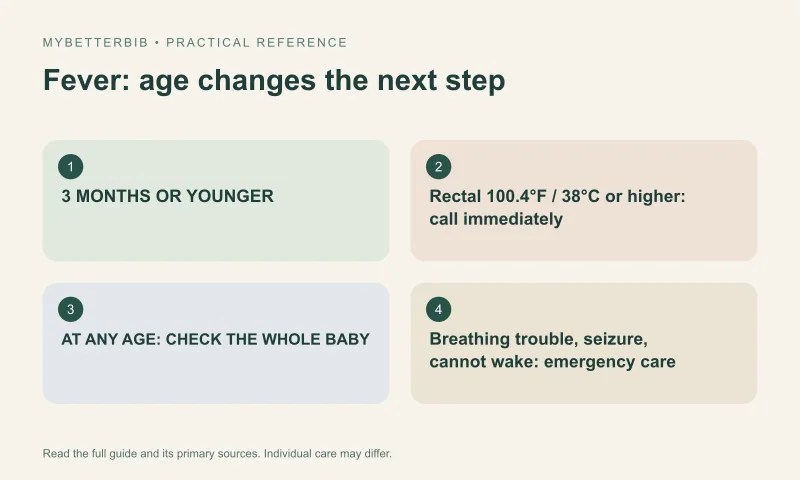
A baby three months old or younger with a rectal temperature of 100.4°F (38°C) or higher needs immediate medical advice, even if they otherwise seem well. Call your pediatrician right away; if you cannot reach them promptly, seek urgent medical care. Do not wait to see whether fever medicine changes the number.
CareA practical guide
Baby fever: when to call and what to tell the pediatrician
Know the urgent fever threshold for young infants, how to record a temperature, and which symptoms to describe when you call your baby's pediatrician.
Jump to a section
The quick answer
Call your pediatrician immediately for a baby three months or younger with a rectal temperature of 100.4°F (38°C) or higher. At any age, breathing difficulty, inability to wake, seizures, or a seriously ill appearance require emergency care.
- Age and overall condition matter as well as the temperature.
- Tell the clinician the reading, time, and measurement method.
- Do not delay a young infant’s assessment to see whether medicine works.
- Ask for dosing instructions tied to the exact medicine and current weight.
Measure and record the temperature
Touching a forehead cannot reliably confirm fever. Use a digital thermometer and follow its instructions. The American Academy of Pediatrics explains that a rectal reading is the most reliable in young infants. Ask your clinician to show you the method if you are unsure.
Write down the reading, time, and measurement method. Do not add or subtract an assumed degree to convert between methods; report what the thermometer actually showed. Keep the device and its instructions together so another caregiver can repeat the process appropriately.
If a reading seems inconsistent with a baby who looks very unwell, seek care rather than repeatedly testing in search of a reassuring number.
Look at the baby as well as the number
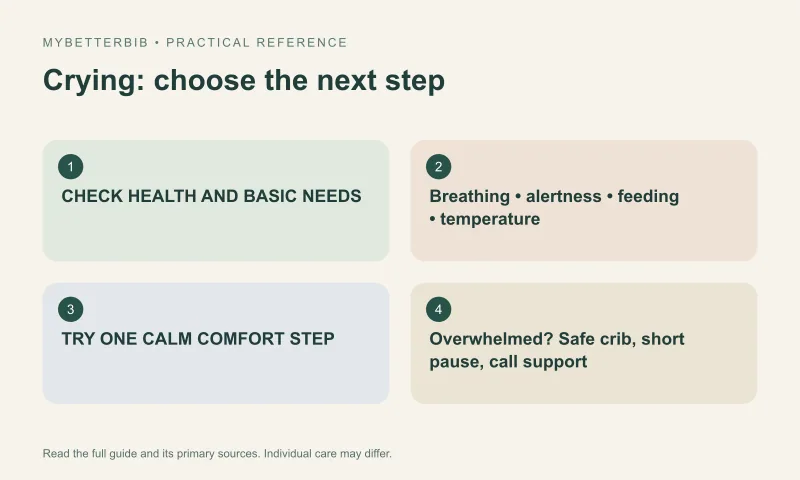
Breathing, alertness, feeding, and hydration matter. Call emergency services for severe breathing difficulty, blue or gray lips, a seizure, or an unresponsive baby.
Tell the clinician about fewer wet diapers, repeated vomiting, a rash, unusual sleepiness, persistent distress, or feeding refusal. Explain when each change began. A baby can need medical attention even without a very high temperature.
For babies older than three months, ask your pediatrician which temperature and symptom thresholds apply to your child, especially if they were born prematurely or have another medical condition.
Make comfort care follow the clinical plan
Continue appropriate feeds and keep the baby comfortably dressed. Do not bundle them heavily to sweat out a fever. Avoid cold baths or alcohol rubs.
Ask before giving medicine to an infant, especially a baby under three months. Medication selection depends on age, weight, medical circumstances, and product concentration. Do not give aspirin, and do not alternate medicines unless a clinician supplies a clear plan. Our baby Tylenol guide explains label and caregiver checks without providing doses.
Have a thermometer plan before the first illness
Read the instructions while the thermometer is new, check how it displays units, and keep it where adults can find it. A rectal temperature is the most accurate measurement for young infants according to the AAP’s fever guidance. Ask the care team to demonstrate the correct technique if you are uncertain. Do not improvise a method from a social-media clip while the baby is distressed.
Tell the clinician whether the reading came from the forehead, ear, armpit, or rectum. Do not silently add or subtract a degree to convert it. Different techniques have different limitations, and the original number plus method is more useful than an adjusted estimate. If your baby is ill-looking, do not delay seeking care because you cannot obtain the measurement you wanted.
Keep a short record that supports the next decision
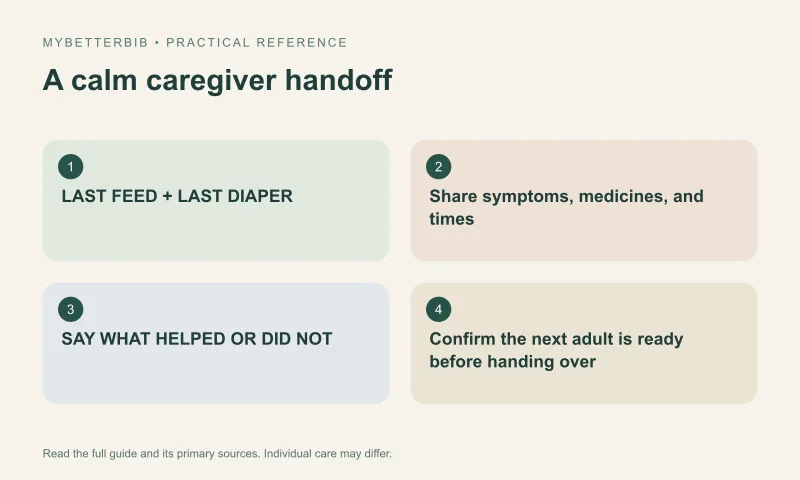
Write the time, temperature, method, feeding observations, wet diapers, and any medicine given. Record the exact medicine and concentration from its label; brand names can cover more than one product. If another adult takes over, hand over that same record rather than starting a new one.
Avoid repeatedly waking a resting baby just to create a detailed temperature chart unless the clinician asks you to monitor that way. The important observations include responsiveness, breathing, comfort, and hydration. A lower temperature after medicine does not establish the cause of illness or cancel a recommendation to have the baby examined.
Comfort measures have limits
Offer the baby’s usual appropriate feeds and follow advice about hydration. Use comfortable clothing rather than deliberately overheating the baby to “sweat it out.” Do not use rubbing alcohol, ice baths, or an adult medicine as a home fever treatment. A child who seems too uncomfortable to feed or is producing fewer wet diapers needs medical advice rather than another cooling trick.
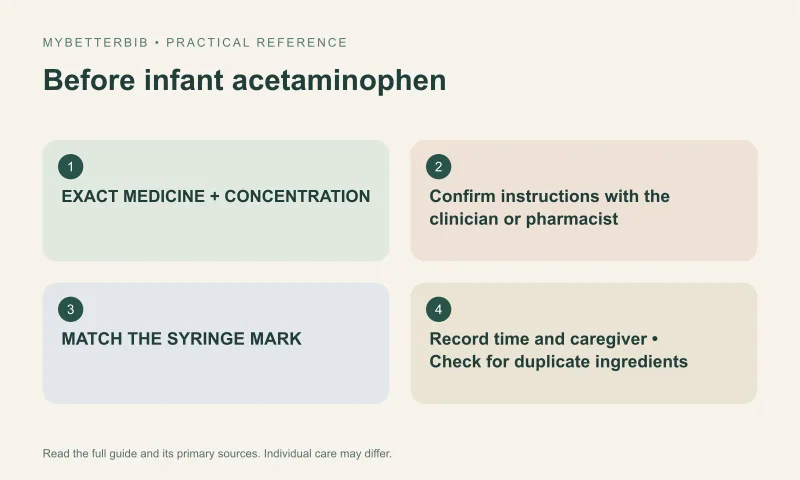
For medication, the clinician or pharmacist needs the baby’s age, current weight, and exact product. Ask whether medicine is appropriate before giving it to a very young infant. Do not combine or alternate fever medicines on your own, and check combination products for duplicate ingredients. Our baby Tylenol label guide explains the information needed for that conversation without offering a dose calculator.
Ask what should happen after the first call
Clarify where to go, how soon the baby should be seen, and what changes should trigger a return call or emergency care. Ask what to do if you cannot obtain transport or reach the recommended service. Keep discharge or visit instructions together with the symptom record.
If the clinician recommends observation at home, confirm the follow-up conditions instead of assuming “watch and wait” means waiting indefinitely. Mention new symptoms even if the thermometer number has not increased. A baby’s change in alertness or breathing can be more urgent than whether the reading is one decimal place higher.
A few more details
Your questions, answered
What temperature needs an immediate call for a young baby?
A baby three months old or younger with a rectal temperature of 100.4°F (38°C) or higher needs immediate medical advice, even if they appear otherwise well.
Should I give fever medicine before calling about a newborn?
Call first and follow the clinician's instructions. Do not delay assessment to see whether medication lowers the temperature.
Should I add a degree to an armpit temperature?
Report the original reading and the measurement method. Do not silently convert it. Ask your clinician whether a more accurate measurement is needed.
Can a lower temperature after medicine rule out a serious illness?
No. A response to fever medicine does not identify the cause of fever or remove the need for an advised assessment, especially in a young infant.
Sources & product information
Follow the original sources for current product details, instructions, and guidance.