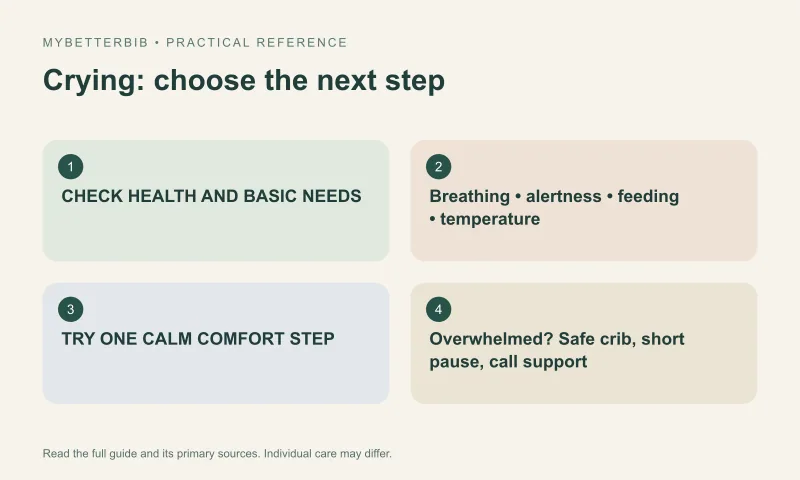
When a baby is crying right now, a short sequence is more useful than twenty competing tips. First check for illness or injury. Then check feeding and physical comfort, try one calm response, and make a safe plan for a break if you need one.
CareA practical guide
Crying baby right now? A practical step-by-step checklist
Use a simple checklist when your baby will not settle: assess urgent symptoms, check comfort and feeding, lower stimulation, and make a safe handoff.
Jump to a section
The quick answer
An inconsolable or unusually distressed baby needs a health check before more soothing attempts. If the baby is otherwise well, use a simple comfort-and-handoff plan. Put the baby safely down whenever you need a brief break; never shake them.
- Describe what changed from the baby’s normal behavior.
- Keep the care plan short enough to follow when tired.
- Share what has already been tried during a handoff.
- Seek help for a new, persistent, painful, or otherwise concerning cry.
1. Pause and assess the baby
Look at breathing, responsiveness, and color before deciding this is an ordinary fussy period. If your baby has serious breathing difficulty, is unresponsive, has a seizure, or looks blue or gray, call emergency services.
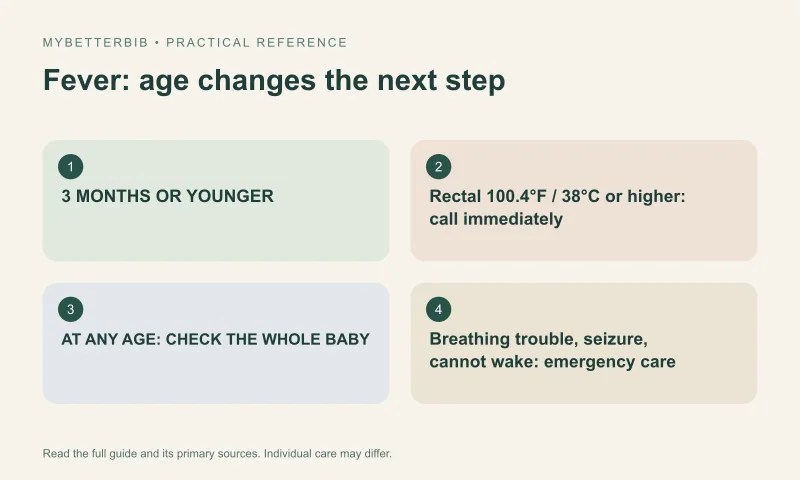
Call your baby's clinician for a markedly unusual cry, ongoing inconsolability, poor feeding, or other signs of illness. For fever in a baby three months or younger, seek immediate clinical advice. This checklist does not replace an assessment when your baby seems unwell.
Say what you can observe when calling: age, when the crying started, temperature and how you measured it, feeds, wet diapers, and any vomiting.
2. Make a quick comfort check
Check the diaper, wet clothing, and how warm the baby feels. Loosen or change an uncomfortable outfit. Inspect fingers and toes if your baby seems to have unexplained pain, and seek urgent help if a hair appears tightly wrapped around one and you cannot easily remove it.
Consider whether feeding is due. Offer a feed according to your baby's cues and routine, without trying to make the baby finish a bottle. If feeding repeatedly triggers distress, stop experimenting with several new products and discuss it with your pediatrician.
Keep the room quiet enough that you can observe the response.
3. Choose one soothing approach
Try secure holding, gentle rhythmic movement, or quiet talking. If the space is busy, reduce the activity before adding music or another toy. A baby who turns away may be asking for a pause from stimulation.
Allow a few minutes for an approach to help, while continuing to monitor the baby. Make one adjustment at a time. This makes it easier to see whether the baby wants a different position, less movement, or a feeding break.
If the baby falls asleep, move them to their appropriate firm, flat sleep surface on their back. Remove bibs and keep loose items out of the sleep space.
4. Use a planned caregiver break
An overwhelmed adult should place the baby safely on their back in an empty crib or bassinet before stepping away briefly. Never shake a baby. The NHS guidance for prolonged crying supports taking a safe break and getting help.
Call someone with a direct request: “Please come hold the baby while I eat and reset.” If no one can come, a calm person on the phone can still help you work through the next step. Return to check the baby promptly.
5. Decide whether the pattern needs follow-up
After the immediate episode, record what happened rather than trying to remember it at the next appointment. Include whether crying happened after feeding, at a similar time on previous days, or alongside a change in diapers or sleep.
Repeated episodes that concern you deserve a conversation with your clinician, even if the baby eventually settles. For the broader explanation of common causes, read why babies cry. No blanket, bottle, bib, or gadget can promise to stop every episode.
Use a handoff that transfers information as well as the baby
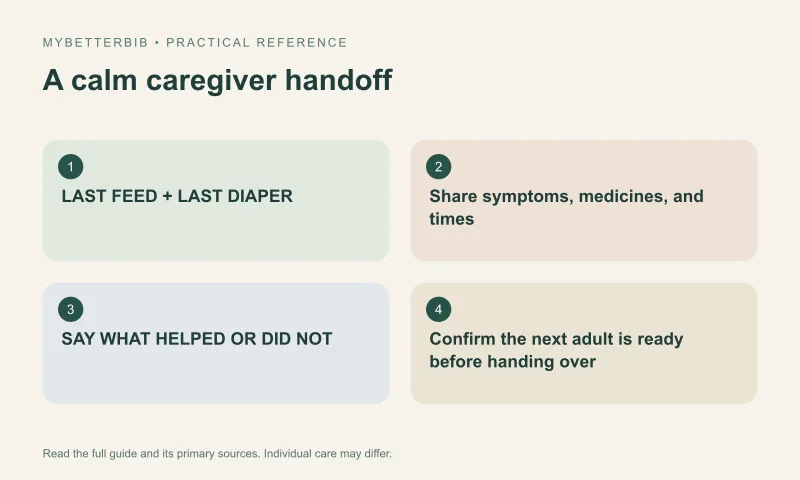
When another adult arrives, give a short factual update: the last feed, the last diaper, any temperature measurement, when the crying began, and what happened when you tried to comfort the baby. Mention medicines or products already given, with their times. This avoids the next person repeating a dose or feeding simply because they have started a new shift.
A handoff can sound like “She fed at seven, had a wet diaper at eight, and has been crying on and off since then. Walking helped briefly. I have not given medicine.” It should take seconds, not become a debate about whose technique works better. The adult taking over should confirm that they are ready before the baby changes arms.
Reduce the number of decisions during a hard evening
Set up a safe place to put the baby down, a place for clean feeding supplies, and the pediatrician’s after-hours number. Keep drinking water and a simple snack available for the caregiver. These measures do not stop crying, but they reduce the chance of becoming trapped in a long episode without basic support.
Decide who can be called before the worst evening happens. A trusted adult might take a walking shift, bring food, or stay on the phone while you regain composure. Avoid putting pressure on a baby to meet a sleep schedule as proof that the plan is working. Some crying continues despite attentive care; the aim is a safe, manageable response while health concerns are assessed.
Separate a feeding observation from a feeding experiment
If crying repeatedly accompanies feeds, record what you see: coughing, pulling away, tiring, dribbling, or refusing. A clinician or feeding professional can use those observations to decide what needs assessment. Changing formula, bottle shape, nipple flow, feeding volume, and positioning all at once makes it harder to understand what changed.
Bottle “anti-colic” marketing does not diagnose the cause of distress. Similarly, a bib can manage milk on clothing without treating feeding pain. Avoid adding cereal, thickening feeds, or using herbal remedies without the baby’s clinician advising the exact plan. Our bottle guide explains how to evaluate ordinary bottle handling separately from a medical feeding concern.
Make the after-hours call easier
Have the baby’s age, current symptoms, feeding pattern, and wet-diaper observations ready. Say clearly if the baby is difficult to console, cries when touched or moved, has a fever, or seems different from their usual self. State when the change began and whether there was a fall, possible injury, or possible medicine exposure. You can call before you have collected every detail.
The AAP’s crying guidance reinforces the rule that a baby must never be shaken. If you worry that you might lose control, place the baby safely in their crib, step away briefly, and seek immediate support. If the baby has emergency symptoms, call emergency services rather than waiting for a routine callback.
A few more details
Your questions, answered
How many soothing techniques should I try at once?
Use one calm approach at a time while monitoring your baby. Too much changing, sound, and movement can make it harder to see what is helping.
Should I wait until the next appointment if crying seems unusual?
No. Call your clinician for a different cry, persistent inconsolability, poor feeding, or signs of illness. Seek emergency care for serious breathing problems or unresponsiveness.
What should I tell the next caregiver during a crying episode?
Share the last feed and diaper, any temperature or other symptoms, when crying started, and every medicine already given. Confirm that the next adult is ready before handing over the baby.
Should I keep buying new bottles for a crying baby?
Repeated bottle changes are not a substitute for assessing feeding discomfort. Record what happens during feeds and discuss persistent concerns with the pediatrician.
Sources & product information
Follow the original sources for current product details, instructions, and guidance.