Baby teeth need care even though they will eventually fall out. Start a gentle brushing routine when the first tooth appears, arrange the first dental visit on time, and use teething comfort measures that do not create another risk. The most useful routine is one your caregivers can repeat every day.
Care3 products, compared
Baby teeth: first-tooth care, brushing, and teething comfort
Build a manageable routine for baby teeth, from the first toothbrush and dental visit to teething comfort, bottle habits, and useful questions to ask.
Jump to a section
The quick answer
Begin brushing when the first tooth appears, using a small soft brush and a rice-grain smear of fluoride toothpaste for children under three. Arrange an early dental visit. Teething does not explain significant fever, diarrhea, or an ill-looking baby.
- Adults need to brush the teeth even when a baby enjoys holding a brush.
- A training teether and a cleaning toothbrush have different jobs.
- Keep bottles and sweet drinks from becoming an all-night exposure.
- Avoid teething jewelry and numbing gels discouraged by the FDA.
A closer look
Products mentioned in this guide
Actual product photos, manufacturer information, and direct links. Comparisons are based on published specifications; these are not hands-on test results.
01
A simple hand-held teether
MushieRainbow Teether
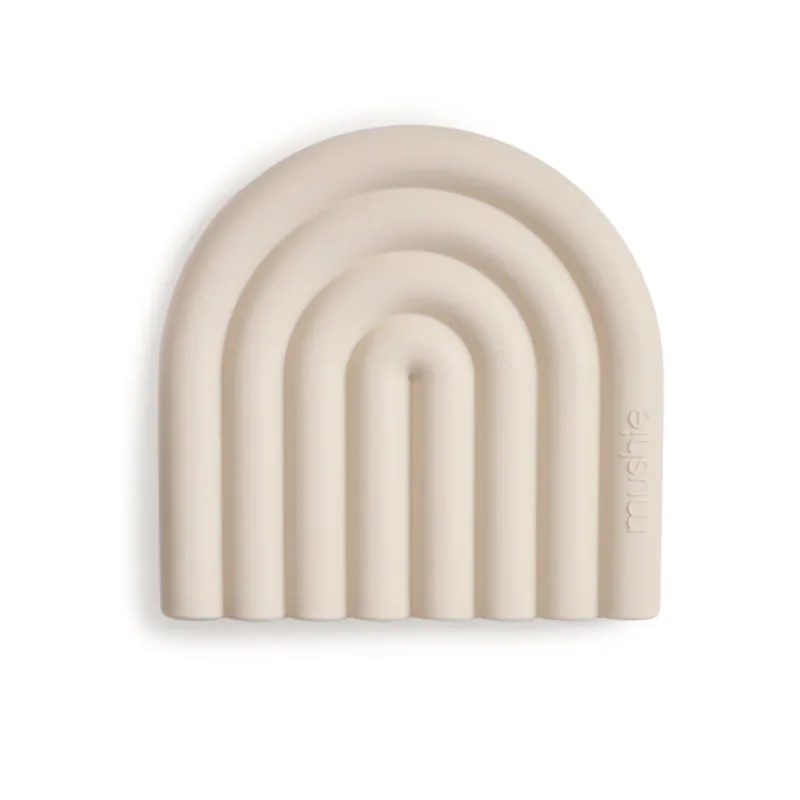
Mushie’s Rainbow Teether is a one-piece silicone shape with ridges for a baby to explore with their gums. Its role is a supervised comfort object, not a medicine or a way to speed tooth eruption. Check the current age guidance, wash it as directed, and inspect it for damage before each use. A teether should not hang from a necklace or be tied around the baby’s neck.
- Food-grade silicone
- One-piece rainbow design
- Raised ridges
- Hand-held shape
Where it fits
- Simple shape to inspect
- No liquid-filled chamber
What to weigh up
- Does not treat fever or illness
- Needs cleaning and regular damage checks
02
A teether with separate cooling inserts
Frida Baby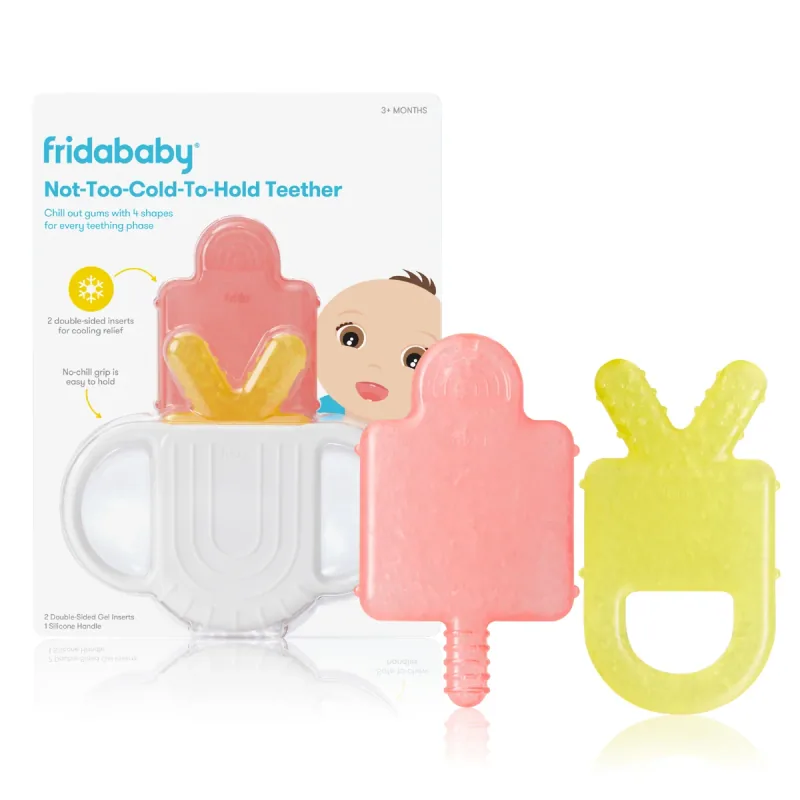
Not-Too-Cold-To-Hold Teether
Frida’s Not-Too-Cold-To-Hold Teether has a room-temperature handle and two double-sided inserts with different textures. Follow the product’s chilling and cleaning instructions rather than assuming every part can be frozen or washed the same way. Its pieces make it a different maintenance choice from a one-piece silicone ring. Teething discomfort can justify a supervised comfort tool, but high fever, diarrhea, or an ill-looking baby should not be dismissed as teething.
- Two double-sided gum-massaging inserts
- Separate handle
- Four textured surfaces
- Manufacturer specifies hand-washing the teether
Where it fits
- Several textures in one set
- Handle separates grip from the cooled insert
What to weigh up
- More parts to clean and track
- Use the stated chilling method; do not improvise
03
Practicing a supervised gum-care routine
Frida Baby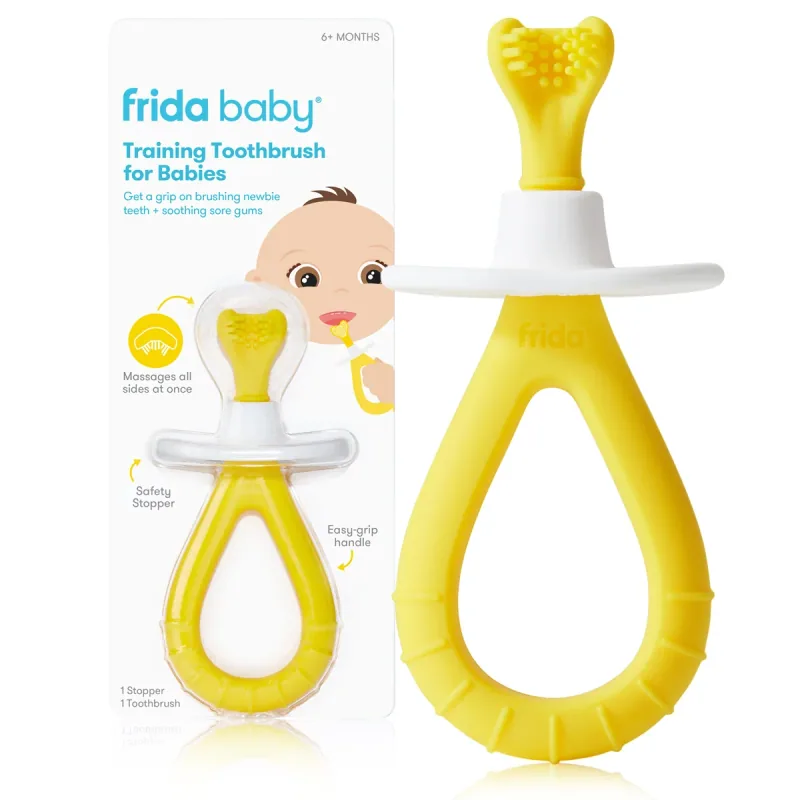
Training Toothbrush for Babies
Frida’s Training Toothbrush for Babies has silicone bristles, a loop handle, and a removable stopper. It is an example of a training tool whose purpose should be distinguished from effective parent-assisted tooth cleaning. Once a tooth appears, ask the dentist which soft-bristled brush and fluoride-toothpaste routine suit your baby. Stay with the baby while the tool is used; a stopper does not make it an unattended toy.
- Silicone training bristles
- Loop handle
- Removable stopper
- Manufacturer introduces this model from 6 months
Where it fits
- Easy-to-identify handle
- Training-tool shape
What to weigh up
- Does not replace adult brushing
- Check developmental fit and inspect for damage
Set up first-tooth brushing
Choose a small, soft toothbrush appropriate for a baby. For children under three, the American Dental Association recommends a smear of fluoride toothpaste about the size of a grain of rice. An adult should brush twice daily, unless the dentist directs otherwise, and keep toothpaste out of the child's independent reach.
Choose a position where you can see the teeth and support your baby. Keep the routine brief and calm. If the baby wants to hold a brush, a second one can be a distraction while the adult does the cleaning.
Do not wait until several teeth arrive to begin. Early routines are easier to organize when there are only a few small surfaces to clean.
Keep teething comfort simple
Offer an appropriate teether according to its instructions and inspect it regularly for damage. Gentle gum massage with a clean finger may help. Avoid items that can break into small pieces.
The FDA warns against teething necklaces and numbing products containing benzocaine or lidocaine. Do not put teething jewelry around a baby's neck or use an adult oral pain product as a shortcut.
If discomfort affects feeding, sleep, or your baby's general behavior, contact your clinician. A product labeled for teething does not automatically make it suitable for your child's age.
Watch changes rather than chasing exact dates
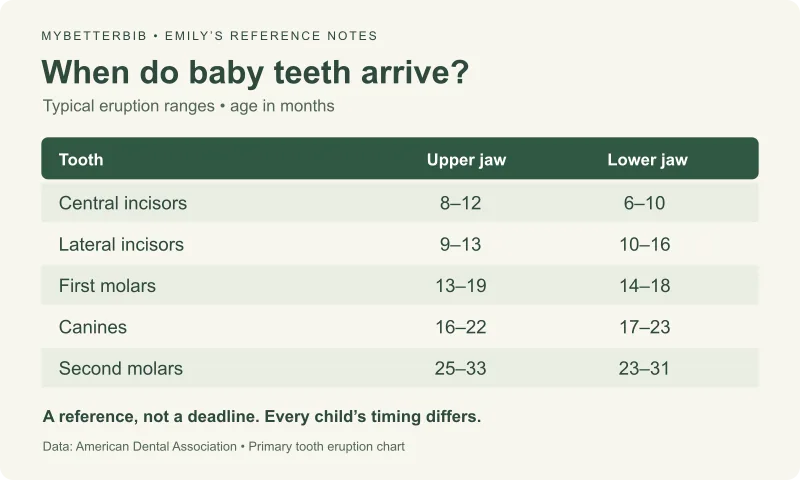
New teeth do not all appear on a single timetable. Our baby teeth chart gives typical ranges, but your dentist should assess unusual timing or appearance.
Seek advice about a chipped tooth, mouth injury, swelling, persistent bleeding, or an area that appears painful. Fever or a baby who seems ill should not simply be labeled teething. Keep a note of when the concern started and what changed in feeding or behavior.
Build a brushing position you can repeat
Choose a position that lets you support the baby and see the tooth surfaces. The exact setup can vary, but stability and visibility matter more than getting through the task quickly. Ask the dentist to demonstrate a method if the baby turns away or clamps their mouth. Keep the routine calm and brief; gradually practicing mouth care is different from forcing a prolonged struggle.
An adult should apply the toothpaste and do the cleaning. Letting the baby explore an appropriate training brush may make the object familiar, but it does not establish that the gumline or back surfaces have been cleaned. Replace a worn brush and follow the dentist’s advice about the size and softness of the bristles.
Choose comfort tools by construction, not promises
Mushie’s Rainbow Teether is a simple one-piece silicone example. Frida’s Not-Too-Cold-To-Hold Teether uses separate textured inserts and a handle. That difference changes cleaning, chilling, and the number of parts to track. Neither design should be tied to the baby’s neck or treated as a medicine.
Use only the manufacturer’s stated chilling method. An object frozen hard can be uncomfortable against gums, and improvised household objects may break or create a choking risk. Inspect teethers for damage and discard them according to their instructions. If a baby is too uncomfortable to feed, obtain medical advice rather than cycling through stronger-sounding teething products.
Think about repeated exposure between brushing sessions
Dental care is also about what remains around the teeth over time. Discuss bedtime feeding and drinks with the dentist, especially if a bottle is regularly left with the child. Do not prop a bottle or put sweetened liquids in it as a settling strategy. Water, milk, and other drinks have age-specific roles; ask the pediatrician and dentist how feeding advice fits together for your child.
The ADA’s healthy-habits guidance explains early brushing and prevention. Bring your actual daily routine to the appointment, including who brushes in the morning and evening, rather than trying to give the answer you think the dentist expects. A realistic plan is easier to maintain.
Prepare for the first dental visit
Bring a list of questions about eruption, toothpaste, fluoride, bottles, and any discoloration or injury you have noticed. Mention family difficulties with dental care or access to fluoridated water if they affect your routine. The first visit is an opportunity to learn and prevent problems, not a test of how many teeth have arrived.
If a tooth chips, changes color after a fall, or the gums become swollen and painful, seek advice rather than waiting for the next milestone. Use our baby teeth chart to identify names and common ranges, while leaving diagnosis and treatment decisions to a dental examination. Keep a dental contact number with the pediatrician’s information so it is available when a question arises outside ordinary office hours.
A few more details
Your questions, answered
Do baby teeth need brushing if they will fall out?
Yes. Begin brushing when the first tooth appears. Primary teeth can develop decay and are part of your child's current oral health.
Are teething necklaces a useful option?
No. The FDA warns that teething jewelry can cause choking or strangulation. Choose an appropriate teether and ask your clinician about persistent pain.
Does chewing a silicone toothbrush count as brushing?
No. A training brush can help a baby get used to mouth care, but an adult needs to clean the teeth with an appropriate brush and fluoride toothpaste.
Can teething cause a high fever?
Do not assume a significant fever or an ill-looking baby is teething. Use the baby’s age and symptoms to seek medical advice promptly.
Sources & product information
Follow the original sources for current product details, instructions, and guidance.