“Baby aspirin” is a misleading everyday name for a low-dose aspirin product, usually discussed in adult care. It is not a medicine to give a baby for fever, teething, or pain. If you arrived here while looking for infant medicine, pause and check the active ingredient before giving anything.
CareA practical guide
Baby aspirin is not for babies: what the name means
Baby aspirin usually means low-dose aspirin for adults. Learn why it is not an infant fever medicine and what to ask a clinician about exposure.
Jump to a section
The quick answer
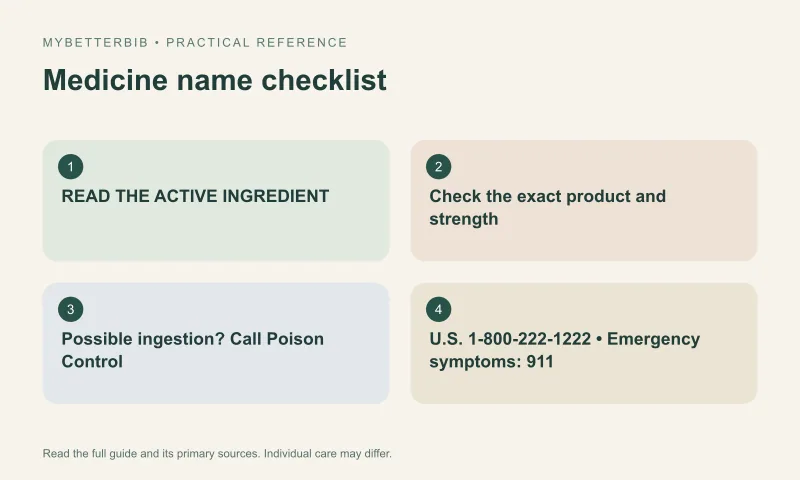
“Baby aspirin” usually means low-dose aspirin used in adult care, not a medicine for babies. Do not give it to an infant unless a specialist specifically prescribes it. For a possible ingestion, call U.S. Poison Control at 1-800-222-1222 immediately.
- Read the active ingredient, not the nickname on a shopping list.
- A small tablet is not evidence of an infant-appropriate medicine.
- Call Poison Control after a possible ingestion; do not wait for symptoms.
- Keep the original package available when asking for help.
Why the name causes confusion
Medication nicknames can outlast the reason they began. A small tablet or the word baby in a search result does not tell you which patient it is appropriate for. The actual drug name on the package is aspirin, also called acetylsalicylic acid.
Adult low-dose aspirin may be prescribed for a specific medical reason. It is not suitable for everyone, and an adult should not start or stop a prescribed course based on a baby-care article. Questions about pregnancy, cardiovascular prevention, bleeding risks, or interactions belong with the person's own clinician or pharmacist.
Why infants should not receive aspirin at home
Aspirin and related salicylates have been linked to Reye's syndrome, a rare but serious condition in young people. The NHS aspirin guidance says children aged 15 and under should not receive it except under medical direction. Specialists sometimes prescribe aspirin for particular childhood conditions; that is an individualized treatment plan, not permission to use household aspirin.
Do not substitute a fractional adult tablet for an infant medicine. Splitting a tablet does not solve the question of whether its ingredient is appropriate.
If your baby has a fever or discomfort
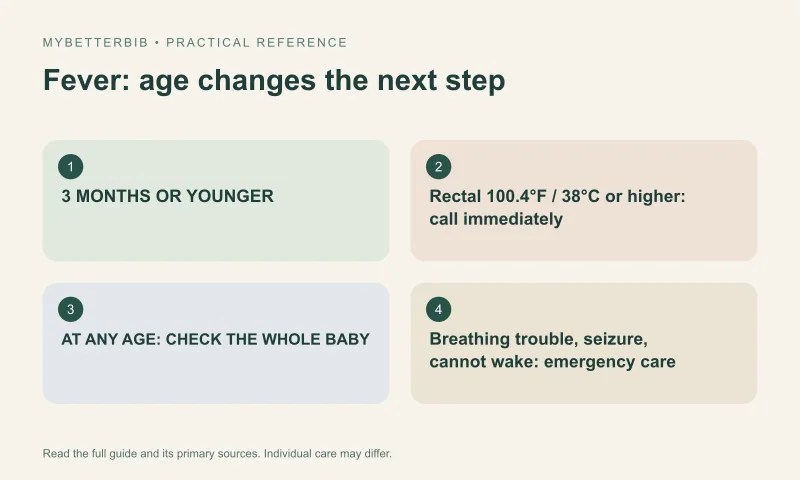
Start with the baby's age, temperature, feeding, and overall behavior rather than reaching automatically for medicine. A fever in a very young infant needs prompt clinical assessment. Call your pediatrician immediately for a baby three months or younger with a rectal temperature of 100.4°F (38°C) or higher.
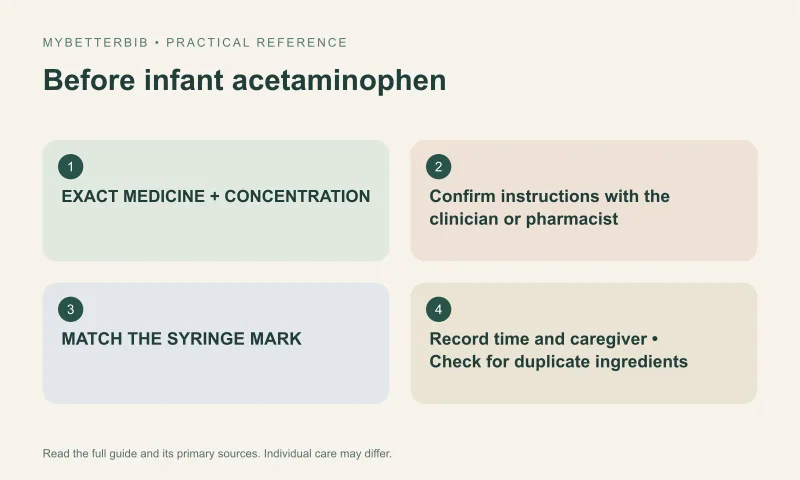
For other situations, ask your clinician which medicine is suitable and obtain instructions based on the child's current weight and the exact product concentration. Our baby fever guide explains what information to have ready when you call. This page does not provide medication doses.
Read the label as three separate pieces of information
The medicine name, strength, and dosage form answer different questions. “Aspirin” identifies the active ingredient. A number followed by milligrams identifies the amount in a tablet. Words such as chewable or enteric-coated describe the formulation. None of these facts independently tells you that the medicine is appropriate for a baby. A caregiver searching for a tiny tablet can easily choose an adult product if they rely on the informal name alone.
Make a medication handoff explicit. Instead of “the little orange tablet,” use the exact drug name from the clinician’s instructions and show the package to the next adult. Keep medicines in their own containers so that child-resistant packaging and ingredient information travel together. Do not transfer tablets into a snack bag for a family trip.
What to say during an exposure call
Describe the event in plain terms: “My child may have swallowed aspirin. The package says this strength. I found the bottle at this time, and this many tablets may be missing.” Estimates are useful when clearly identified as estimates. Have the child’s current weight, age, symptoms, and other medications ready, but do not delay the call to find a perfect answer to every question.
The specialist may ask you to read more of the label or check for combination ingredients. Follow that advice instead of relying on a search result for a different aspirin product. Poison Control’s first-aid guidance specifically says not to induce vomiting. If a child collapses, has a seizure, has trouble breathing, or cannot be awakened, call emergency services.
When aspirin actually appears on a child’s care plan
Some childhood conditions are managed by specialists using medicines that should not be given casually at home. If aspirin has been prescribed, the written plan should name the exact product, reason for treatment, administration instructions, and whom to contact about illness or a missed dose. That supervised exception does not make an over-the-counter low-dose aspirin an acceptable substitute for a baby’s pain or fever medicine.
Ask the prescribing team about the circumstances that should prompt a call. Do not change the medicine based on a general article, and do not share the prescription with another child. The important distinction is an individualized medical plan with follow-up, rather than the size of the tablet or the marketing name.
Keep a safer family medicine record
A single shared log can include medicine name, the clinician’s instructions, date and time given, and the caregiver’s initials. Store it beside the adult-controlled medicine area, not inside the child’s reach. If a grandparent uses daily aspirin, include purses, visitor bags, bedside drawers, and pill organizers in your storage check. Child-resistant does not mean childproof, and an unfamiliar household is a good reason to check where medications are kept.
A few more details
Your questions, answered
Does baby aspirin treat a baby's fever?
No. The phrase commonly refers to adult low-dose aspirin. Do not give aspirin to an infant unless a specialist has explicitly prescribed it.
What if my baby swallowed an aspirin tablet?
Contact Poison Control immediately at 1-800-222-1222 in the United States. For breathing trouble, seizures, or unresponsiveness, call emergency services.
Where should visitors keep their medicines?
Keep medicines, pill organizers, and visitor bags out of children’s reach and sight in secure storage. Ask guests to avoid leaving medicines on bedsides, low tables, or open bags.
Should I make my child vomit after swallowing aspirin?
No. Call Poison Control immediately and follow its instructions. Call emergency services for collapse, seizures, breathing trouble, or inability to wake the child.
Sources & product information
Follow the original sources for current product details, instructions, and guidance.