A bib is worn by the baby to catch dribbles or food on the area it covers. A burp cloth rests on the adult's shoulder or lap during feeding and burping. Many families use both because the mess changes location when the baby moves from a feed to a cuddle.
Feeding4 products, compared
Burp cloth vs. bib: what each protects, and when to use both
Compare a burp cloth and bib by coverage, absorbency, and everyday use. See what protects baby, what protects your shoulder, and where convertible designs fit.
Jump to a section
The quick answer
A bib primarily protects the baby’s clothing; a burp cloth primarily protects the adult’s shoulder or lap. Absorbent fabrics take up liquid, while a silicone pocket holds it. Many families use both because the spill location changes between feeding, burping, and meals.
- Choose by who and what needs coverage.
- A pocket and an absorbent cloth manage liquid differently.
- Hybrid products need evaluation in each configuration.
- Neither a bib nor a burp cloth prevents spit-up.
At a glance
The details that make a difference when you’re deciding.
| Design | Primary coverage | Liquid behavior |
|---|---|---|
| Absorbent baby bib | Baby’s front | Fabric absorbs until wet or saturated |
| Burp cloth | Adult’s shoulder or lap | Fabric absorbs where it is placed |
| Silicone pocket bib | Baby’s front during meals | Pocket holds liquid and food |
| Textile bib/cloth hybrid | Changes with configuration | Absorption plus draped or fastened coverage |
A closer look
Products mentioned in this guide
Actual product photos, manufacturer information, and direct links. Comparisons are based on published specifications; these are not hands-on test results.
01organic cotton muslin burpy bibs 2 pack02Muslin Bib033 Pack Premium Burp Cloths - Genevieve04Silicone Baby Bib
01
Comparing a bib-and-burp-cloth hybrid
HALO / aden + anais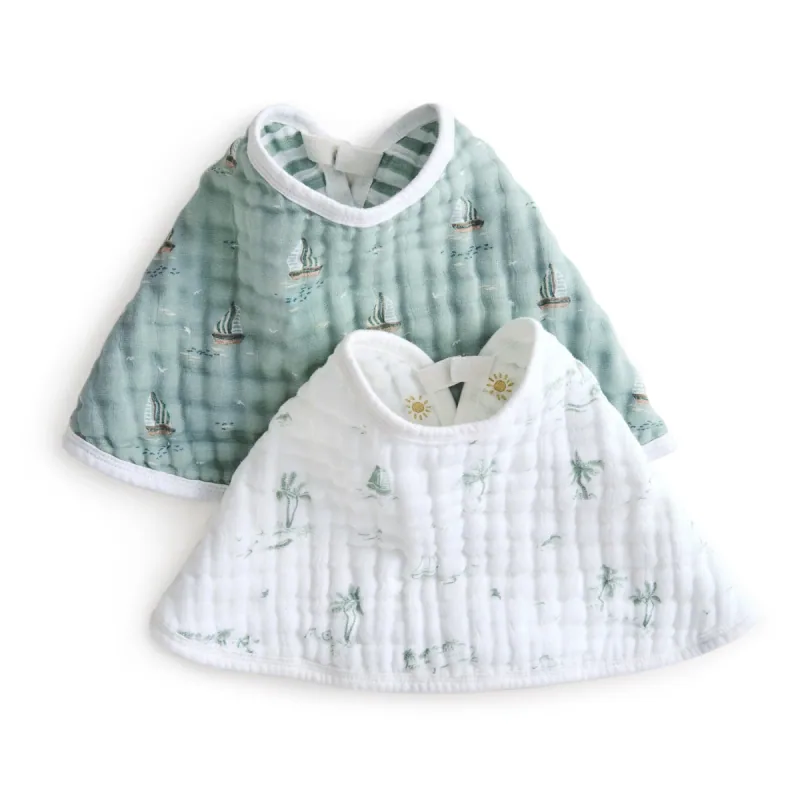
organic cotton muslin burpy bibs 2 pack
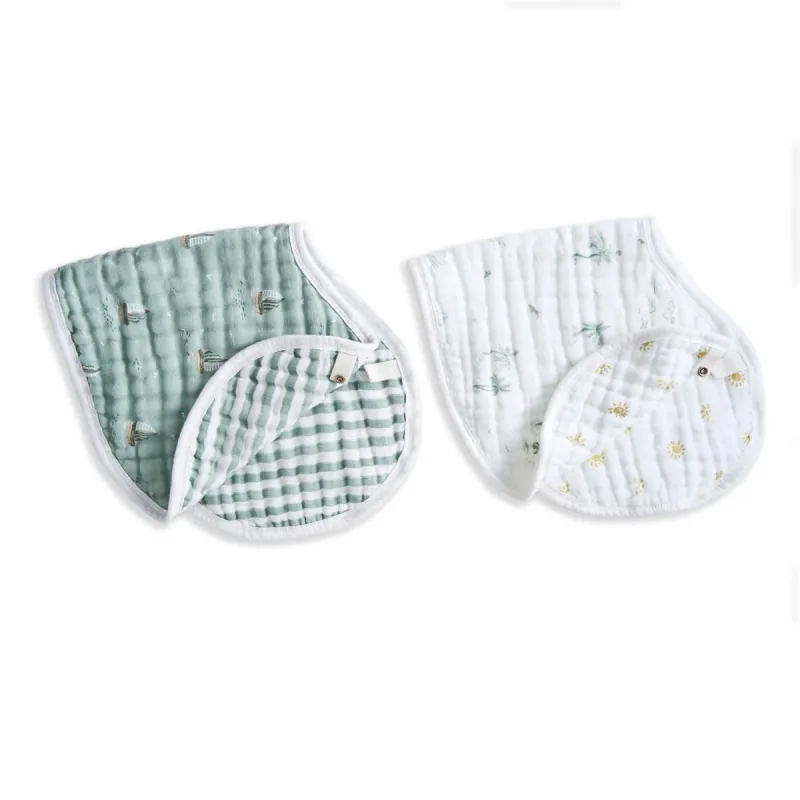
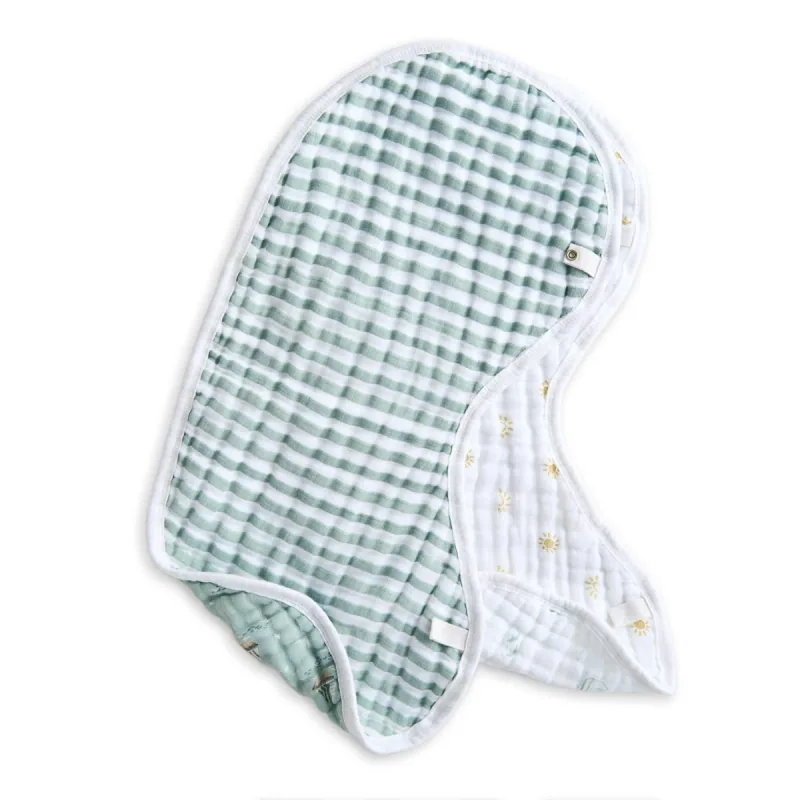
The aden + anais Organic Cotton Muslin Burpy Bib is a useful real-world example of a product that performs two cleanup jobs. It can be draped over an adult’s shoulder as a cloth or fastened as a bib on the baby. Its shaped textile design is different from a liquid-holding silicone pocket. Compare how the fastening changes the covered area and how often the cloth needs replacing; neither mode prevents spit-up itself.
- 100% organic cotton muslin
- Two-in-one bib and burp-cloth design
- Shaped coverage
- Sailing Seas print shown
Where it fits
- Two uses in one textile
- Wider outline than some bandana bibs
What to weigh up
- Needs repositioning when draped on an adult
- No molded absorbent shelf
02
Soft dribble coverage during awake time
Mushie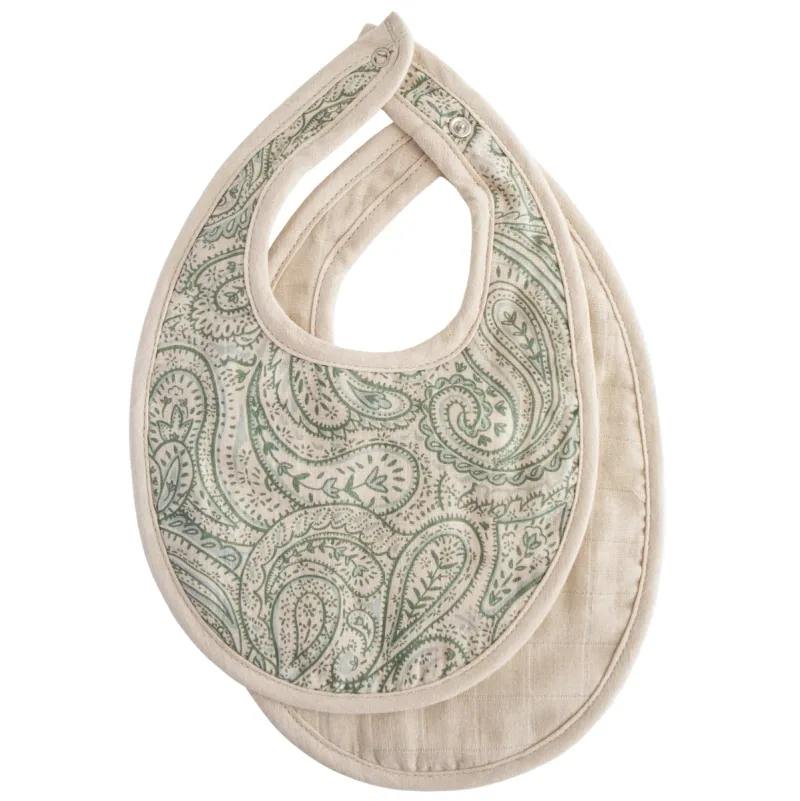
Muslin Bib
This Mushie bib uses layers of muslin and two snap positions, so its main role is catching moisture on the baby’s front. It belongs in a different comparison from a silicone food bib: the fabric absorbs liquid while a molded pocket holds it. The small pack is useful for trying the fit before committing to a large drawer of matching bibs. Always remove it before sleep and check the neckline on the individual baby.
- Organic cotton muslin
- Two snap positions
- Two bibs per set
- Multi-layer fabric
Where it fits
- Adjustable closure
- Soft absorbent construction
What to weigh up
- Protects the baby’s front rather than the parent’s shoulder
- Needs laundering after wet use
03
Long shoulder coverage with a layered cloth
Copper Pearl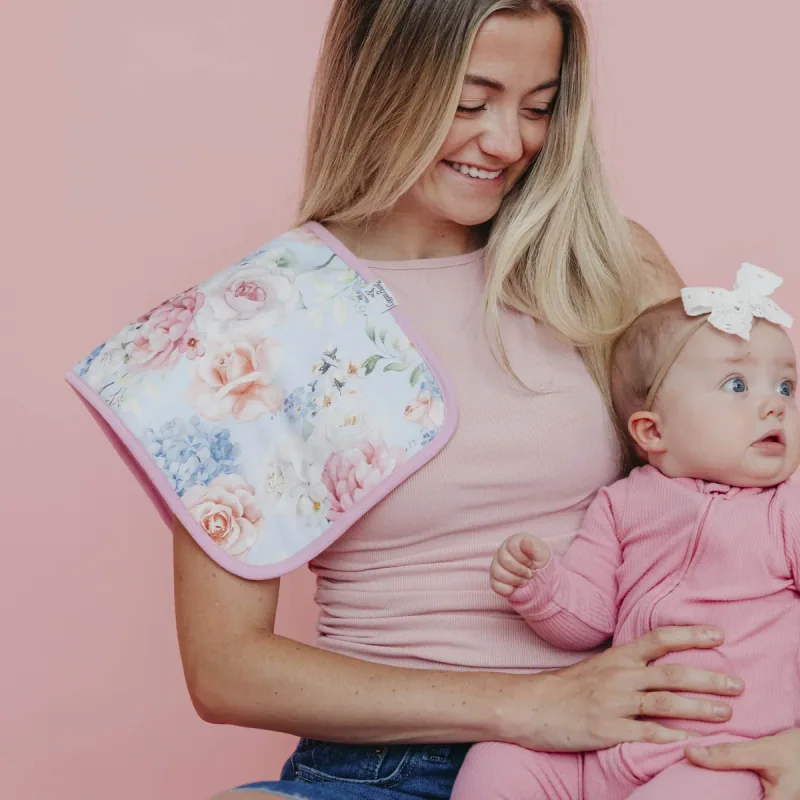
3 Pack Premium Burp Cloths - Genevieve
Copper Pearl’s Genevieve burp cloths pair cotton outer surfaces with a fleece middle layer. The 21-by-10-inch size gives a concrete measurement to compare with your shoulder, forearm, or lap. The three-pack may suit a small rotation, though the right quantity depends on your actual changes and drying time. This is a fabric cloth that needs positioning; the manufacturer’s absorbency language should not be read as a guarantee that every spill will stay off clothing.
- Three cloths in this set
- 21 × 10 inches
- Cotton front and back
- Fleece middle layer
Where it fits
- Documented dimensions
- Layered absorbent construction
What to weigh up
- Can shift while the baby moves
- Check care guidance for the layered fabric
04
Catching food during supervised meals
Mushie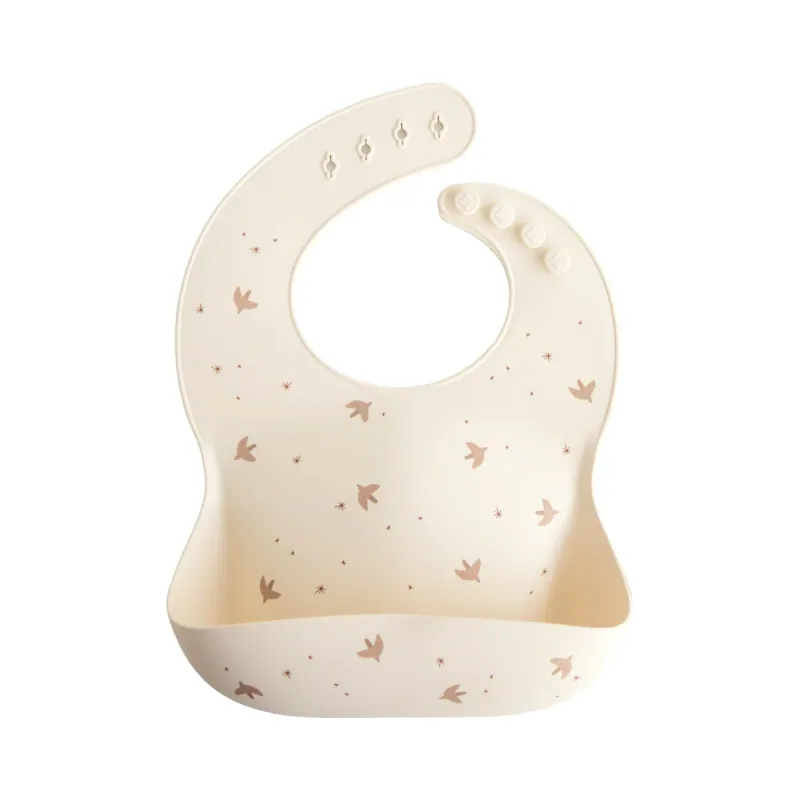
Silicone Baby Bib
Mushie’s silicone bib has a structured front pocket and an adjustable neck fastening. It is a meal-cleanup option once its fit and age guidance suit your child. Unlike a muslin bib, silicone does not soak up liquid; spills remain in the pocket until you empty and clean it. That makes the distinction especially relevant for families comparing food bibs with spit-up cloths. Check how the pocket sits against the high-chair tray before ordering several.
- Silicone construction
- Deep front pocket
- Adjustable neck strap
- Multiple colors and patterns
Where it fits
- Wipe-clean surface
- Pocket for food pieces
What to weigh up
- Not an absorbent spit-up cloth
- Pocket contents need emptying before removal
Use the item that fits the moment
During a feed, a correctly fitted bib may help with milk around the neckline. Before lifting the baby to your shoulder, place a burp cloth across the area you want to protect.
Keep a clean replacement nearby and change fabric when wet or soiled. Do not stack several bibs or tighten a neckline to solve a coverage problem. For positioning details, read how to use a burp cloth.
Remove the bib and clear away cloths before sleep, following Canadian Paediatric Society guidance.
Understand where convertible designs fit
Some existing products are designed to work as both a shoulder cloth and baby bib. For example, the aden + anais burpy bib uses a shaped cotton-muslin cloth with a snap for its bib configuration. Follow each product's own fitting instructions rather than improvising a conversion.
mybetterbib is a separate prelaunch concept being developed around wraparound coverage and a soft absorbent shelf, with a parent-shoulder configuration. Its proposed advantage is addressing where spit-up travels in both uses. Final materials, fit, washing instructions, and performance remain to be established; see the product FAQ.
Choose a small setup that works today
For a simple starter kit, try a suitable absorbent bib and a shoulder cloth, then observe which areas still need coverage. Compare how easily each washes, dries, and returns to use.
A cleanup product is not a reflux treatment. The AAP's spit-up guidance can help you identify questions for your pediatrician if feeding is uncomfortable or vomiting seems concerning.
The right combination follows your actual routine: comfortable coverage for the baby, prepared coverage for the adult, and clean replacements without an overflowing drawer.
Compare the same spill in three positions
During a bottle feed, a small dribble may travel from the mouth onto the baby’s chest. An absorbent baby-worn bib sits near that route. During an over-the-shoulder burp, spit-up can land beyond the baby’s back onto the adult’s shoulder or shirt. A draped burp cloth is positioned for the adult’s coverage. During a supervised meal, food pieces may fall straight toward the lap or tray; a pocket bib addresses that path.
Changing the position changes the appropriate tool. A perfectly fitted front bib can still leave the adult’s shoulder uncovered, while a large shoulder cloth does not stay attached to the baby during a meal. Start the comparison with those physical locations instead of asking which category is universally better.
Use four real products to see the distinctions
Mushie’s Muslin Bib is a fastened absorbent front layer. Copper Pearl’s Genevieve Burp Cloth is a 21-by-10-inch layered textile for draping. Mushie’s Silicone Bib has a structured pocket rather than absorbent fabric. Their different outlines are visible in the manufacturer photographs below.
The aden + anais Organic Burpy Bib is a hybrid that can be draped as a burp cloth or fastened as a bib. It demonstrates that two-use products already exist. Evaluate how much of each surface it covers, how the fastening works, and how quickly you can switch without putting a wet area against the baby.
Separate catching from absorbing
A silicone pocket can catch liquid yet still contain free-moving liquid when the bib is lifted. A fabric cloth can absorb liquid yet become saturated or allow runoff at an edge. These are different mechanisms, so the word “catch” in two product descriptions may not mean the same behavior.
Consider the removal step as well as the wearing step. Empty a liquid-holding pocket carefully. Fold a wet cloth so the saturated area stays contained, and wash it promptly according to the label. Neither design should be assumed to keep all clothing dry under every spill size or angle.
Build the smallest combination that covers your routine
If most mess is a small front dribble, begin with a few comfortable cloth bibs. If the adult’s shoulder takes most of it, prioritize burp cloths. If both happen, a small supply of each may be more useful than a large set of one category. Add a suitable food bib when the child is ready for the feeding stage and the product fits.
Try the combination through several feeds and one complete laundry cycle. Notice which pieces stay clean and which run out. The answer can change as the baby grows, feeding positions change, or another caregiver takes over. Reassess before expanding the collection.
Place MyBetterBib in the comparison honestly
MyBetterBib is a product concept being developed for use with both baby and parent, with an absorbent shelf intended to manage spit-up around the relevant coverage area. That intended function should be distinguished from demonstrated performance of a finished, tested product. Final materials, fit, care instructions, and performance still need validation.
The useful question for any future design is specific: how does it cover the spill route in each mode, absorb the liquid, and allow removal and washing? Visit the MyBetterBib homepage for the concept and Kickstarter updates, while using the available products here for current shopping comparisons.
A few more details
Your questions, answered
Do I need both bibs and burp cloths?
Many families find both useful because they protect different areas. Observe whether the mess lands mainly on the baby, the adult, or both.
Can a burp cloth become a bib?
Only use it that way if the product is designed for conversion and follow its instructions. Do not add improvised clips, ties, or fasteners.
Can one hybrid product replace every bib and burp cloth?
Possibly for some routines, but assess each configuration separately. A draped shoulder mode and a fastened baby mode may cover different areas and become wet in different places.
Does a pocket bib absorb spit-up?
A silicone pocket holds liquid rather than soaking it into fabric. An absorbent textile works differently and must be changed when wet.
Sources & product information
Follow the original sources for current product details, instructions, and guidance.