Estimate your burp cloth supply by multiplying daily clean-cloth use by the days between completed laundry loads, then adding a few purposeful backups. If you expect three to four cloths a day and finish laundry every two days, a starting set of roughly eight to twelve follows from that plan. It is a planning estimate, not a requirement for every baby.
Feeding2 products, compared
How many burp cloths do I need? A simple laundry-based estimate
Estimate your burp cloth supply from daily use, laundry turnaround, and travel backups. Use clear examples and adjust a starter set without overbuying.

Jump to a section
The quick answer
Estimate burp cloths as daily clean changes multiplied by days until laundry is washed and fully dry, then add dedicated outing or caregiver supplies and a small reserve. Start with observed use rather than a universal registry number.
- Use completed laundry time, not the time a wash cycle starts.
- Count cloths that stay elsewhere separately.
- Start with a small trial set before buying identical multipacks.
- Recalculate when feeding, daycare, or laundry routines change.
At a glance
The details that make a difference when you’re deciding.
| Daily changes | Days until fully dry | Basic home cycle |
|---|---|---|
| 3 | 1 | 3 cloths before travel/reserve |
| 4 | 2 | 8 cloths before travel/reserve |
| 5 | 2 | 10 cloths before travel/reserve |
| Any amount | Your observed turnaround | Add dedicated location supplies separately |
A closer look
Products mentioned in this guide
Actual product photos, manufacturer information, and direct links. Comparisons are based on published specifications; these are not hands-on test results.
01
Long shoulder coverage with a layered cloth
Copper Pearl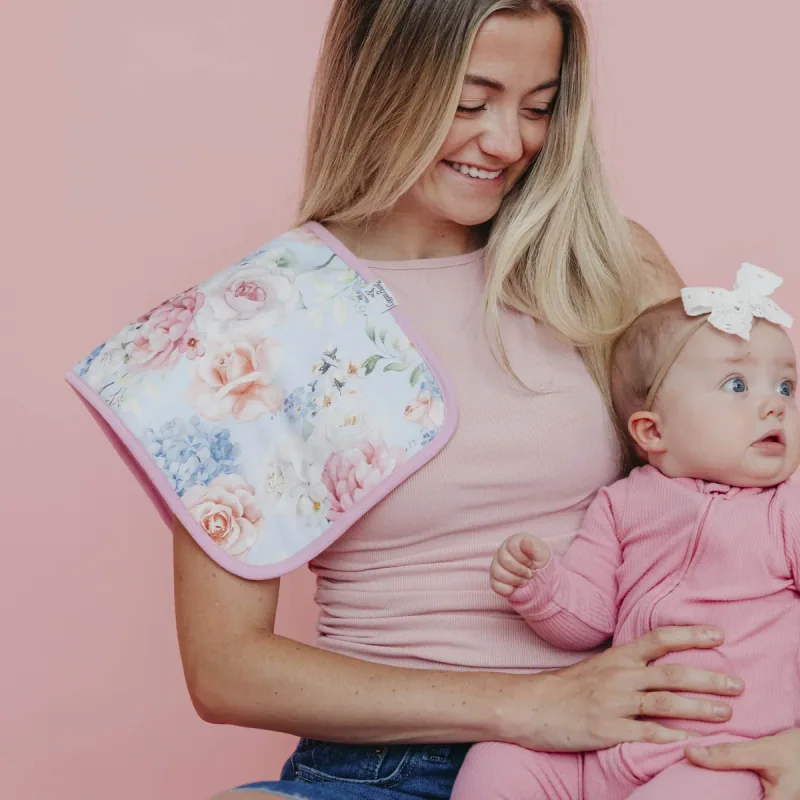
3 Pack Premium Burp Cloths - Genevieve
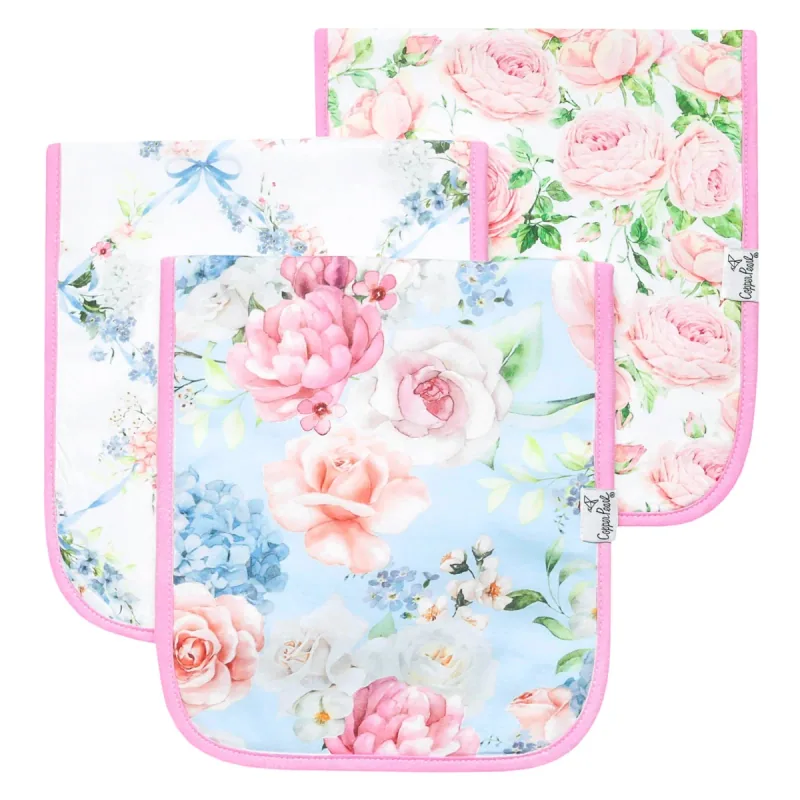
Copper Pearl’s Genevieve burp cloths pair cotton outer surfaces with a fleece middle layer. The 21-by-10-inch size gives a concrete measurement to compare with your shoulder, forearm, or lap. The three-pack may suit a small rotation, though the right quantity depends on your actual changes and drying time. This is a fabric cloth that needs positioning; the manufacturer’s absorbency language should not be read as a guarantee that every spill will stay off clothing.
- Three cloths in this set
- 21 × 10 inches
- Cotton front and back
- Fleece middle layer
Where it fits
- Documented dimensions
- Layered absorbent construction
What to weigh up
- Can shift while the baby moves
- Check care guidance for the layered fabric
02
An absorbent cloth for a parent’s shoulder
Mushie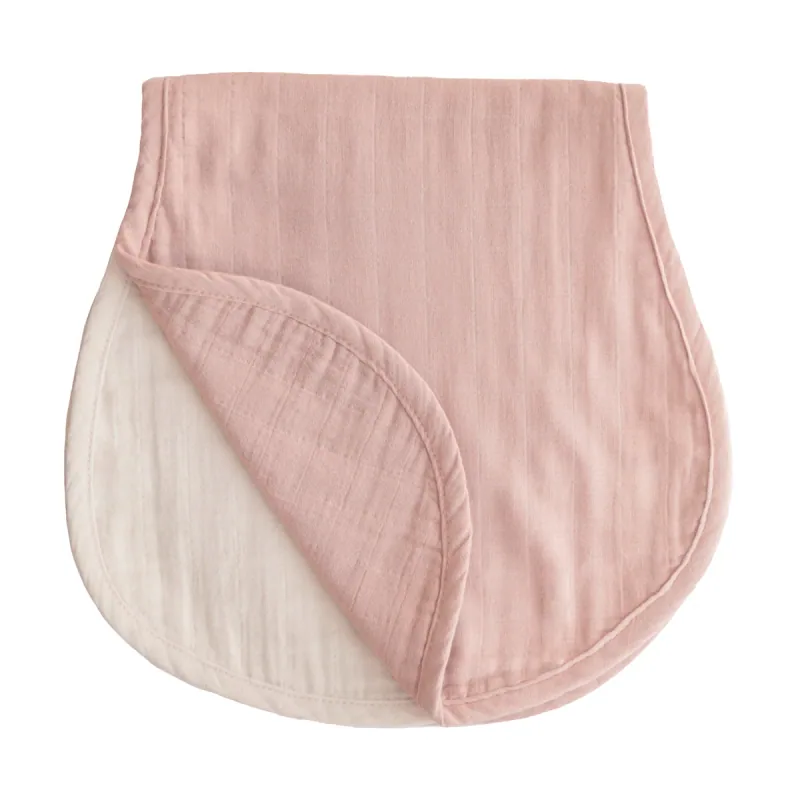
Organic Cotton Muslin Burp Cloth 2-Pack
Mushie’s curved muslin cloth is a straightforward option for milk cleanup when you want a washable fabric surface across your shoulder. The two-pack makes it possible to keep one in use and another in the wash. Its value is the coverage and absorbent construction, rather than a molded pocket. Compare the actual outline with where spit-up lands when you hold your baby; the cloth still needs positioning and replacement when wet.
- 100% organic cotton
- Pre-washed muslin
- Pack includes two cloths
- Rounded, extended shoulder shape
Where it fits
- Washable fabric for repeated feeds
- Two cloths support a small rotation
What to weigh up
- No wearable fastening for the parent
- Absorbency is finite; replace when damp
Use a simple formula
Cloths needed = daily clean cloths × days until laundry is clean and dry + separate backups.
Count the full turnaround, including drying and putting items away. If you wash every evening but cloths remain damp until the following afternoon, that is different from having a fresh set ready before morning.
Include backups deliberately. One in a diaper bag and one at a grandparent's home are actual needs. A drawer full of unspecified extras may simply hide how many you already own.
If the baby has not arrived, buy in stages
Choose a modest starter set, then keep a note of what it contains. Check gifts and hand-me-downs before ordering another pack. You may already have several suitable cloths in different drawers.
Try one or two shapes before committing to a large identical bundle. A set that fits your shoulder and laundry routine is more useful than a larger set you avoid reaching for.
Our burp cloth comparison guide covers dimensions, layers, and drying considerations. Factor in those practical differences before treating every cloth as an identical unit in the calculation.
Adjust storage before buying more
Sometimes the shortage is that clean cloths are upstairs while feeds happen downstairs. Move a few into the place they are actually used and give the bag its own small supply.
Keep clean and used items separate, and reset the bag after outings. Launder according to the care label and allow full drying before storage; the AAP's clothing-care guidance emphasizes practical washability.
Recalculate when routines change, especially with daycare or longer intervals between loads. Start with the number your household can explain, observe actual use, and expand only when the clean rotation repeatedly falls short.
Work through three household examples
A household using three clean cloths daily with laundry ready every day needs three in the basic active cycle. Adding two travel cloths and a modest reserve creates a different total from a household where every cloth remains beside one chair. The travel pieces should be counted only once, and reset after each outing.
A household using five clean cloths a day with laundry fully dry every two days needs ten in that basic cycle. If a grandparent keeps two at their home, those are separate. A third household may wash daily but air-dry slowly; if cloths are not usable until the following afternoon, “daily laundry” does not mean a one-day turnaround.
These are planning examples, not recommended minimums for all babies. The purpose is to make the assumptions visible. Your observation of actual use can move the number up or down without suggesting that the baby’s feeding is normal or abnormal based on laundry count alone.
Translate the estimate into actual packs
Mushie’s Organic Cotton Muslin Burp Cloths come in a two-pack. Copper Pearl’s Genevieve Burp Cloths come in a three-pack. If you estimate a need for eight suitable cloths, four two-packs or three three-packs would leave different purchase totals and reserves. Compare the unit cost only after checking that the shape and care routine work.
You do not need to make every cloth identical. A mixed rotation can be sensible if one shape works on the shoulder and another is convenient in a bag. Avoid counting a large blanket, a tiny washcloth, and a broad burp cloth as equivalent just because all are washable textiles.
Use a short tally instead of guessing from memory
For several typical days, put a small mark on a note whenever a fresh cloth leaves the clean stack. Record when laundry returns dry, and list where dedicated cloths are kept. The tally should take seconds. You do not need to count each spit-up or measure its volume for a shopping decision.
Look for the average pattern and the reason for the worst shortage. A bag forgotten in the car is an organization issue; unusually slow drying is a turnaround issue; repeated saturation may be a construction or change-frequency issue. Buying more can help some of those problems, but understanding the cause makes the purchase more deliberate.
Add a reserve for a specific interruption
Think about one plausible delay: an overnight outing, a missed wash, or a caregiver handoff. A reserve should cover that event without becoming a second unused collection. Keep it in the same clean storage system so it remains easy to locate and inspect.
If the reserve is constantly being used, the normal estimate is probably too low or the laundry routine has changed. If it remains untouched for months while the baby outgrows the stage, reduce future purchases. A practical rotation is allowed to evolve.
Reassess before buying the next size or matching set
Review the count when daycare begins, another adult changes feeding shifts, or the baby’s mess pattern changes. Keep cloths that are useful and in good condition; remove those with rough damage or persistent care problems. For the next purchase, use the notes from the first set rather than starting again with a generic checklist.
Our burp-cloth comparison explains shape and layers, and the washing guide covers care-label decisions. Quantity and construction work together: a number is only useful when the cloths it counts actually fit your routine.
A few more details
Your questions, answered
Is ten burp cloths enough?
It can be a workable starting quantity if your use is around four per day, laundry is ready every two days, and you keep two backups. Adjust to your actual routine.
Do I need one burp cloth for every feed?
Not necessarily. Count clean cloths actually used over several days; feeding count alone does not describe your replacement needs.
How many should I buy before I know the baby’s routine?
Start with a small practical trial supply, then count actual clean changes and laundry turnaround. There is no single correct number for every household.
Should I count a burp cloth kept at daycare in my home total?
Count it as a separate location supply unless it reliably returns clean when needed. A cloth elsewhere cannot cover a home laundry shortage.
Sources & product information
Follow the original sources for current product details, instructions, and guidance.