Wash baby bibs according to the complete item's care label, including any backing, coating, fastener, or structured part. A cotton face does not mean every layer tolerates the same treatment. Separate fabric bibs from wipe-clean designs and use a routine that leaves each item clean, fully dry, and ready to inspect.
Feeding4 products, compared
How to wash baby bibs: a guide by material
Wash baby bibs according to their fabric, backing, and care label. Learn a practical routine for stains, closures, drying, storage, and silicone bibs.
Jump to a section
The quick answer
Wash baby bibs according to their exact material and care label. Remove residue, separate incompatible fabrics or silicone, use the recommended wash method, and dry fully before storage. Avoid assuming every baby bib can tolerate bleach, high heat, or a dishwasher.
- Cotton muslin, fleece-backed cloth, silicone, and coated fabric need different checks.
- Close fasteners when the label advises it and protect them from snagging.
- A bib that is still damp is not ready for closed storage.
- Do not use a strong chemical or heat method simply because the item is for a baby.
At a glance
The details that make a difference when you’re deciding.
| Construction | Before cleaning | Drying check |
|---|---|---|
| Mushie Muslin Bib | Cold wash; maximum 30 degrees Celsius | Lay flat; manufacturer says no tumble dryer |
| Cotton with fleece backing | Check mixed-material instructions | Avoid assuming plain-cotton settings |
| Silicone pocket | Empty pocket and clean every surface | Dry pocket creases completely |
| Water-resistant sleeve bib | Inspect coating, seams, and fastening | Follow air-dry or machine-dry limits |
A closer look
Products mentioned in this guide
Actual product photos, manufacturer information, and direct links. Comparisons are based on published specifications; these are not hands-on test results.
01
Soft dribble coverage during awake time
Mushie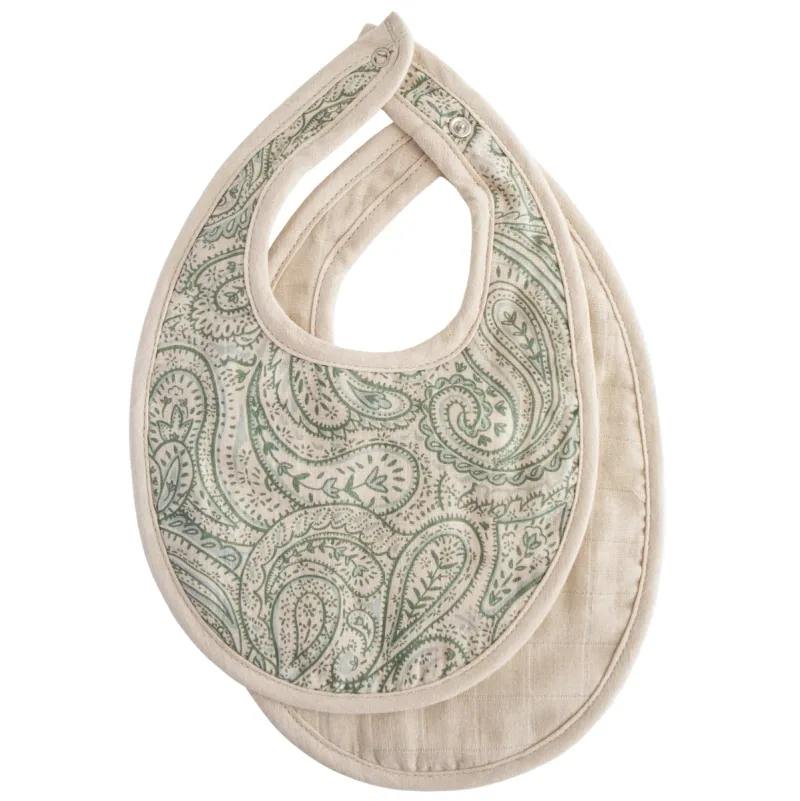
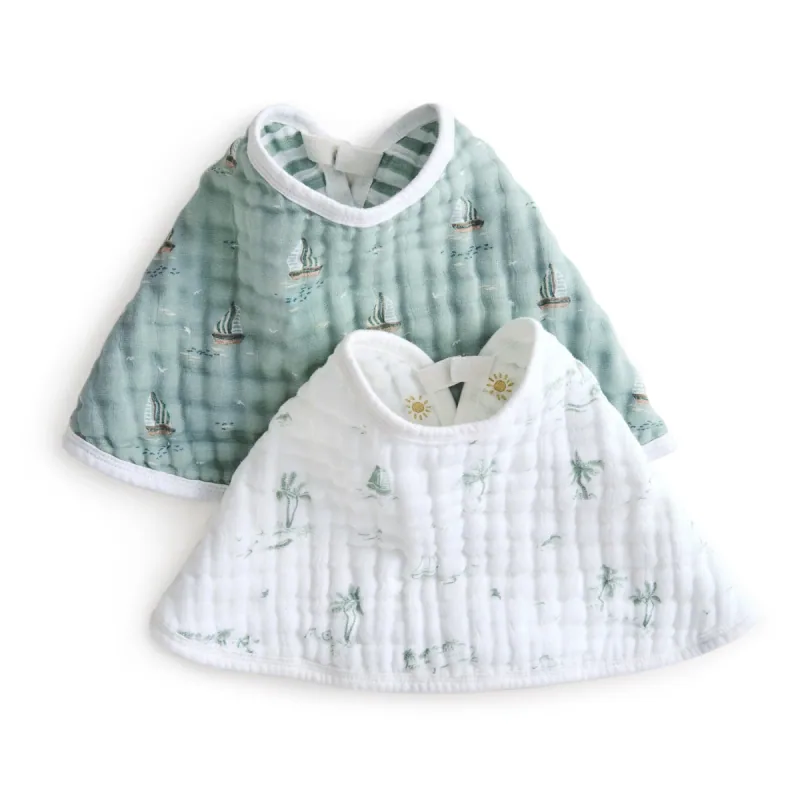
Muslin Bib
This Mushie bib uses layers of muslin and two snap positions, so its main role is catching moisture on the baby’s front. It belongs in a different comparison from a silicone food bib: the fabric absorbs liquid while a molded pocket holds it. The small pack is useful for trying the fit before committing to a large drawer of matching bibs. Always remove it before sleep and check the neckline on the individual baby.
- Organic cotton muslin
- Two snap positions
- Two bibs per set
- Multi-layer fabric
Where it fits
- Adjustable closure
- Soft absorbent construction
What to weigh up
- Protects the baby’s front rather than the parent’s shoulder
- Needs laundering after wet use
02
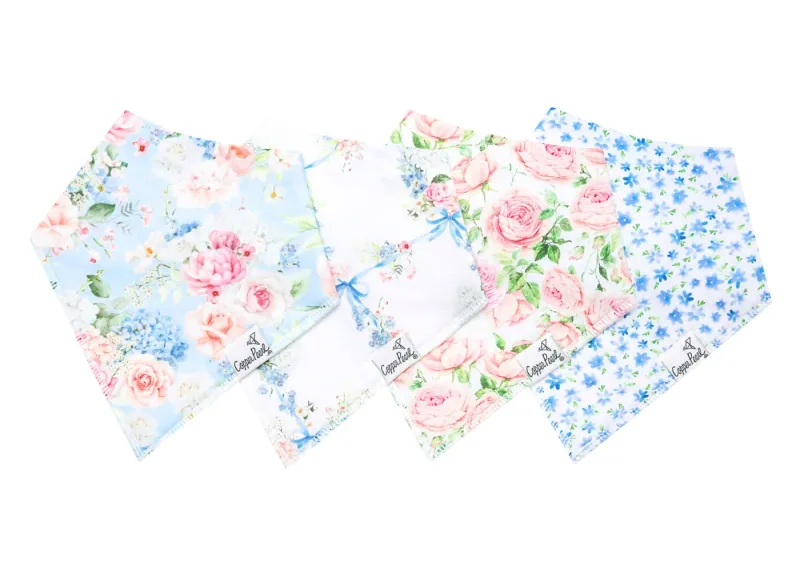
A multipack of bandana-style dribble bibs
Copper Pearl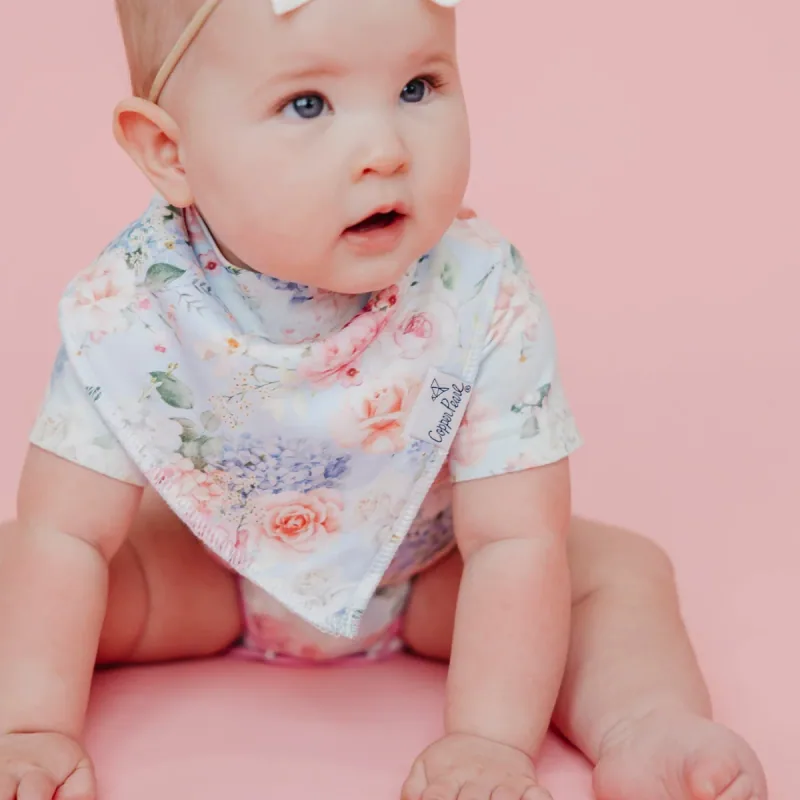
4 Pack Baby Bandana Bibs - Genevieve
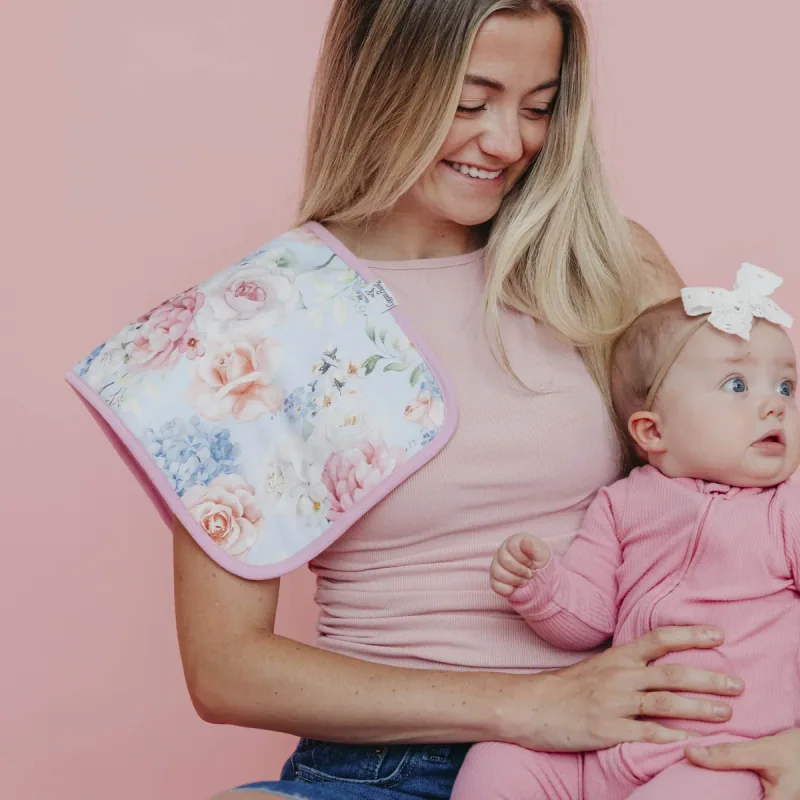
Copper Pearl’s Genevieve set contains four bandana bibs with a cotton front and polyester fleece backing. Two nickel-free snaps provide adjustment. The triangular outline makes this a useful comparison with a rounded muslin bib: look at coverage near the shoulders and how fabric gathers under the chin. The listed age range is a shopping guide, not proof that a specific fastening is comfortable on your baby. Change damp bibs and remove them before sleep.
- Four-pack
- Cotton front with polyester fleece backing
- Two nickel-free snaps
- Manufacturer lists ages 0–36 months
Where it fits
- Coordinated small rotation
- Adjustable fastening
What to weigh up
- Bandana shape covers differently from a broad bib
- Contains polyester as well as cotton
03
Catching food during supervised meals
Mushie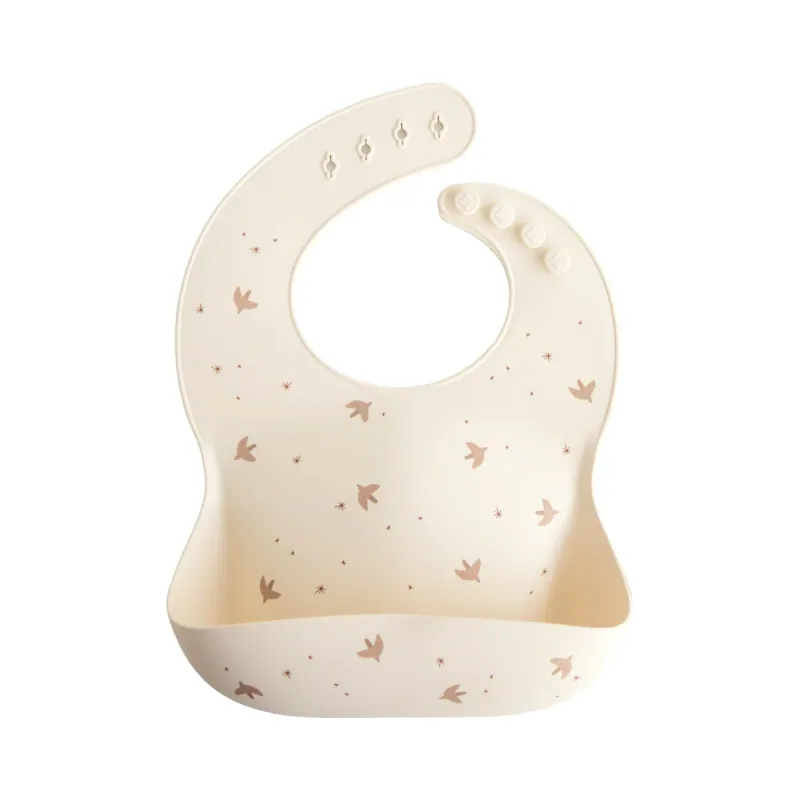
Silicone Baby Bib
Mushie’s silicone bib has a structured front pocket and an adjustable neck fastening. It is a meal-cleanup option once its fit and age guidance suit your child. Unlike a muslin bib, silicone does not soak up liquid; spills remain in the pocket until you empty and clean it. That makes the distinction especially relevant for families comparing food bibs with spit-up cloths. Check how the pocket sits against the high-chair tray before ordering several.
- Silicone construction
- Deep front pocket
- Adjustable neck strap
- Multiple colors and patterns
Where it fits
- Wipe-clean surface
- Pocket for food pieces
What to weigh up
- Not an absorbent spit-up cloth
- Pocket contents need emptying before removal
04
Covering sleeves during messy meals
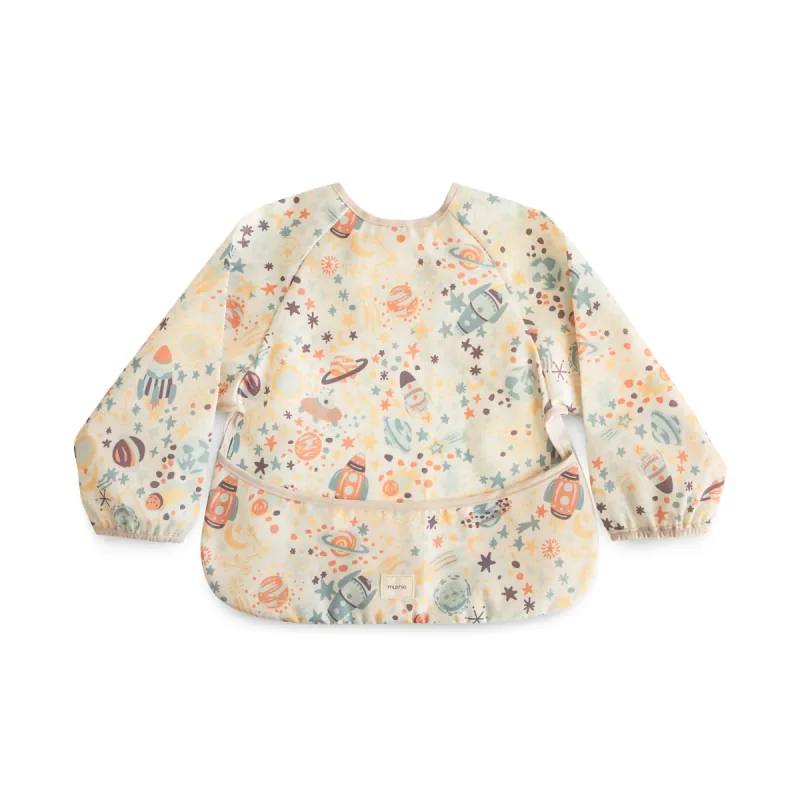
MushieLong Sleeve Bib
Mushie’s Long Sleeve Bib adds arm and clothing coverage to the usual front panel. The manufacturer describes a water-resistant material, a wide catching pocket, and a rear hook-and-loop closure. It suits the question “how do I protect this outfit?” better than “how do I absorb milk during burping?” Check sleeve length and the space around the chair before buying. The greater coverage also creates more surface area to clean and dry between uses.
- Manufacturer age range: 6–24 months
- Long sleeves
- Wide front pocket
- Machine-washable water-resistant material
Where it fits
- Protects more of the outfit
- Wipe-clean option between suitable uses
What to weigh up
- Too much material for routine newborn milk dribbles
- Check full care instructions before machine drying
Use four real constructions to read care labels correctly
Mushie’s Muslin Bib is a layered cotton textile. Copper Pearl’s Genevieve Bandana Bib combines cotton and polyester fleece. Mushie’s Silicone Bib is a non-absorbent molded product, and the Mushie Long Sleeve Bib uses water-resistant material with a rear hook-and-loop closure.
Those materials explain why one generic “wash all bibs hot” instruction is inadequate. Read the care information for the exact item and any trim or fastening. Manufacturer pages can change, so retain the sewn-in label or a photograph of the supplied directions. Do not substitute the instructions for a similar-looking product from another brand.
Read the label before choosing a cycle
Check washing temperature, permitted cleaning products, dryer settings, and any instructions for fastening closures. Keep a photograph of the label if it is likely to fade.
For a concrete example, the current Mushie Muslin Bib care instructions call for a cold wash at no more than 30 degrees Celsius and flat drying, and rule out tumble drying, bleach, ironing, and dry cleaning. That is a specific product instruction, not a rule for every cotton bib.
A bib with waterproof backing, internal support, or decorative printing may need different handling from a plain fabric cloth. If instructions are missing, contact the manufacturer before using a hot cycle or strong stain treatment.
Deal with fresh soil before it dries
Remove leftover food into the trash and handle milk-soiled fabric promptly. Follow the label for rinsing, soaking, or pretreatment rather than leaving damp bibs in a closed bag for days.
The AAP's baby clothing-care guidance suggests addressing stains early and checking how the item should be washed. Use a suitable laundry product according to its directions, including any compatibility warning.
Try a new stain treatment on an inconspicuous area when the product instructions recommend it. Do not combine household cleaning chemicals or assume a strong cleaner is appropriate simply because the item looks stained.
Wash fabric bibs with room to move
Sort by the care instructions, color, and soil level. Follow directions for closing hook-and-loop tabs or other fasteners so they do not snag neighboring items.
Use the detergent quantity appropriate for the load, machine, and water conditions. More detergent is not a shortcut to cleaner fabric. Avoid adding softener or other treatments when the label says they are unsuitable for the material.
Keep detergents securely stored in their original containers. The AAP's laundry safety guidance emphasizes keeping these products out of children's reach, including concentrated packets.
Deal with fresh residue before it becomes a drawer problem
Remove loose food and handle milk residue according to the textile’s care directions. Keep used bibs separate from clean ones while waiting for the wash, and avoid leaving damp fabric sealed in a travel bag. If a stain treatment is permitted, follow that treatment’s label and test an inconspicuous area when advised.
Do not scrub delicate layers aggressively or assume that visible discoloration requires a stronger chemical. Stain appearance and cleanliness are not identical questions. Conversely, a bib that looks clean but remains wet from a feed belongs with the used items, not back around the baby’s neck.
Sort by compatible care, not only by color
Check wash temperature, cycle, detergent guidance, and drying method. Fasteners may need to be closed or protected to avoid catching other fabric, depending on the label. A laundry bag can be useful when permitted, but it does not make an incompatible high-temperature cycle acceptable.
Avoid adding fabric softener or other treatments automatically to absorbent textiles; follow the manufacturer’s guidance about finishes that can affect the fabric. Do not mix cleaning chemicals. If you have been given a specific medical laundry instruction for the baby, ask how it applies to these particular materials rather than improvising a disinfection method.
Give silicone and coated bibs their own cleaning check
Empty a silicone pocket carefully, clean every surface and crease, rinse as directed, and let it dry. Check whether the exact product permits a dishwasher and the specified placement or temperature. “Wipe-clean” can describe convenience between appropriate uses, but it does not mean visible residue can remain in folds indefinitely.
Water-resistant sleeve bibs can have coatings, seams, and closures that behave differently from plain cotton. Check the current instructions before machine drying, ironing, or using bleach. Inspect creases and pocket seams where food can remain, and hang or lay the bib as directed so it dries completely.
Inspect while folding rather than during the next feed
Look for loose snaps, damaged hook-and-loop fastening, rough seams, peeling surfaces, tears, or a shape that no longer fits. Put questionable items aside immediately. Another caregiver should not have to discover the same problem with a hungry baby waiting.
Store only fully dry bibs in a clean place. Put fresh laundry behind the older clean supply to spread use across the rotation. If drying is repeatedly the bottleneck, choose future bibs with a care routine your household can maintain or increase the rotation based on the actual delay. Our baby-bibs quantity guide explains that planning step.
Know when replacement is more practical than restoration
A damaged closure, persistent roughness, or peeling material can make a bib unsuitable even when a stain remover improves its appearance. Follow the manufacturer’s replacement guidance and avoid home repairs that add small detachable parts near the baby. Everyday feeding textiles should remain simple to inspect, clean, dry, and use comfortably.
A few more details
Your questions, answered
Can every baby bib go in the washing machine?
No. Follow the exact item's label. Plain fabric, coated fabric, silicone, and structured designs may require different washing and drying methods.
Can I use the same washing instructions for mybetterbib?
Final mybetterbib materials and care instructions are still in development. Do not assume a temperature, dryer setting, or cleaning method before those instructions are confirmed.
Can all baby bibs go in the dryer?
No. Follow the exact care label, especially for water-resistant coatings, trim, closures, and layered fabrics. Air-dry when the manufacturer requires it.
Is a silicone bib clean after a quick wipe?
Remove residue from the pocket and every surface, then clean and rinse as the manufacturer directs. Wipe-clean convenience does not mean food can remain in folds or seams.
Sources & product information
Follow the original sources for current product details, instructions, and guidance.