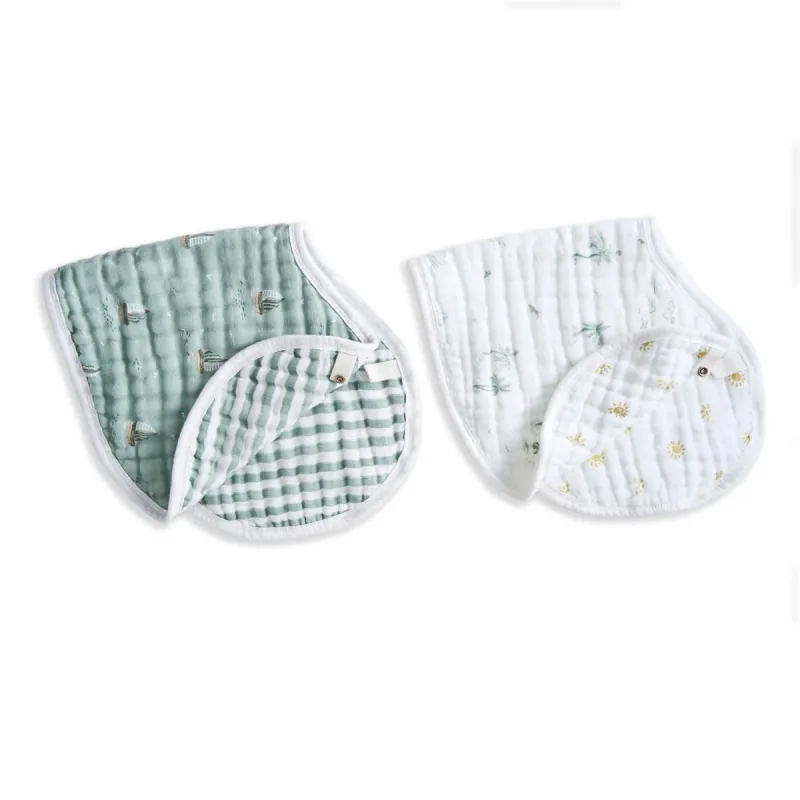
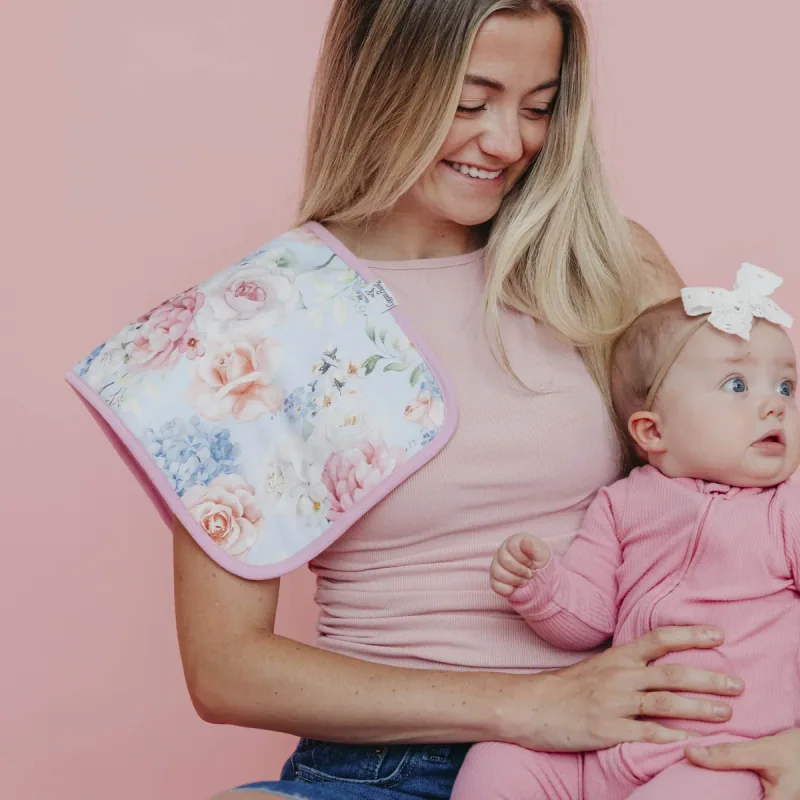
Choose a baby bib by the mess you want it to catch. A soft, absorbent fabric bib can be useful for milk dribbles and spit-up during supervised awake time. A wipe-clean food bib serves a different purpose. Before comparing colors or buying a multipack, consider where the liquid or food actually lands.
Feeding4 products, compared
Baby bib basics: choose the right shape for the mess
Choose a first baby bib by the job it needs to do: milk dribbles, spit-up, or early meals. Compare coverage, fit, fabrics, closures, and washing.
Jump to a section
The quick answer
Choose a baby bib by the mess: absorbent cloth for milk and dribbles, a pocket bib for food, and a burp cloth for the adult’s shoulder. Check the neckline, coverage, and washing instructions on the exact product. Remove bibs before sleep.
- A silicone pocket catches liquid but does not absorb it.
- Bandana and rounded bibs cover different areas.
- Fit matters more than a broad “one size” label.
- Try a small set before buying a large rotation.
At a glance
The details that make a difference when you’re deciding.
| Type | Real example | Best comparison question |
|---|---|---|
| Rounded muslin | Mushie Muslin Bib | Does it cover the front without bunching? |
| Bandana with fleece backing | Copper Pearl Genevieve | Does the narrower shape match the dribble area? |
| Layered broad muslin | aden + anais Snap Bib | Does the extra outline fit comfortably? |
| Silicone pocket | Mushie Silicone Bib | Does the pocket work with the meal setup? |
A closer look
The products, in detail
Actual product photos, manufacturer information, and direct links. Comparisons are based on published specifications; these are not hands-on test results.
01Muslin Bib024 Pack Baby Bandana Bibs - Genevieve03organic cotton snap bibs 3 pack04Silicone Baby Bib
01
Soft dribble coverage during awake time
MushieMuslin Bib
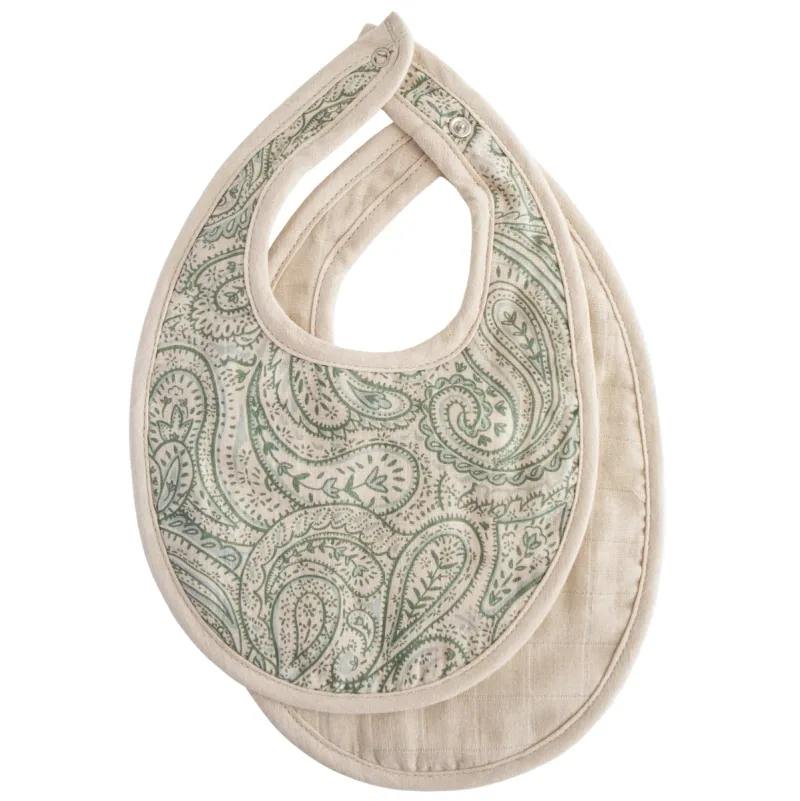
This Mushie bib uses layers of muslin and two snap positions, so its main role is catching moisture on the baby’s front. It belongs in a different comparison from a silicone food bib: the fabric absorbs liquid while a molded pocket holds it. The small pack is useful for trying the fit before committing to a large drawer of matching bibs. Always remove it before sleep and check the neckline on the individual baby.
- Organic cotton muslin
- Two snap positions
- Two bibs per set
- Multi-layer fabric
Where it fits
- Adjustable closure
- Soft absorbent construction
What to weigh up
- Protects the baby’s front rather than the parent’s shoulder
- Needs laundering after wet use
02
A multipack of bandana-style dribble bibs
Copper Pearl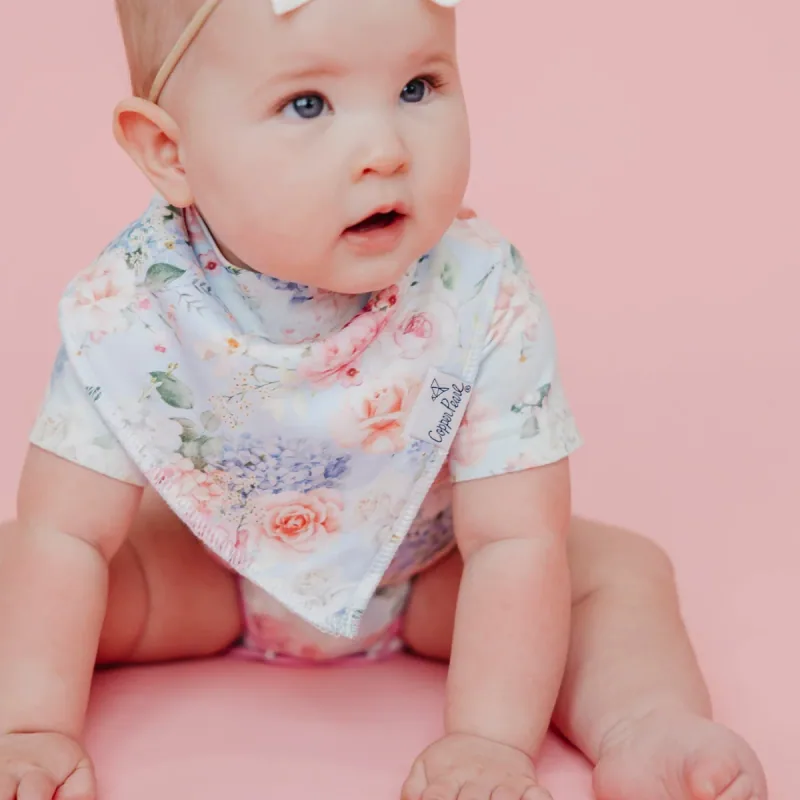
4 Pack Baby Bandana Bibs - Genevieve
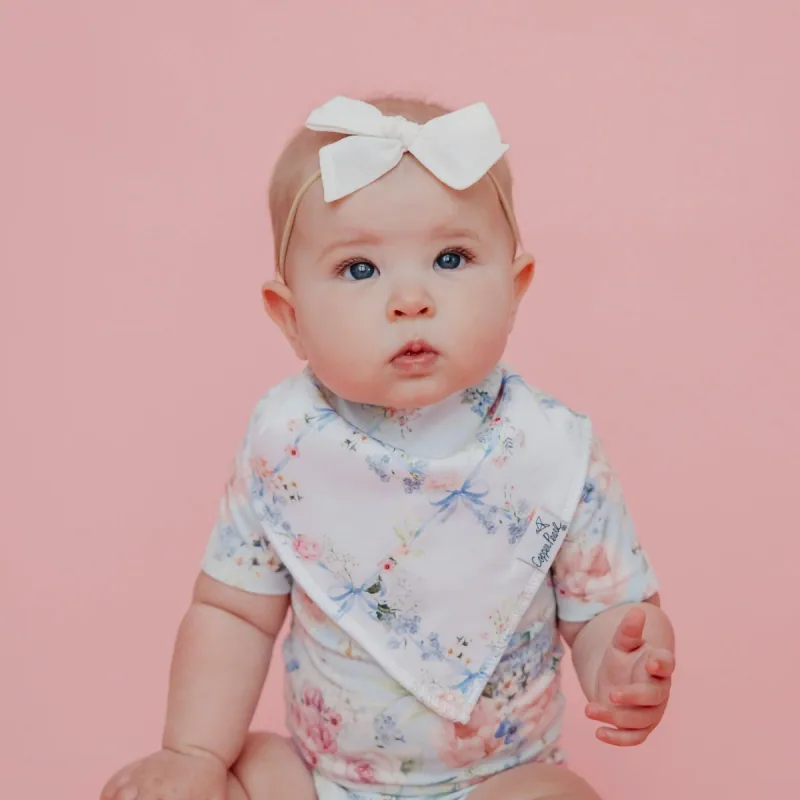
Copper Pearl’s Genevieve set contains four bandana bibs with a cotton front and polyester fleece backing. Two nickel-free snaps provide adjustment. The triangular outline makes this a useful comparison with a rounded muslin bib: look at coverage near the shoulders and how fabric gathers under the chin. The listed age range is a shopping guide, not proof that a specific fastening is comfortable on your baby. Change damp bibs and remove them before sleep.
- Four-pack
- Cotton front with polyester fleece backing
- Two nickel-free snaps
- Manufacturer lists ages 0–36 months
Where it fits
- Coordinated small rotation
- Adjustable fastening
What to weigh up
- Bandana shape covers differently from a broad bib
- Contains polyester as well as cotton
03
Broad cloth bib coverage in a small set
HALO / aden + anais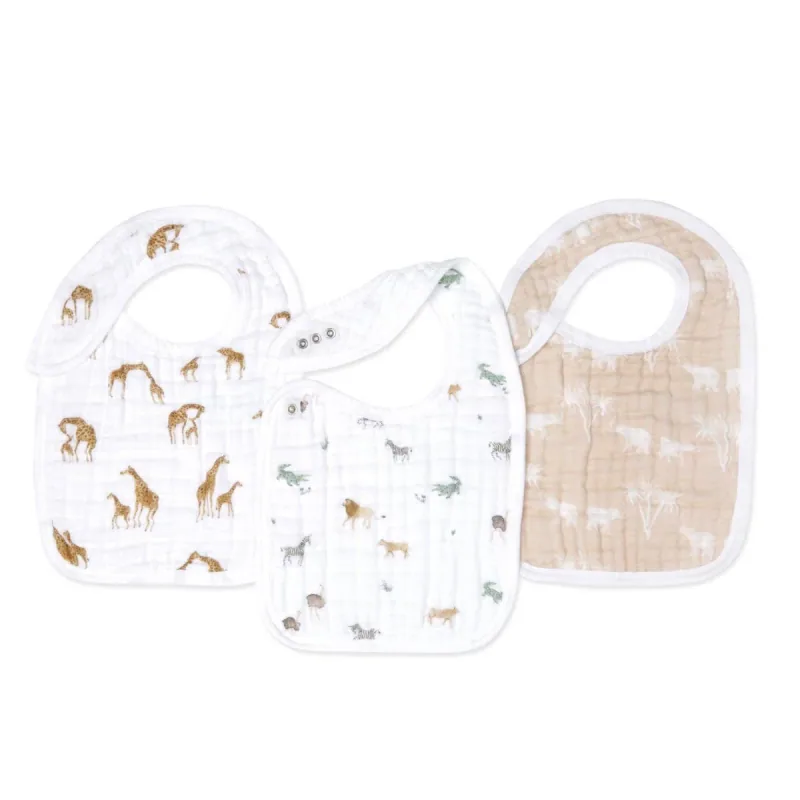
organic cotton snap bibs 3 pack
The aden + anais Organic Cotton Snap Bibs shown here use three layers of muslin and an adjustable fastening. The Safari Dreams three-pack provides another fabric construction to compare with fleece-backed bandanas and smaller two-layer options. Look at the neckline and actual washed dimensions before choosing by pack count. Layer count describes construction, but it is not an independently measured capacity rating or a promise that a bib will stay dry through every feed.
- Three-pack
- Three layers of organic cotton muslin
- Adjustable snap fit
- Safari Dreams print shown
Where it fits
- Several bibs for rotation
- Absorbent textile layers
What to weigh up
- Needs laundering and drying
- Fit still depends on the individual baby
04
Catching food during supervised meals
Mushie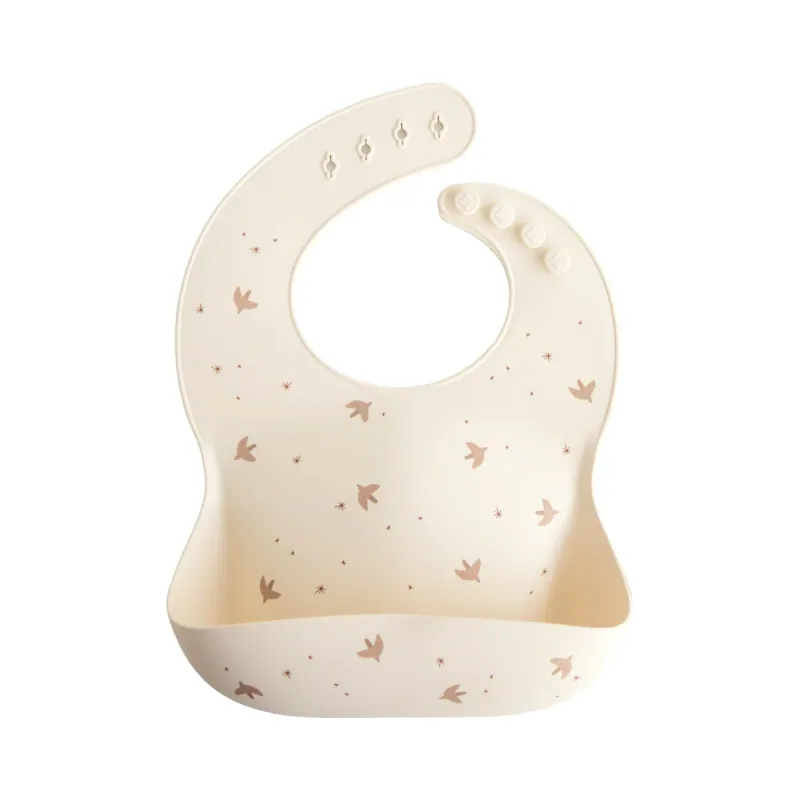
Silicone Baby Bib
Mushie’s silicone bib has a structured front pocket and an adjustable neck fastening. It is a meal-cleanup option once its fit and age guidance suit your child. Unlike a muslin bib, silicone does not soak up liquid; spills remain in the pocket until you empty and clean it. That makes the distinction especially relevant for families comparing food bibs with spit-up cloths. Check how the pocket sits against the high-chair tray before ordering several.
- Silicone construction
- Deep front pocket
- Adjustable neck strap
- Multiple colors and patterns
Where it fits
- Wipe-clean surface
- Pocket for food pieces
What to weigh up
- Not an absorbent spit-up cloth
- Pocket contents need emptying before removal
Compare four real bibs before deciding on a shape
Mushie’s Muslin Bib is a rounded fabric option with two snap positions. Copper Pearl’s Genevieve Bandana Bibs use a cotton front and polyester fleece backing in a triangular shape. The aden + anais Organic Cotton Snap Bibs use three layers of muslin and a broader outline. These differences affect coverage and laundry, even when all three appear in a retailer’s “drool bibs” category.
Mushie’s Silicone Baby Bib belongs to a different comparison. Its deep front pocket holds food and spills during meals. Silicone is not absorbent fabric, so emptying a pocket carefully is part of cleanup. It should not be selected as a shoulder burp cloth simply because a product description mentions catching mess.
Start with one clear job
Watch a few ordinary feeds and changes. Does milk run toward the baby's chest, spread toward the shoulders, or end up mostly on the adult holding them? A front bib covers the area beneath the chin; it does not automatically protect a parent's shoulder or the back of a shirt.
If most of the cleanup happens while you hold the baby against your shoulder, a burp cloth may be the more useful first purchase. If your baby is beginning appropriate solid foods, a food-catching pocket may help with that particular mess.
You may eventually use more than one type. Begin with the job happening now instead of purchasing for every future stage.
Read the material and care label together
An absorbent face, a backing layer, and the seams all contribute to how a bib works. A waterproof backing may limit liquid reaching clothing through the middle, while liquid can still travel around an edge or gap. Do not assume a material claim means the whole outfit will stay dry.
Check whether the bib can go through your normal wash and dry routine. If it needs air-drying, plan a place where it can dry fully. A bib that remains damp when you need it is less useful than its product photograph suggests.
Check comfort and the closure
Follow the manufacturer's age, size, and fitting instructions. The closure should fasten as intended without pulling the neckline tightly against the skin or leaving fabric near the face.
Look for rough stitching, stiff edges, loose fasteners, and decorative parts that might come free. Try fastening the bib before placing it on the baby so you know how the closure works.
Remove the bib before sleep. The Canadian Paediatric Society's safe-sleep guidance specifically advises taking bibs off before putting a baby down.
Use the product photograph as a fit clue, then check measurements
Look at where the upper edge sits beneath the chin and how far the fabric extends toward each shoulder. A triangular point can look long while providing less width higher on the chest. A rounded bib can look compact but cover more clothing near the shoulder seams. Neither outline is automatically better; the relevant question is where your baby’s dribbles land.
Ask whether the photo shows the exact size and model being sold. A newborn and an older toddler can make the same bib look very different. Read the dimensions and fastening positions, then compare them with a garment that currently fits. Do not use extra clips or tie a loose bib tighter to make an unsuitable size work.
Make the first purchase a useful experiment
Try one small pack through several feeds and its first wash cycle. Notice whether the bib catches the usual dribble, bunches under the chin, becomes saturated quickly, or takes longer to dry than your routine allows. Those observations tell you more about your household’s needs than choosing the biggest matching multipack in advance.
Keep notes simple: “good front coverage, needs changing after a feed” or “pocket presses against tray.” You are assessing convenience and fit, not conducting a laboratory absorbency test. If a bib leaves clothing wet at an edge, a larger absorbent area or a separate shoulder cloth may address the actual route of the spill.
Decide when to use a cloth instead
During an over-the-shoulder burp, the parent’s clothing may be the main surface at risk. A baby-worn bib can stay neatly on the chest while spit-up lands behind the baby and onto the adult. A burp cloth placed across the shoulder addresses that different location. Keep a fresh cloth within reach so the adult can swap it without leaving the baby unsupported.
Some products combine bib and burp-cloth uses, but the arrangement still matters. Look at how the textile is draped or fastened in each mode and whether the wet area will touch the baby when repositioned. For a direct comparison of coverage, use burp cloth versus bib.
Read “better” as better for a particular job
A quick-drying cloth may suit frequent laundry, while a pocket bib may suit a high-chair meal. A wider bib may protect more of a shirt, yet still leave the adult’s back uncovered during burping. Buying with that specific job in mind produces a more useful collection than treating one material or brand as the best choice for every stage.
A few more details
Your questions, answered
What kind of bib should I try first?
Start with the job you need now. A soft absorbent bib may suit milk dribbles, while a burp cloth protects the adult during burping and a food bib serves meals.
Can my baby sleep wearing a bib?
No. Remove bibs before sleep and keep loose feeding cloths out of the baby's sleep space.
Is a silicone bib good for absorbing spit-up?
Silicone holds liquid rather than absorbing it. For milk cleanup, compare absorbent cloth bibs and shoulder burp cloths, and consider where the liquid actually lands.
How do I know if a bandana bib covers enough?
Compare its width near the chin and shoulders, its length, and the actual fit. A long triangular point does not necessarily mean broad upper-chest coverage.
Sources & product information
Follow the original sources for current product details, instructions, and guidance.