Choose a Baby Björn carrier by its exact model and fit requirements, not by the brand name alone. Mini and Harmony are different designs, and the right choice depends on your baby's size, development and how you plan to carry. Start with the current official instructions, then try the fit on each regular wearer.
Gear2 products, compared
Baby Björn carrier: Mini, Harmony and the questions that matter
Compare BabyBjörn carrier options by your baby's stage, caregiver fit and daily routine, then find the exact manual and plan a useful fitting session.
Jump to a section
The quick answer
Choose a Baby Björn carrier by its exact model and fit requirements, not by the brand name alone. Mini and Harmony are different designs, and the right choice depends on your baby's size, development and how you plan to carry. Start with the current official instructions, then try the fit on each regular wearer.
- BabyBjörn Baby Carrier Mini: short carries in the early months.
- BabyBjörn Baby Carrier Harmony: longer-term use with a supporting waistbelt.
- Use the exact model manual, including all size and developmental limits.
- Details come from manufacturer documentation; Emily has not claimed hands-on testing.
At a glance
The details that make a difference when you’re deciding.
| Product | Useful for | Detail to know | Before buying |
|---|---|---|---|
| BabyBjörn Baby Carrier Mini | Short carries in the early months | Compact front carrier with adjustable head support | Less weight distribution than a waistbelt carrier |
| BabyBjörn Baby Carrier Harmony | Longer-term use with a supporting waistbelt | Manufacturer range: 7–40 lb | More adjustment points than Mini |
A closer look
Products mentioned in this guide
Actual product photos, manufacturer information, and direct links. Comparisons are based on published specifications; these are not hands-on test results.
01
Short carries in the early months
BabyBjörnBabyBjörn Baby Carrier Mini
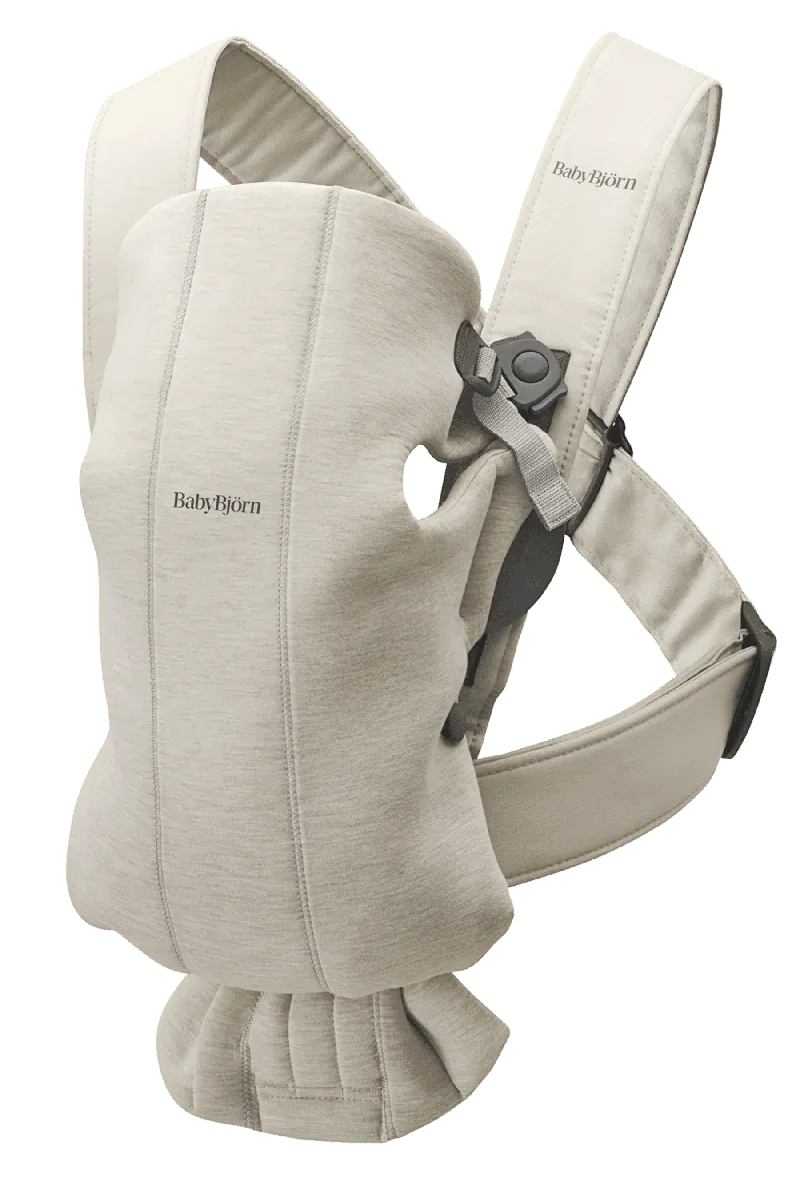
Mini is the compact option for frequent pick-ups when a larger waistband feels like more equipment than you need. Its front section opens for taking a baby out, which is worth practicing before you depend on it during a busy morning. BabyBjörn now recommends Mini mainly for the first six months and about 15 pounds for wearer comfort, while separately stating a safety-tested limit of 24 pounds. Those figures describe different things. Follow the label and manual for your exact carrier rather than using the comfort recommendation as a substitute.
- Compact front carrier with adjustable head support
- Inward and outward positions when criteria are met
- Manufacturer comfort recommendation: early months, around 15 lb
- Manufacturer safety-tested range: 7–24 lb; consult exact manual
Where it fits
- Small size for frequent short carries
- Opening front panel
What to weigh up
- Less weight distribution than a waistbelt carrier
- No back-carry mode
02
Longer-term use with a supporting waistbelt
BabyBjörn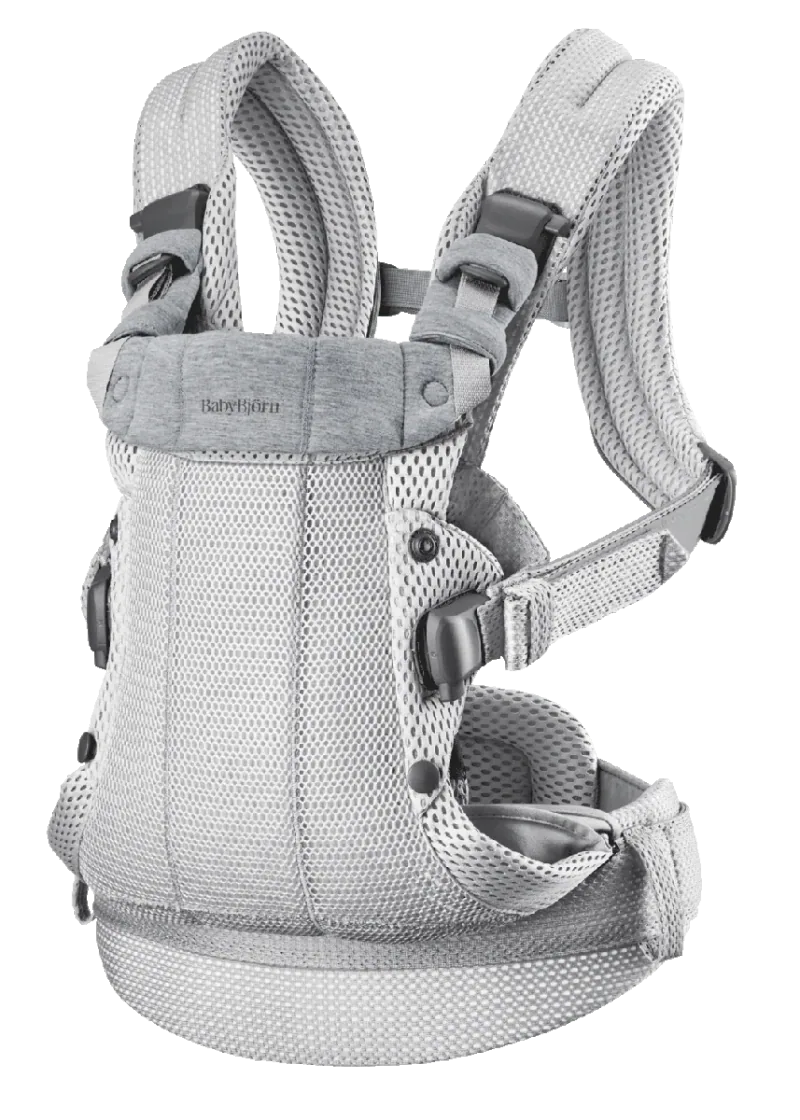
BabyBjörn Baby Carrier Harmony
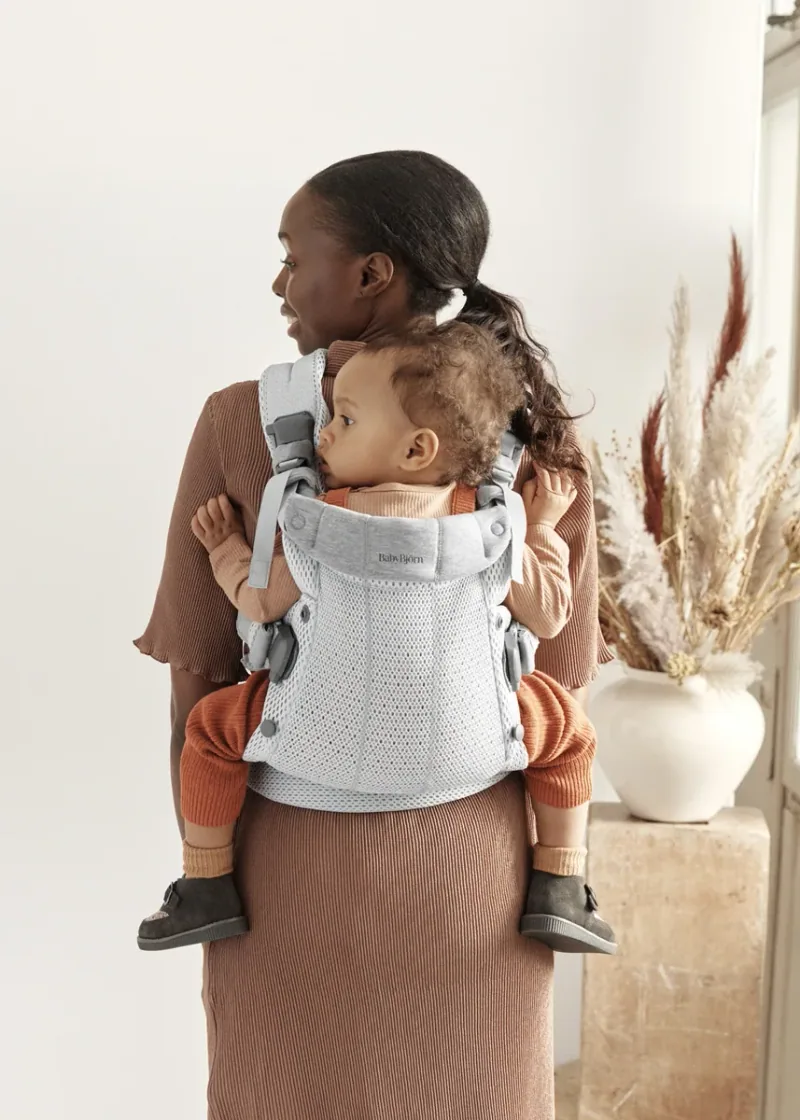
Harmony adds a waistbelt, padded shoulder straps, and back support to the BabyBjörn range. That makes it a different fit proposition from Mini, especially as the child grows. Its adjustable panel and head support need to be set for the individual baby rather than copied from another caregiver’s settings. The brand permits several carry positions, but each has its own readiness rules; a large printed weight range does not make every position suitable from birth. Try the buckles and adjustments while wearing the clothes you normally use outside.
- Manufacturer range: 7–40 lb
- Adjustable seat and head support
- Front inward, front outward and back modes
- Waistbelt with padded shoulder and back support
Where it fits
- Distributes load across waist and shoulders
- Adjustable for a growing child
What to weigh up
- More adjustment points than Mini
- Back carry has separate age requirements
Mini versus Harmony at a glance
Choose Mini to investigate a compact carrier for frequent early carrying. Choose Harmony to investigate a supporting waistbelt, padded shoulder straps and a longer use window. Neither description guarantees that the product fits your baby or body; it tells you which one is worth trying first. The linked official pages and actual product photographs show the different fastening and support arrangements.
Mini’s current page makes a distinction worth understanding. BabyBjörn recommends comfortable early use around the first six months and up to approximately 15 pounds, yet states that the carrier is safety tested up to 24 pounds. Those are not competing hard limits. The lower figure describes the intended comfort window; the label and manual govern permitted use. A family may choose to move to more adult support before reaching the tested maximum.
Harmony’s stated range extends to 40 pounds, but its positions have separate requirements. The manufacturer says back carrying should wait until age one, and outward-facing use depends on the stated minimum age and head control. Do not borrow the position rules from another brand or assume all front-facing photographs show a configuration suitable for a newborn.
Check the fasteners with your own hands
Before loading a baby, practice opening, closing and checking every buckle or adjustment you will use. Identify which part sets the newborn size and which part changes the adult fit. If you cannot comfortably reach a fastener or understand how to confirm it is secure, use the brand’s fitting instructions or support before proceeding.
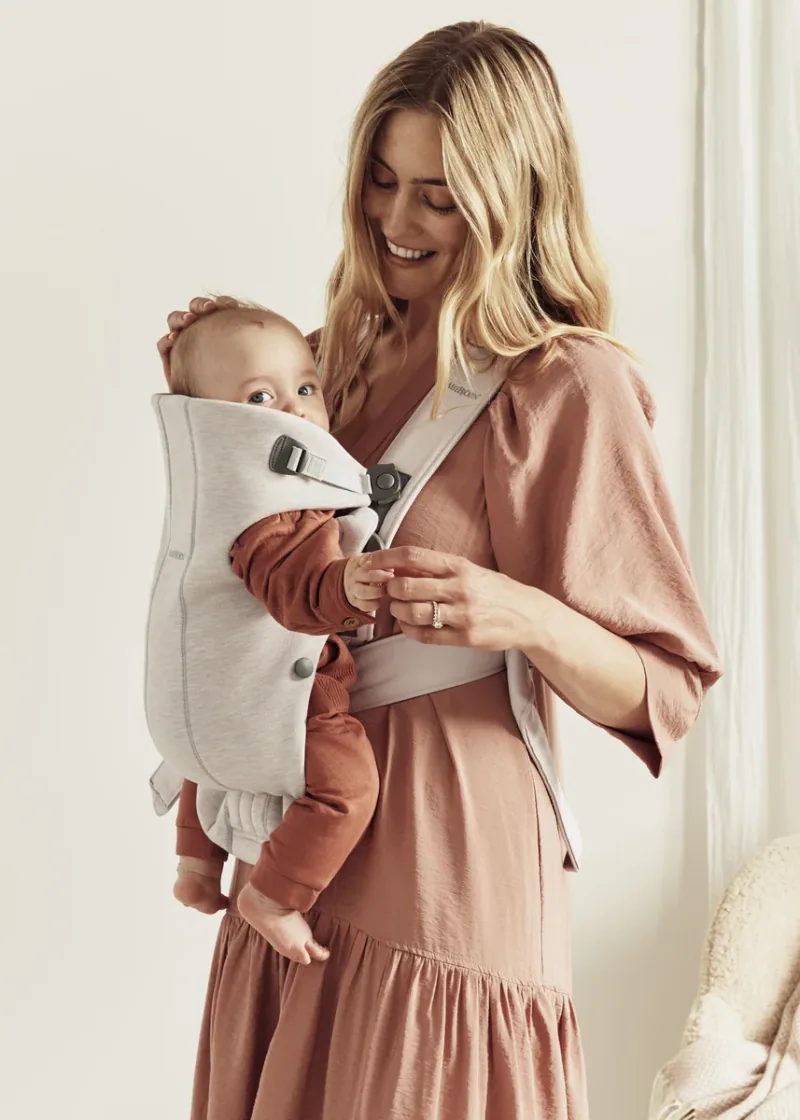
When trying the carrier with your baby, get help from another adult and follow the sequence in the manual. Check the face remains visible, the chin stays away from the chest and the carrier supports the baby in the instructed position. More tightening is not automatically better; a panel or strap in the wrong place needs to be corrected, not simply pulled harder.
Think about sharing and clothing layers
A carrier used by two adults must be reset for the person wearing it. Note which straps need adjustment and whether each adult can repeat the correct fit without the other person doing all the work. Try it over the clothes you normally wear, including seasonal layers that may change where the belt sits.
Avoid putting bulky fabric between the baby and the carrier simply to keep it clean. Use only approved accessories and keep the face clear. If a jacket is worn over the carrier, check visibility and fit again rather than assuming the uncovered arrangement remains unchanged.
Compare the useful life you actually need
Mini can make sense as an early-stage purchase if its simplicity and size suit your routine. Harmony may suit someone prioritizing longer walks and later carrying. Price that decision honestly rather than expecting every first carrier to last for every stage. Include cleaning and drying time, access to support and return terms. The broader best baby carriers guide compares these choices with a soft buckle carrier and a hip seat.
Identify the model you are considering
BabyBjörn's carrier overview includes Mini and Harmony, while its manuals library provides model-specific instructions. Read the manual that matches the product sold in your region.
Do not rely on a seller's shorthand such as “newborn Baby Björn.” Ask for the complete model name and a clear description of included parts. If buying secondhand, make sure labels remain readable and all fasteners function correctly. A fabric color is not enough to identify a carrier's instructions.
Compare the stage and the carrying routine
The Mini is presented as an early-stage option. Harmony is a separate structured design to evaluate for your broader carrying needs. Compare the precise permitted measurements and positions in their manuals rather than treating age ranges in marketing as a guarantee of fit.
If most sessions will be brief, how quickly you can put the carrier on may be especially important. For longer outings, pay more attention to how the adjusted carrier feels over time. If two adults share it, consider the effort involved in changing settings between them.
Do a careful first fitting
Follow the illustrated sequence and adjust the carrier for the baby's current size. Do not skip a setting because it appears close enough. If you cannot tell which adjustment is correct, use the company's customer support or a qualified fit consultation.
Keep the baby's face visible and nose and mouth clear. Avoid a chin-to-chest slump, and check positioning again after movement. CPSC explains the importance of a visible, unobstructed airway in its babywearing guidance. Add no padding or accessories unless the exact carrier instructions permit them.
Check fastening and everyday comfort
Try the carrier over your typical indoor clothing, then consider the outer layers you use outside. Can you reach the controls without straining? Can you loosen the fit in the instructed way? Can you safely remove the baby without feeling rushed or confused?
Have another caregiver repeat the process from the start. If one person can fit it only after help from the other, decide whether that limitation works for your routine. Keep your own notes about settings, but remember that the baby's growth means the fit must be reassessed.
Read the care instructions before you need them
Check how the exact fabric should be washed and dried. Plan around the time it may be unavailable after a spill, and avoid assuming that every version tolerates the same cleaning method. Inspect buckles, seams and adjustment points during ordinary use.
Before checkout, review return conditions and use the trial period to confirm fit, rather than saving the carrier for a first major outing. A good match is one you can use correctly and comfortably. You do not need to choose the model with the most positions if your preferred routine uses only one or two.
A few more details
Your questions, answered
Should I choose BabyBjörn Mini or Harmony?
Compare their current size and position requirements, then try both if possible. Mini is positioned for early carrying; Harmony is a different design whose suitability depends on your fit and routine.
When can a baby face outward in a BabyBjörn carrier?
Follow the exact model's minimum age, development and fit requirements. Do not use a general age estimate or instructions for a different carrier.
When does BabyBjörn allow back carrying in Harmony?
The current manufacturer guidance says to wait until the child is one year old, alongside the other fit and use requirements. Do not transfer back-carry rules from another carrier.
Why do Mini pages mention fifteen and twenty-four pounds?
The maker distinguishes its recommended comfort window around fifteen pounds from its safety-tested maximum of twenty-four pounds. Check the instructions supplied with your exact carrier.
Sources & product information
Follow the original sources for current product details, instructions, and guidance.