The best baby carrier for you is one you can put on correctly, adjust comfortably and check while wearing it. Start with fit before deciding which brand wins. A broad feature list cannot compensate for a buckle you cannot reach or a panel that does not position your particular baby correctly. This guide uses manufacturer information, not product testing.
Gear3 products, compared
Find the best baby carrier for you with a fit-first checklist
Find your best baby carrier by checking comfort, fastening, baby's position and everyday use, with two structured options and a simple try-on plan.
Jump to a section
The quick answer
The best baby carrier for you is one you can put on correctly, adjust comfortably and check while wearing it. Start with fit before deciding which brand wins. A broad feature list cannot compensate for a buckle you cannot reach or a panel that does not position your particular baby correctly. This is an editorial selection guide, not product testing.
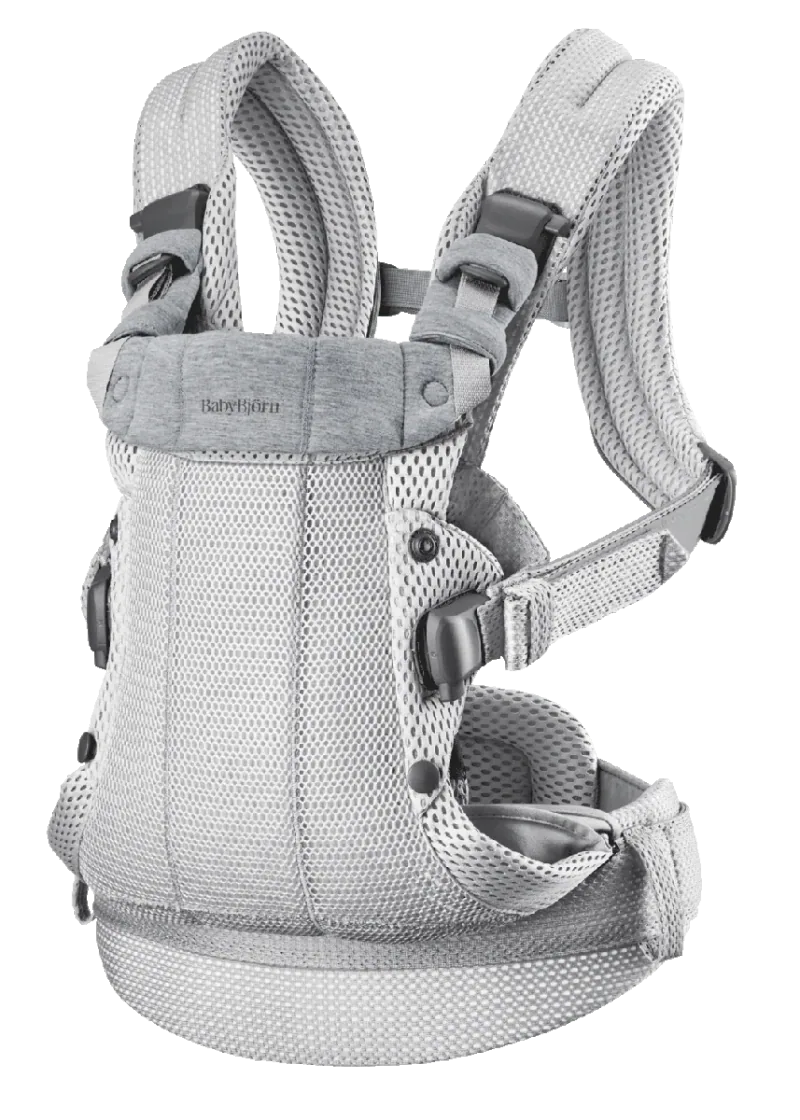
- BabyBjörn Baby Carrier Harmony: longer-term use with a supporting waistbelt.
- Ergobaby Embrace Newborn Carrier: a soft carrier without wrap tying.
- BabyBjörn Baby Carrier Mini: short carries in the early months.
- Details come from manufacturer documentation; Emily has not claimed hands-on testing.
At a glance
The details that make a difference when you’re deciding.
| Product | Useful for | Detail to know | Before buying |
|---|---|---|---|
| BabyBjörn Baby Carrier Harmony | Longer-term use with a supporting waistbelt | Manufacturer range: 7–40 lb | More adjustment points than Mini |
| Ergobaby Embrace Newborn Carrier | A soft carrier without wrap tying | Manufacturer weight range: 7–25 lb | Lower maximum weight than larger structured carriers |
| BabyBjörn Baby Carrier Mini | Short carries in the early months | Compact front carrier with adjustable head support | Less weight distribution than a waistbelt carrier |
A closer look
The products, in detail
Actual product photos, manufacturer information, and direct links. Comparisons are based on published specifications; these are not hands-on test results.
01
Longer-term use with a supporting waistbelt
BabyBjörnBabyBjörn Baby Carrier Harmony
Harmony adds a waistbelt, padded shoulder straps, and back support to the BabyBjörn range. That makes it a different fit proposition from Mini, especially as the child grows. Its adjustable panel and head support need to be set for the individual baby rather than copied from another caregiver’s settings. The brand permits several carry positions, but each has its own readiness rules; a large printed weight range does not make every position suitable from birth. Try the buckles and adjustments while wearing the clothes you normally use outside.
- Manufacturer range: 7–40 lb
- Adjustable seat and head support
- Front inward, front outward and back modes
- Waistbelt with padded shoulder and back support
Where it fits
- Distributes load across waist and shoulders
- Adjustable for a growing child
What to weigh up
- More adjustment points than Mini
- Back carry has separate age requirements
02
A soft carrier without wrap tying
Ergobaby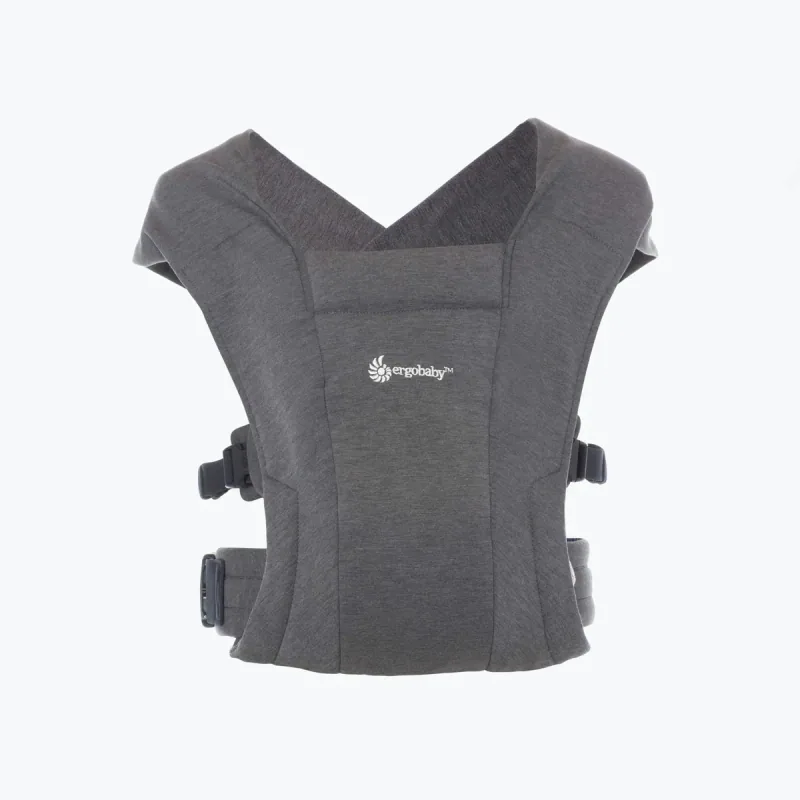
Ergobaby Embrace Newborn Carrier
Embrace combines a soft knit panel with buckles and cross-back straps. It is useful to compare with both a stretchy wrap and a more structured carrier: you avoid tying a long length of fabric but still get a relatively soft, close-fitting design. The newborn adjustment is important, particularly for a shorter baby, so use the supplied illustrated instructions. Its smaller maximum weight makes it an early-stage option. A household hoping to buy one carrier through larger toddlerhood should compare a longer-range model before committing.
- Manufacturer weight range: 7–25 lb
- Soft knit fabric
- Cross-back shoulder straps
- Front inward and outward modes with readiness requirements
Where it fits
- No wrap knots to learn
- Machine-washable fabric
What to weigh up
- Lower maximum weight than larger structured carriers
- Newborn waistband adjustment needs attention
03
Short carries in the early months
BabyBjörn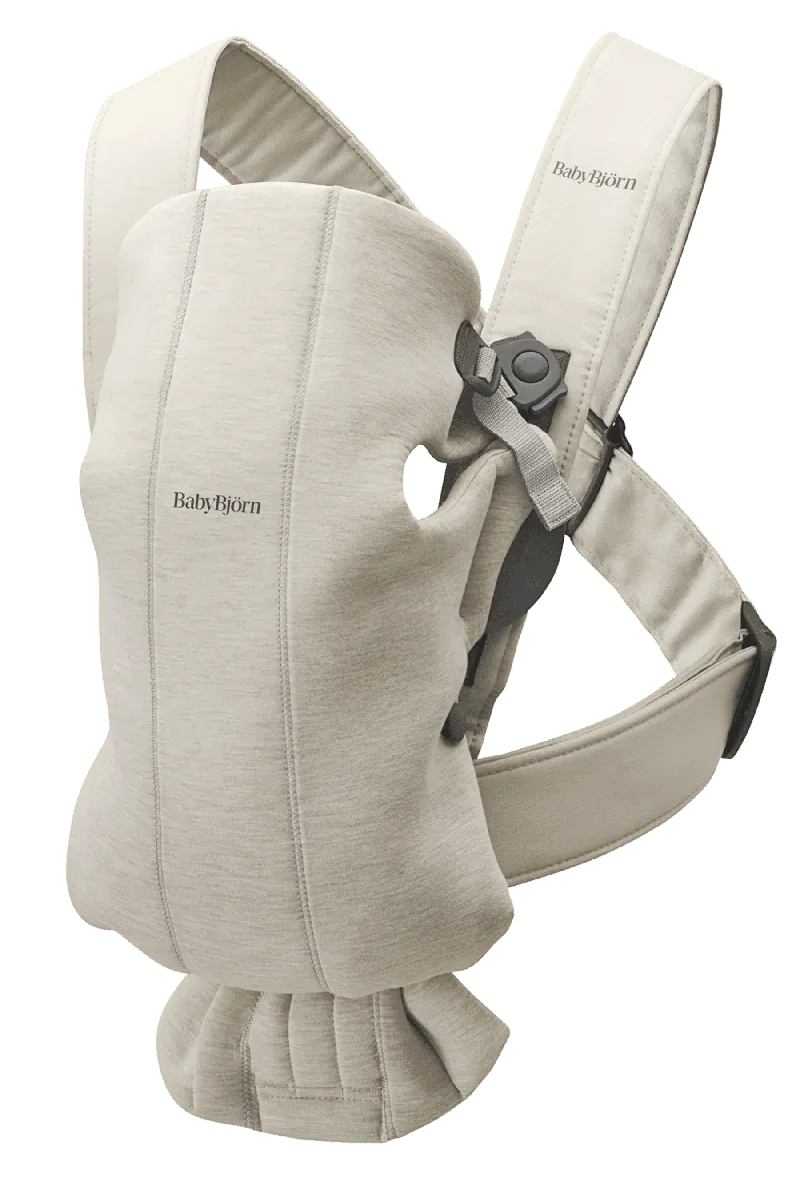
BabyBjörn Baby Carrier Mini
Mini is the compact option for frequent pick-ups when a larger waistband feels like more equipment than you need. Its front section opens for taking a baby out, which is worth practicing before you depend on it during a busy morning. BabyBjörn now recommends Mini mainly for the first six months and about 15 pounds for wearer comfort, while separately stating a safety-tested limit of 24 pounds. Those figures describe different things. Follow the label and manual for your exact carrier rather than using the comfort recommendation as a substitute.
- Compact front carrier with adjustable head support
- Inward and outward positions when criteria are met
- Manufacturer comfort recommendation: early months, around 15 lb
- Manufacturer safety-tested range: 7–24 lb; consult exact manual
Where it fits
- Small size for frequent short carries
- Opening front panel
What to weigh up
- Less weight distribution than a waistbelt carrier
- No back-carry mode
Match the carrier to one realistic scenario
For frequent early carrying with a soft panel, compare Ergobaby Embrace and BabyBjörn Mini. For longer-term carrying with a waistbelt and back support, try BabyBjörn Harmony. These products have different limits and fitting steps; a recommendation becomes meaningful only after you match the baby’s current size and the adult’s comfort to the actual design.
Consider three examples. A caregiver who wants a short walk after a feed may prioritize a quick, repeatable front carry. Someone who walks to daycare each morning may prioritize load distribution and weather-layer compatibility. A household sharing one carrier between adults with different builds may care most about how easily settings change. The same feature can be essential in one scenario and irrelevant in another.
Turn discomfort into a specific fit question
“This hurts” is useful information, but a more specific description helps support solve the problem. Note whether pressure is at the shoulders, waist, lower back or under the arms. Check whether the discomfort starts immediately or after a few minutes, and whether the waistband is moving. Ask the maker’s fitting service how that pattern relates to the correct adjustment sequence.
Do not compensate for discomfort by loosening the carrier until the baby hangs low or by adding unapproved padding. If the correct fit remains uncomfortable, the product may not suit that wearer. A different carrier can be a better answer than a growing collection of workarounds. This is particularly important if the adult has pain or limited movement before trying the carrier.
Compare fabric and cleaning with actual life
Mesh, jersey and soft knit have different textures, but a fabric label does not predict an entire carrying experience. Look at where the carrier contacts the adult and baby, how thick the padded areas are and whether clothing bunches underneath. Review the exact fabric variant on the linked product page, since the same carrier name can cover several materials.
Then think about spit-up and drying time. Read whether the carrier is machine washable, whether a laundry bag is recommended and whether tumble drying is allowed. If the carrier is used daily, identify what you will do while it dries. An approved washable accessory may be convenient, but never cover a baby’s face or alter the required fit to protect the carrier from a spill.
Decide after a repeatable try-on
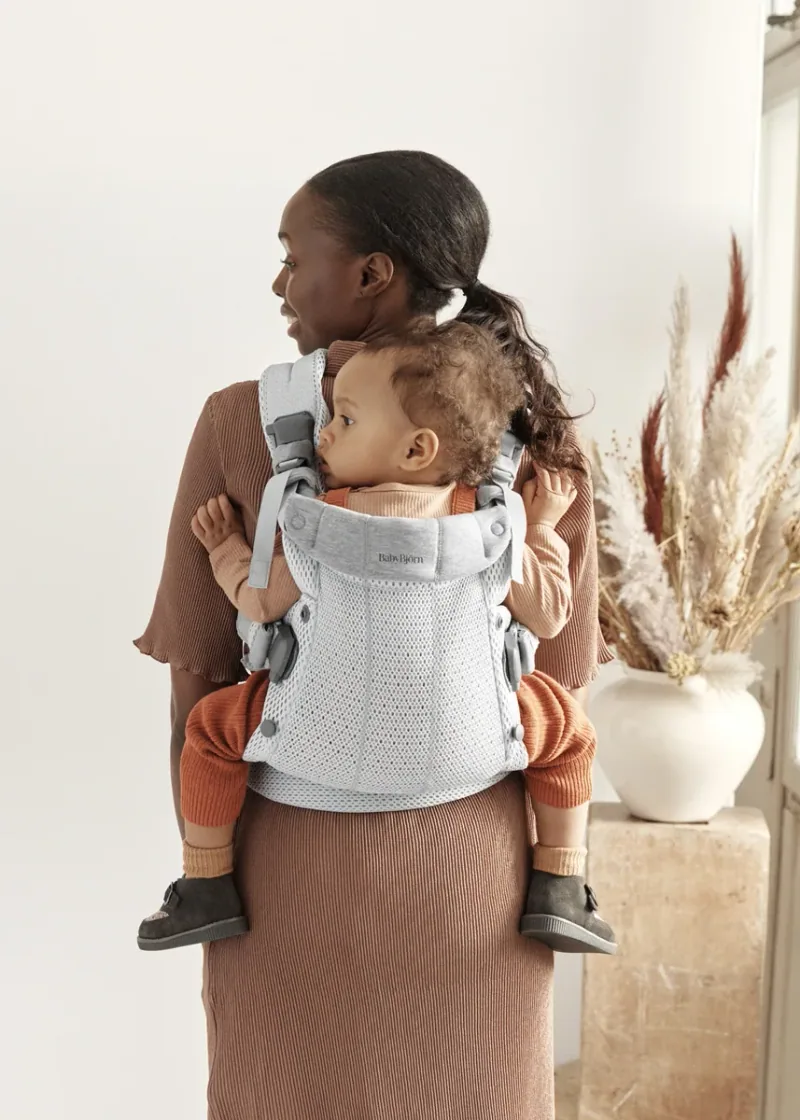
Give each suitable candidate the same sequence: read the setup, adjust for the baby, load with help, check the airway and posture, walk briefly, then unload. Ask each regular wearer to repeat it. Record the steps that were awkward rather than scoring the product from memory later.
Return terms matter because a store demonstration cannot reproduce every home routine. Check them before removing labels or washing. A carrier earns its place by fitting correctly and being usable on an ordinary day. The carrier styles guide explains how soft buckle carriers and hip seats differ if none of these three matches the job you need.
Define the job before selecting a model
Imagine your most common carrying session. You may want a carrier for a short school pickup, a long neighborhood walk or time at home when a baby wants closeness. Write down the expected duration and whether another adult will use it.
Then name the two practical constraints that matter most. Examples are a small storage bag, different-sized caregivers, difficulty reaching behind your back or a preference for fewer adjustments. This turns an open-ended shopping search into a decision you can make with a manual and a useful try-on.
Use the return period to answer the remaining questions
Read the seller’s rules before washing a carrier or removing labels. Some returns depend on condition, packaging or where the product was bought. If a fitting consultation is available, arrange it early enough to use the advice while a return or exchange remains possible.
During permitted try-ons, compare the same short route and the same clothing layers. Note which step required assistance and whether the other caregiver could repeat it. If the baby becomes uncomfortable, stop; the objective is understanding the fit, not completing an arbitrary trial duration.
For a borrowed or secondhand carrier, establish that the label, buckles and required components are intact and that the matching instructions are available. Ask about damage and repairs. A well-known brand name is not enough to evaluate the condition of an individual carrier. Return or stop using a product whose safe setup remains unclear.
Use a repeatable fitting sequence
Follow the instructions in order instead of tightening whichever strap looks loose. Adjust the carrier for the baby's current size, position the baby as directed and then fine-tune the adult fit. If a setting is unclear, stop and use the manufacturer's fitting support.
Check the baby as well as yourself. The face needs to remain visible, the airway unobstructed and the chin away from the chest. CPSC explains these positioning concerns in its babywearing safety guidance.
Try ordinary movements, carefully
Stand, walk a short distance and sit where the instructions permit, keeping attention on the baby. Notice whether the carrier rides up, presses uncomfortably or becomes difficult to readjust. Check how easily you can remove the baby without undoing unfamiliar fasteners in a hurry.
Ask the other regular wearer to perform the same sequence. Photograph the permitted settings for your own reference if that helps, while remembering that adjustments change as the baby grows. A trained fit consultation is particularly useful when you are unsure whether discomfort comes from adjustment or the design itself.
Decide using evidence from your own fit
After trying the carrier, write down what worked, what needed help and whether both caregivers can repeat the process. Check washing, drying and return instructions before committing. An attractive fabric or popular color is a reasonable preference once the functional questions are answered.
If neither candidate fits well, keep looking within your chosen category. You have already improved the search by identifying what matters. The goal is a carrier you can use correctly and comfortably for your real routine, not a purchase justified by the largest number of advertised features.
A few more details
Your questions, answered
How should I compare two baby carriers?
Use the same fitting sequence and ordinary permitted movements for both. Compare baby's position, your comfort, fastener access and how easily another caregiver can adjust the carrier.
Does the most expensive carrier fit best?
Price does not establish personal fit. A correctly fitted carrier that meets your baby's requirements is a better choice than a more expensive design you struggle to use.
How do I choose a carrier for two adults?
Have both adults complete the correct fitting sequence. Check reach to buckles, waistband placement and how much adjustment is needed between wearers. Each adult needs an individual fit.
What should I do if a carrier hurts?
Stop and check the fitting sequence with the manufacturer’s support or a qualified fitting service. Do not solve discomfort by allowing the baby to hang loosely or by adding unapproved padding.
Sources & product information
Follow the original sources for current product details, instructions, and guidance.