The best baby carriers depend on how you carry, not only how many positions a product advertises. For longer outings, compare a structured carrier with adjustable support. For early carrying, consider a simpler newborn-oriented design. For frequent up-and-down requests, a supported hip seat may be useful. This shortlist is a comparison of published information, not a hands-on test.
Gear4 products, compared
Best baby carriers: compare choices for different routines
Compare baby carriers for longer outings, early newborn carrying and quick toddler pickups, with official product links and a practical fitting checklist.
Jump to a section
The quick answer
The best baby carriers depend on how you carry, not only how many positions a product advertises. For longer outings, compare a structured carrier with adjustable support. For early carrying, consider a simpler newborn-oriented design. For frequent up-and-down requests, a supported hip seat may be useful. This shortlist is an editorial comparison, not a hands-on test.
- Ergobaby Embrace Newborn Carrier: a soft carrier without wrap tying.
- BabyBjörn Baby Carrier Mini: short carries in the early months.
- BabyBjörn Baby Carrier Harmony: longer-term use with a supporting waistbelt.
- Details come from manufacturer documentation; Emily has not claimed hands-on testing.
At a glance
The details that make a difference when you’re deciding.
| Product | Useful for | Detail to know | Before buying |
|---|---|---|---|
| Ergobaby Embrace Newborn Carrier | A soft carrier without wrap tying | Manufacturer weight range: 7–25 lb | Lower maximum weight than larger structured carriers |
| BabyBjörn Baby Carrier Mini | Short carries in the early months | Compact front carrier with adjustable head support | Less weight distribution than a waistbelt carrier |
| BabyBjörn Baby Carrier Harmony | Longer-term use with a supporting waistbelt | Manufacturer range: 7–40 lb | More adjustment points than Mini |
| Tushbaby Hip Carrier | Repeated up-and-down carries with one supporting arm | Structured seat attached to an adult waistband | Not hands-free by itself |
A closer look
The products, in detail
Actual product photos, manufacturer information, and direct links. Comparisons are based on published specifications; these are not hands-on test results.
01Ergobaby Embrace Newborn Carrier02BabyBjörn Baby Carrier Mini03BabyBjörn Baby Carrier Harmony04Tushbaby Hip Carrier
01
A soft carrier without wrap tying
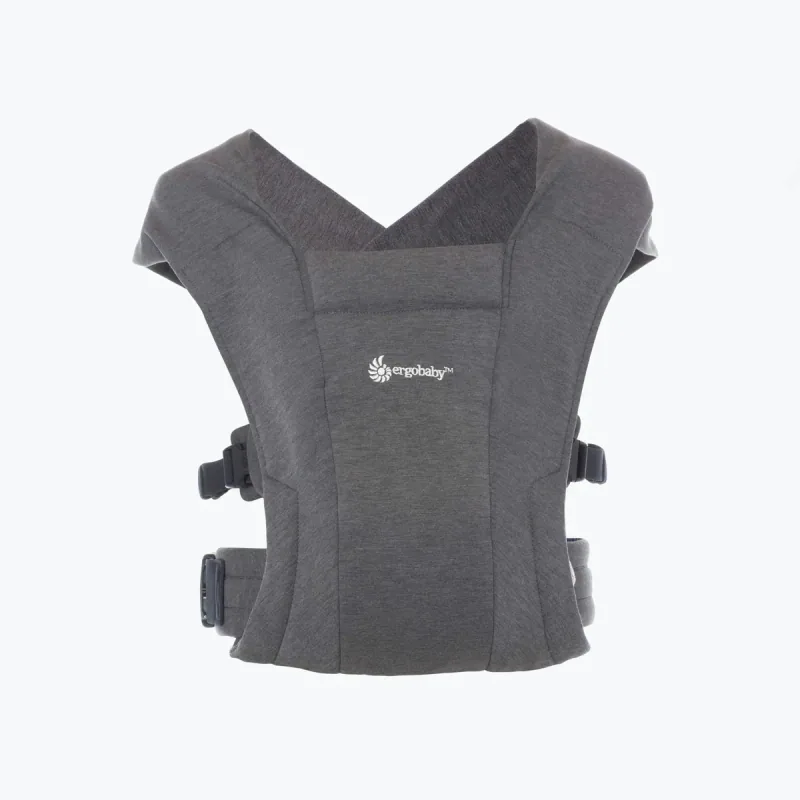
ErgobabyErgobaby Embrace Newborn Carrier
Embrace combines a soft knit panel with buckles and cross-back straps. It is useful to compare with both a stretchy wrap and a more structured carrier: you avoid tying a long length of fabric but still get a relatively soft, close-fitting design. The newborn adjustment is important, particularly for a shorter baby, so use the supplied illustrated instructions. Its smaller maximum weight makes it an early-stage option. A household hoping to buy one carrier through larger toddlerhood should compare a longer-range model before committing.
- Manufacturer weight range: 7–25 lb
- Soft knit fabric
- Cross-back shoulder straps
- Front inward and outward modes with readiness requirements
Where it fits
- No wrap knots to learn
- Machine-washable fabric
What to weigh up
- Lower maximum weight than larger structured carriers
- Newborn waistband adjustment needs attention
02
Short carries in the early months
BabyBjörn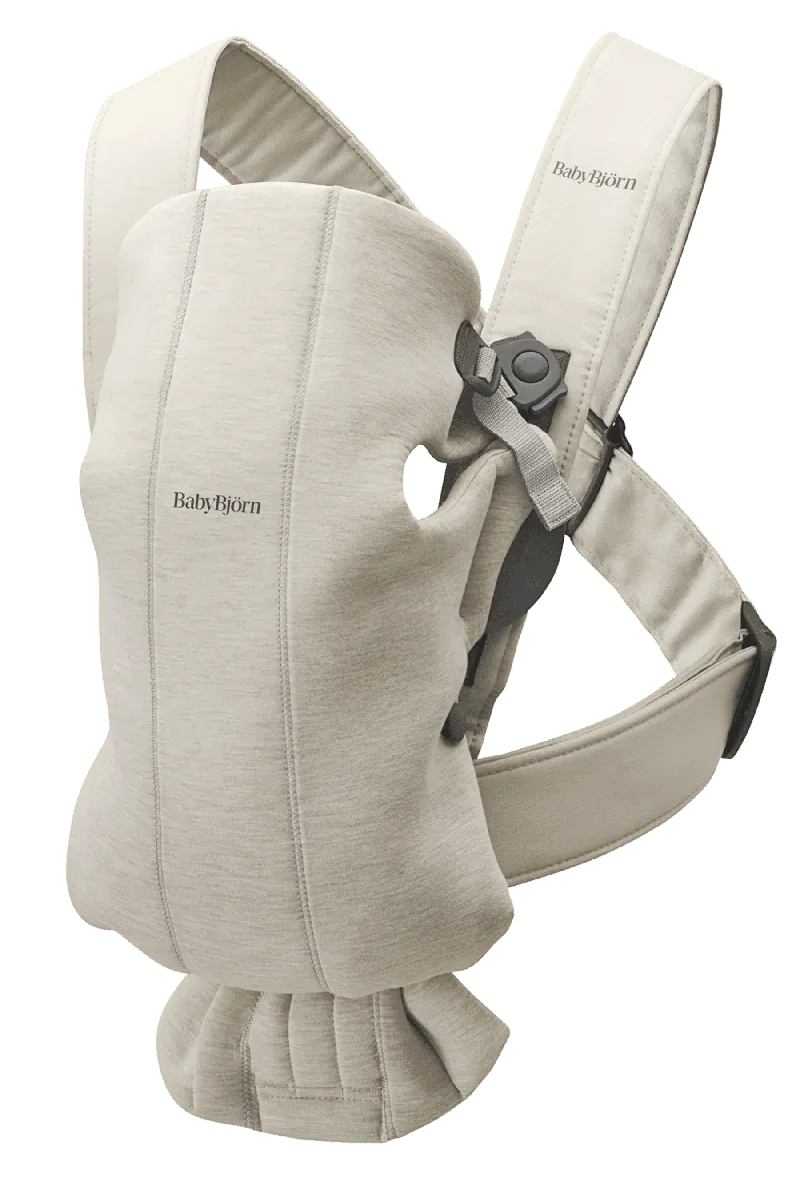
BabyBjörn Baby Carrier Mini
Mini is the compact option for frequent pick-ups when a larger waistband feels like more equipment than you need. Its front section opens for taking a baby out, which is worth practicing before you depend on it during a busy morning. BabyBjörn now recommends Mini mainly for the first six months and about 15 pounds for wearer comfort, while separately stating a safety-tested limit of 24 pounds. Those figures describe different things. Follow the label and manual for your exact carrier rather than using the comfort recommendation as a substitute.
- Compact front carrier with adjustable head support
- Inward and outward positions when criteria are met
- Manufacturer comfort recommendation: early months, around 15 lb
- Manufacturer safety-tested range: 7–24 lb; consult exact manual
Where it fits
- Small size for frequent short carries
- Opening front panel
What to weigh up
- Less weight distribution than a waistbelt carrier
- No back-carry mode
03
Longer-term use with a supporting waistbelt
BabyBjörn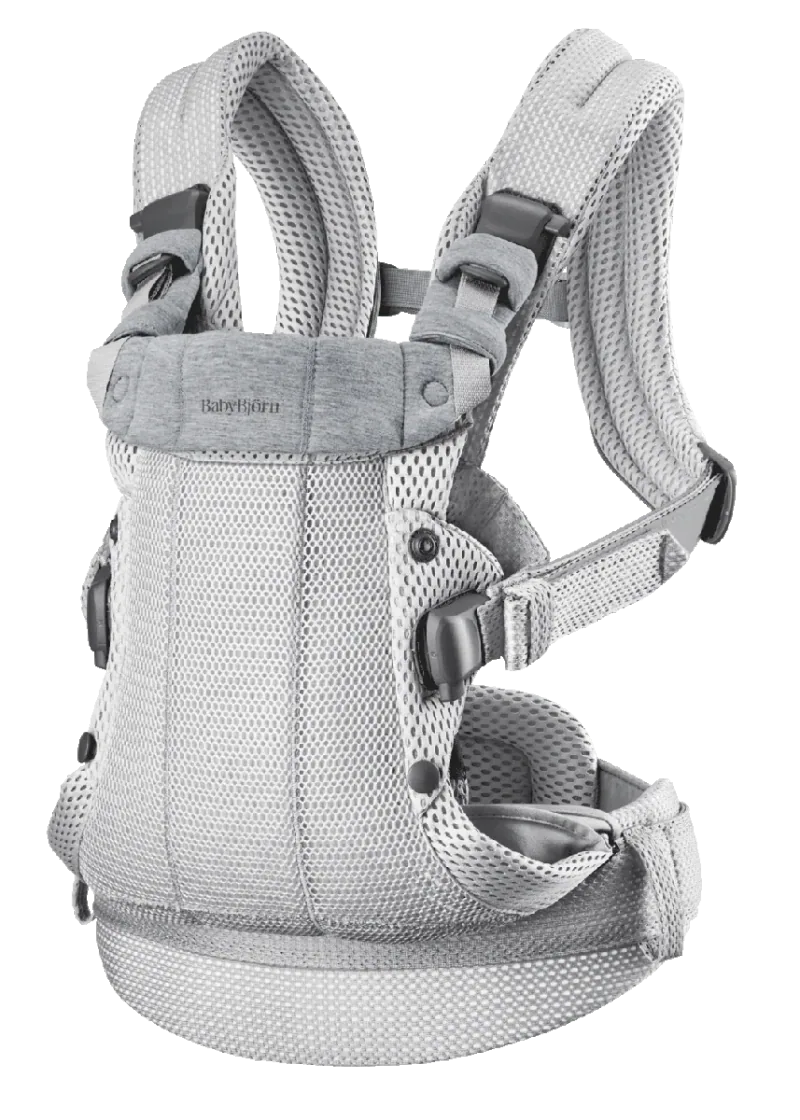
BabyBjörn Baby Carrier Harmony
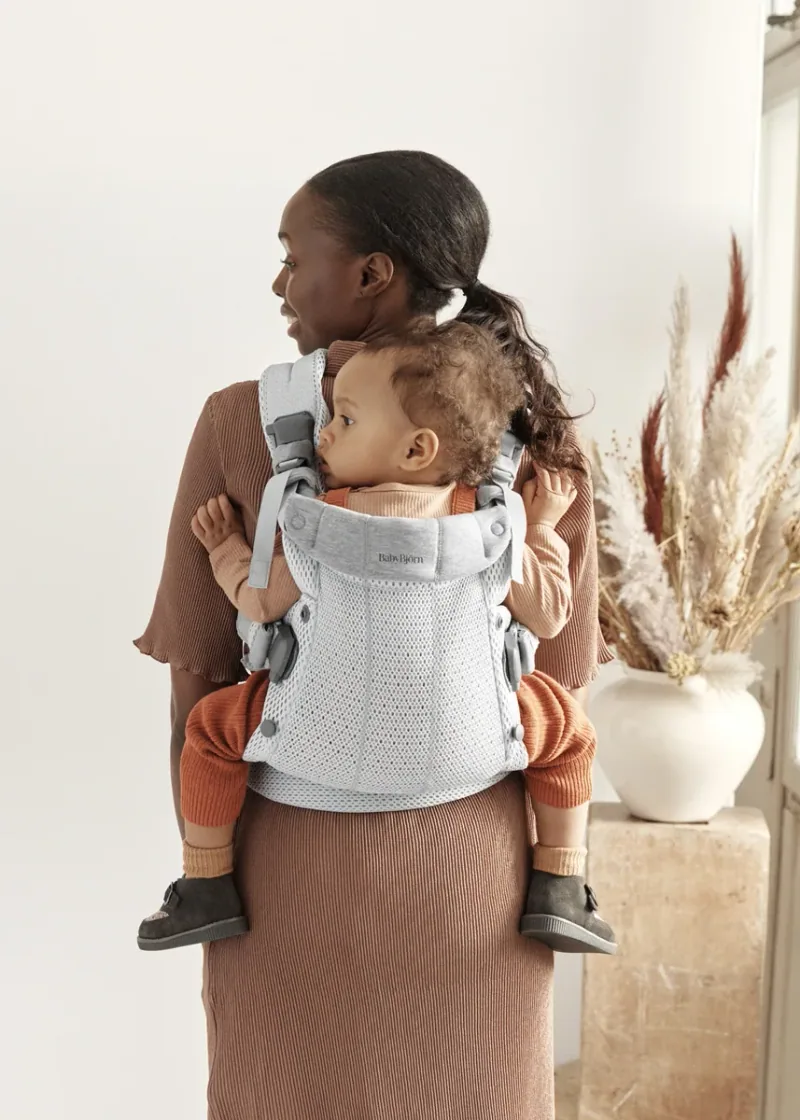
Harmony adds a waistbelt, padded shoulder straps, and back support to the BabyBjörn range. That makes it a different fit proposition from Mini, especially as the child grows. Its adjustable panel and head support need to be set for the individual baby rather than copied from another caregiver’s settings. The brand permits several carry positions, but each has its own readiness rules; a large printed weight range does not make every position suitable from birth. Try the buckles and adjustments while wearing the clothes you normally use outside.
- Manufacturer range: 7–40 lb
- Adjustable seat and head support
- Front inward, front outward and back modes
- Waistbelt with padded shoulder and back support
Where it fits
- Distributes load across waist and shoulders
- Adjustable for a growing child
What to weigh up
- More adjustment points than Mini
- Back carry has separate age requirements
04
Repeated up-and-down carries with one supporting arm
Tushbaby
Tushbaby Hip Carrier
Tushbaby is a hip seat: the child sits on a platform attached to a wide adult waistband. That is useful for a child who asks to be picked up and put down repeatedly, because there is no full fabric panel to adjust each time. The seat by itself does not secure the child hands-free. Keep a supporting arm around the baby and follow the stage-specific directions, including the separate rules for newborn feeding support. Pockets may replace a small bag on a short outing, but they do not change the support required.
- Structured seat attached to an adult waistband
- Storage pockets built into the carrier
- Seat alone requires continuous adult support
- Different use directions by developmental stage
Where it fits
- Quick up-and-down access
- Integrated storage
What to weigh up
- Not hands-free by itself
- Waistband fit and pressure vary by wearer
Four choices with different strengths
The Ergobaby Embrace is the soft buckle option in this shortlist. The BabyBjörn Mini is compact and designed around frequent early carrying. The BabyBjörn Harmony adds a supporting waistbelt and a longer use range. The Tushbaby Hip Carrier suits repeated pickups when you can keep an arm around the child. Those distinctions are more useful than calling one carrier the winner for every family.
Embrace and Mini are worth trying if the immediate need is a smaller baby who wants closeness at home. Compare how their straps sit on your shoulders, how the baby is positioned and how easily you can remove the baby. Harmony makes more sense to investigate if longer walks and later carrying are central. Tushbaby is a separate category: it helps support a carry, but the basic seat does not replace the fabric panel and restraint of a full carrier.
Understand two different numbers on the Mini page
BabyBjörn’s current Mini guidance distinguishes comfortable early use from the safety-tested range. It recommends Mini mainly for approximately the first six months and around 15 pounds for wearer comfort, while stating that it is safety tested up to 24 pounds. Treating 15 pounds as a hard safety maximum would misread the page; treating the higher number as a promise of comfort would misread it too. Follow the exact label and manual and reassess the adult fit as the baby grows.
This is a useful reminder for every shortlist. Weight capacity, age estimates and developmental readiness describe different constraints. A carrier that allows a larger child in one position may have additional rules for a newborn or an outward-facing carry. Compare the permitted configuration you will use now, not only the biggest number in the advertisement.
A practical fitting appointment
Bring your usual outdoor layer and, if possible, the second regular wearer. Ask to learn the correct setup from the beginning rather than having someone tighten the carrier while you stand still. You should be able to reproduce the fitting sequence and explain which adjustments belong to the baby and which belong to the adult.
Check face visibility, chin position, panel height and leg support before judging pocket placement or colors. Walk a short distance, then inspect whether the fit has shifted. If you cannot achieve a clear, stable position, use the manufacturer’s fit support or try a different design. Being within the listed weight range does not settle every fit question.
Spend on the routine you have
A first-stage carrier plus a later reassessment may suit a family better than buying the most elaborate model in advance. Conversely, a comfortably fitting longer-range carrier can reduce later purchases. Include only accessories you expect to use: storage pouches, weather covers and spare textiles are optional costs, and should be approved for the exact carrier. Our fit-first carrier guide helps turn the shortlist into a decision for one wearer and one baby.
Plan the wash-and-dry gap before buying extras
A carrier that is used every day eventually needs cleaning. Read the care label for the chosen fabric, then work out when it can dry fully. A quick wipe may address a small surface mark, but it is not a substitute for the manufacturer’s cleaning instructions after a larger spill. Keep another appropriate way to hold or transport the baby available while the carrier is out of service.
Check whether any spare bib or cover is explicitly approved for the model. A loosely tucked cloth can move or alter the baby’s position, so protecting the carrier is never more important than maintaining the instructed fit. If you buy a spare carrier, repeat the fit check rather than assuming its settings match the first one.
Inspect buckles, seams and adjustment points after cleaning. Store the carrier dry and away from damage, with the matching manual available for the next growth-stage adjustment.
A newborn-oriented option to investigate
The BabyBjörn Mini is positioned by the maker as a carrier for the early stage. It is worth considering when a compact, straightforward design is more important to you than planning every future carry position.
Read the current Mini manual through BabyBjörn's instructions library. Compare the actual minimum size, permitted positions and stopping limits with your baby. An early-stage carrier can be a sensible purchase even if it is not the only one you will ever own, provided that shorter window fits your budget.
A hip seat for frequent pickups
The Tushbaby hip carrier is a different proposition: a seat that supports some of the carrying load. The basic hip seat requires an adult arm supporting the baby; it is not a complete hands-free carrier.
It may be useful for an older baby who repeatedly wants to be picked up and put down. Compare it against simply carrying your child, not only against buckle carriers. Consider whether you need both hands available, because that single requirement may rule out a basic hip seat for your intended task.
Compare fit before counting features
For every candidate, ask three questions: does the baby meet the requirements, can the adult achieve the instructed fit, and can that fit be checked without guesswork? Do not choose an outward-facing position because an age estimate sounds right; follow the model's development and fit requirements.
If available, use a manufacturer fit consultation or a local carrier library. Practice over your normal clothing and ask another regular caregiver to do the same. Pay attention to pressure, reach and adjustability, rather than expecting one carrier to feel identical on everyone.
Build a shortlist around one primary job
Write down your main use: neighborhood walks, brief errands, early closeness at home or toddler pickups. Then decide what you are willing to carry and wash. Removable storage, fabric choice and packability can matter, but they should not displace correct positioning.
Keep the manual, inspect fasteners and use the product only in its permitted configurations. A carrier is not appropriate for every household task. The best choice is the one whose strengths match the job you actually need it to do, with limitations you understand before purchasing.
A few more details
Your questions, answered
Which carrier is best for a newborn?
Compare newborn-approved models against your baby's actual size and the manufacturer's positioning requirements. The BabyBjörn Mini is one early-stage candidate, but fit and individual needs determine suitability.
Is there one carrier that suits every parent?
No. Body shape, reach, comfort, baby's size and preferred activities vary. Trying the fit is more useful than relying on a universal ranking.
Is BabyBjörn Mini limited to fifteen pounds?
The current maker page recommends roughly fifteen pounds for comfortable early use but separately states a safety-tested maximum of twenty-four pounds. Follow the label and manual and reassess wearer comfort as the child grows.
Should I buy one carrier for every stage?
Only if it fits correctly and suits the routines you need. A compact early-stage carrier followed by a later reassessment can also be reasonable; compare the total cost and expected use.
Sources & product information
Follow the original sources for current product details, instructions, and guidance.