Baby Björn, officially styled BabyBjörn, is a baby-gear brand with products that include carriers and bouncers. If you searched the brand name without a specific item, first decide which job you need the product to do. A carrier holds a baby on an adult; a bouncer provides an awake, supervised seat. They are not interchangeable.
Gear3 products, compared
Baby Björn guide: carriers, bouncers and finding the right manual
Looking for Baby Björn? Find the official brand, distinguish carriers from bouncers and locate the right instructions before choosing or using a product.
Jump to a section
The quick answer
Baby Björn, officially styled BabyBjörn, is a baby-gear brand with products that include carriers and bouncers. If you searched the brand name without a specific item, first decide which job you need the product to do. A carrier holds a baby on an adult; a bouncer provides an awake, supervised seat. They are not interchangeable.
- BabyBjörn Baby Carrier Mini: short carries in the early months.
- BabyBjörn Baby Carrier Harmony: longer-term use with a supporting waistbelt.
- BabyBjörn Bouncer Bliss: a naturally moving bouncer that folds flat.
- Details come from manufacturer documentation; Emily has not claimed hands-on testing.
At a glance
The details that make a difference when you’re deciding.
| Product | Useful for | Detail to know | Before buying |
|---|---|---|---|
| BabyBjörn Baby Carrier Mini | Short carries in the early months | Compact front carrier with adjustable head support | Less weight distribution than a waistbelt carrier |
| BabyBjörn Baby Carrier Harmony | Longer-term use with a supporting waistbelt | Manufacturer range: 7–40 lb | More adjustment points than Mini |
| BabyBjörn Bouncer Bliss | A naturally moving bouncer that folds flat | Natural rocking without a motor | Infant and chair modes have different limits |
A closer look
Products mentioned in this guide
Actual product photos, manufacturer information, and direct links. Comparisons are based on published specifications; these are not hands-on test results.
01
Short carries in the early months
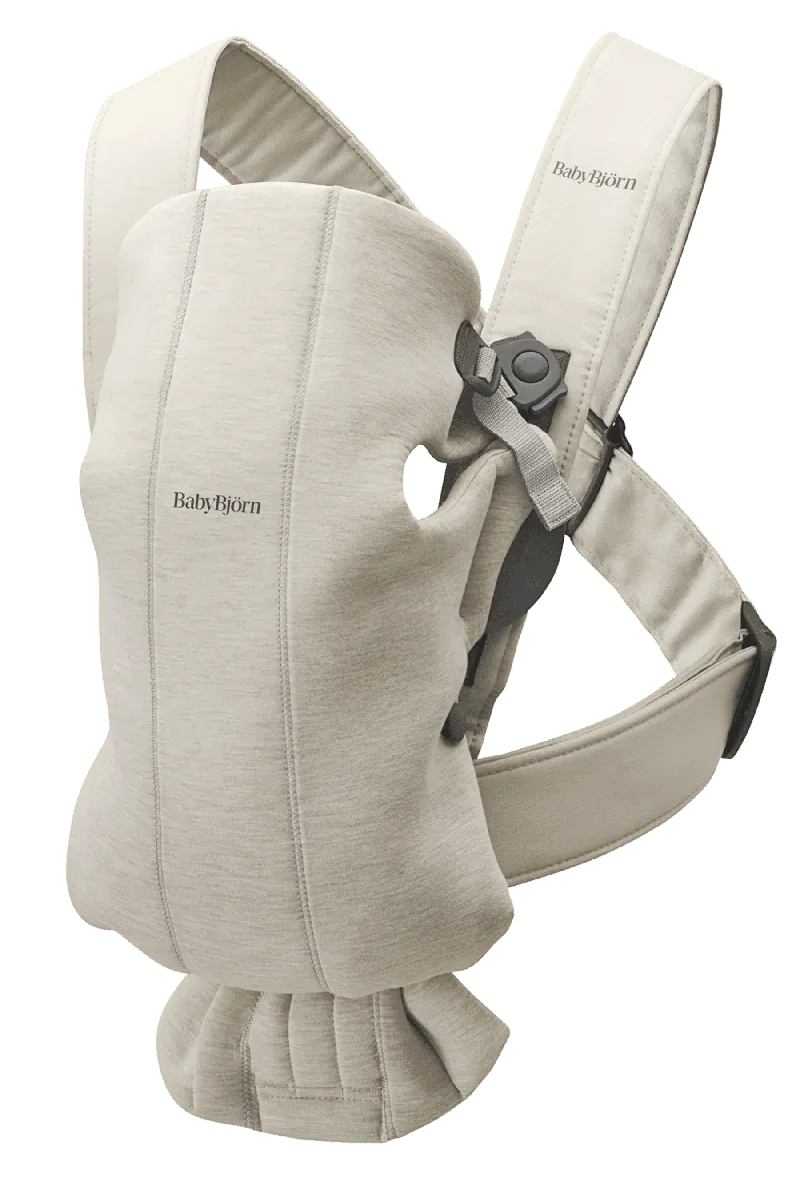
BabyBjörnBabyBjörn Baby Carrier Mini
Mini is the compact option for frequent pick-ups when a larger waistband feels like more equipment than you need. Its front section opens for taking a baby out, which is worth practicing before you depend on it during a busy morning. BabyBjörn now recommends Mini mainly for the first six months and about 15 pounds for wearer comfort, while separately stating a safety-tested limit of 24 pounds. Those figures describe different things. Follow the label and manual for your exact carrier rather than using the comfort recommendation as a substitute.
- Compact front carrier with adjustable head support
- Inward and outward positions when criteria are met
- Manufacturer comfort recommendation: early months, around 15 lb
- Manufacturer safety-tested range: 7–24 lb; consult exact manual
Where it fits
- Small size for frequent short carries
- Opening front panel
What to weigh up
- Less weight distribution than a waistbelt carrier
- No back-carry mode
02
Longer-term use with a supporting waistbelt
BabyBjörn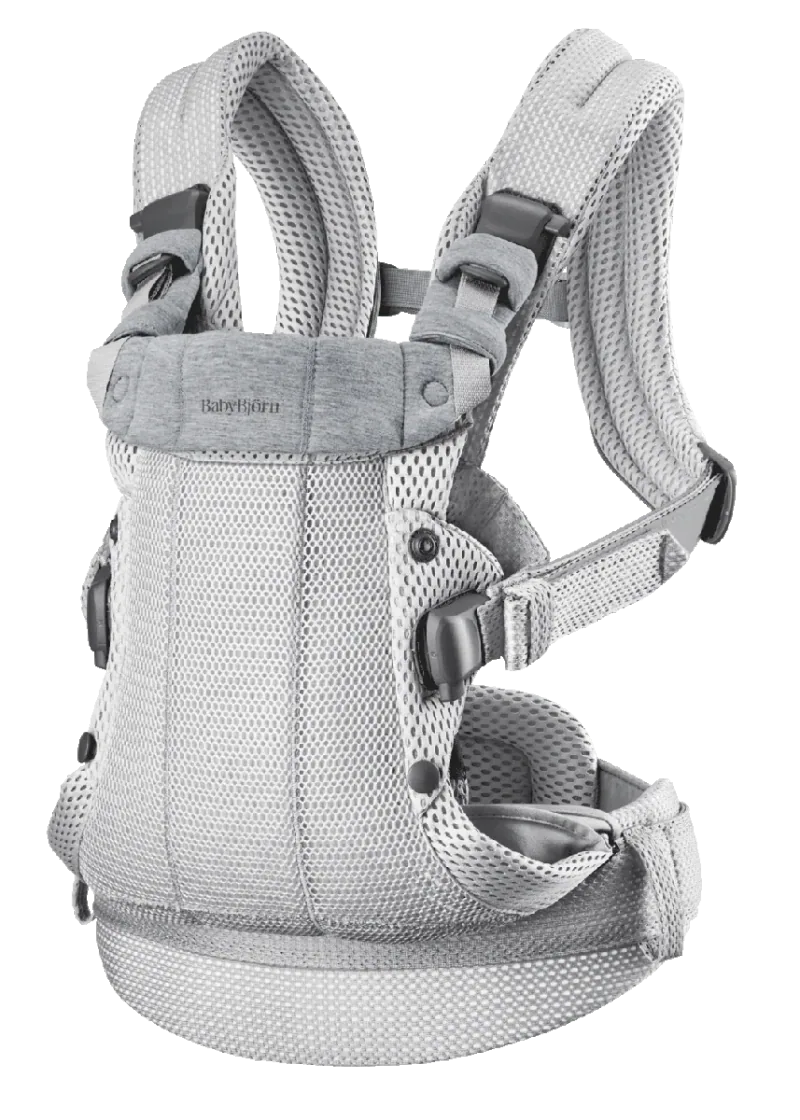
BabyBjörn Baby Carrier Harmony
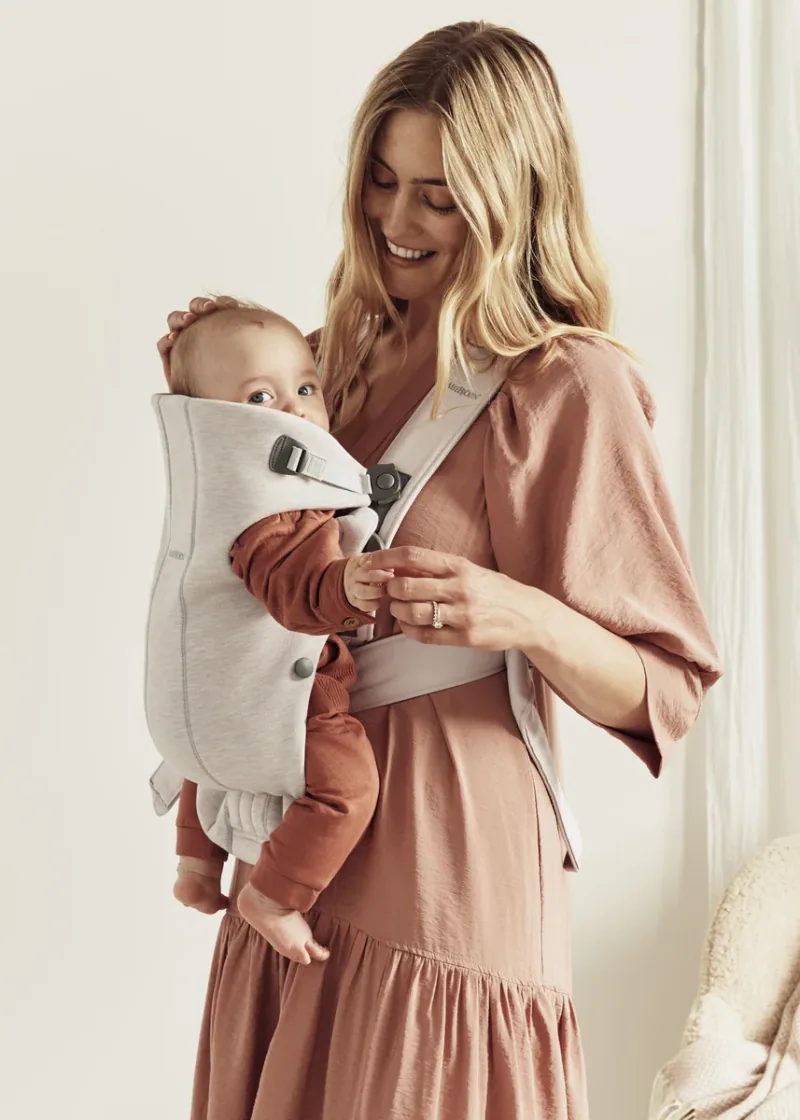
Harmony adds a waistbelt, padded shoulder straps, and back support to the BabyBjörn range. That makes it a different fit proposition from Mini, especially as the child grows. Its adjustable panel and head support need to be set for the individual baby rather than copied from another caregiver’s settings. The brand permits several carry positions, but each has its own readiness rules; a large printed weight range does not make every position suitable from birth. Try the buckles and adjustments while wearing the clothes you normally use outside.
- Manufacturer range: 7–40 lb
- Adjustable seat and head support
- Front inward, front outward and back modes
- Waistbelt with padded shoulder and back support
Where it fits
- Distributes load across waist and shoulders
- Adjustable for a growing child
What to weigh up
- More adjustment points than Mini
- Back carry has separate age requirements
03
A naturally moving bouncer that folds flat
BabyBjörn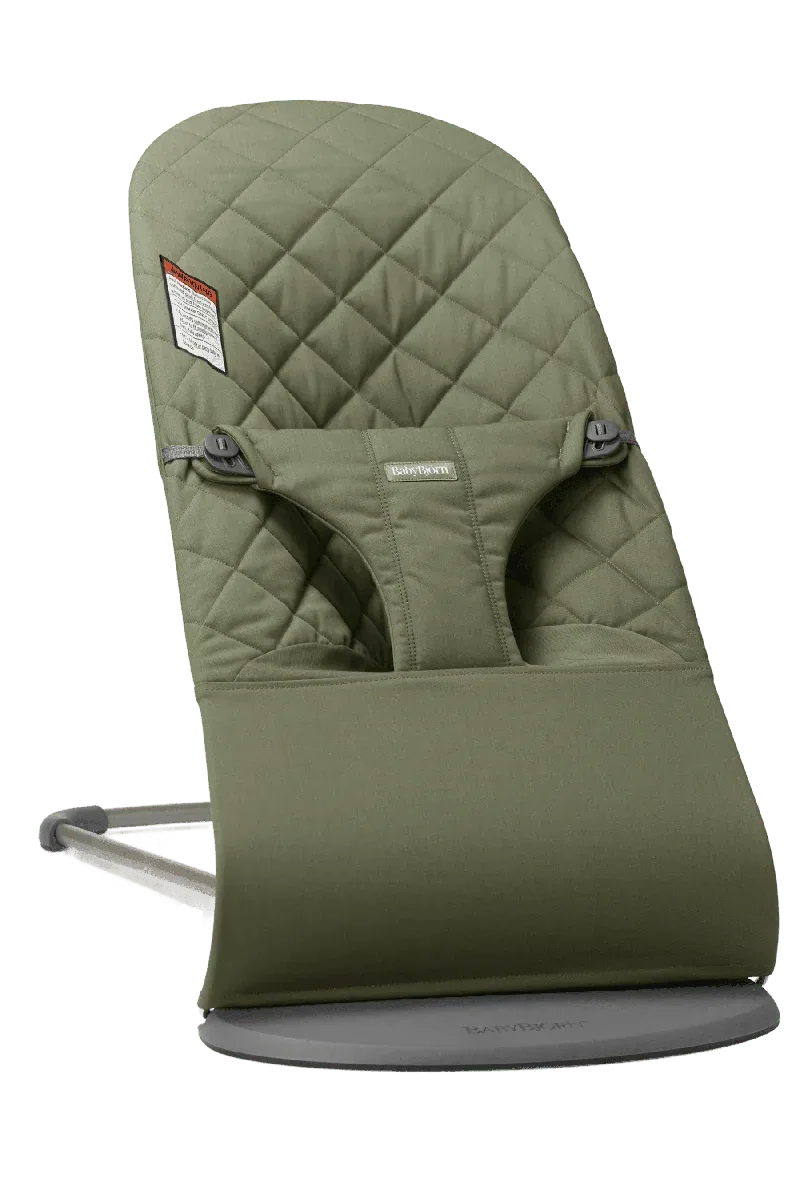
BabyBjörn Bouncer Bliss
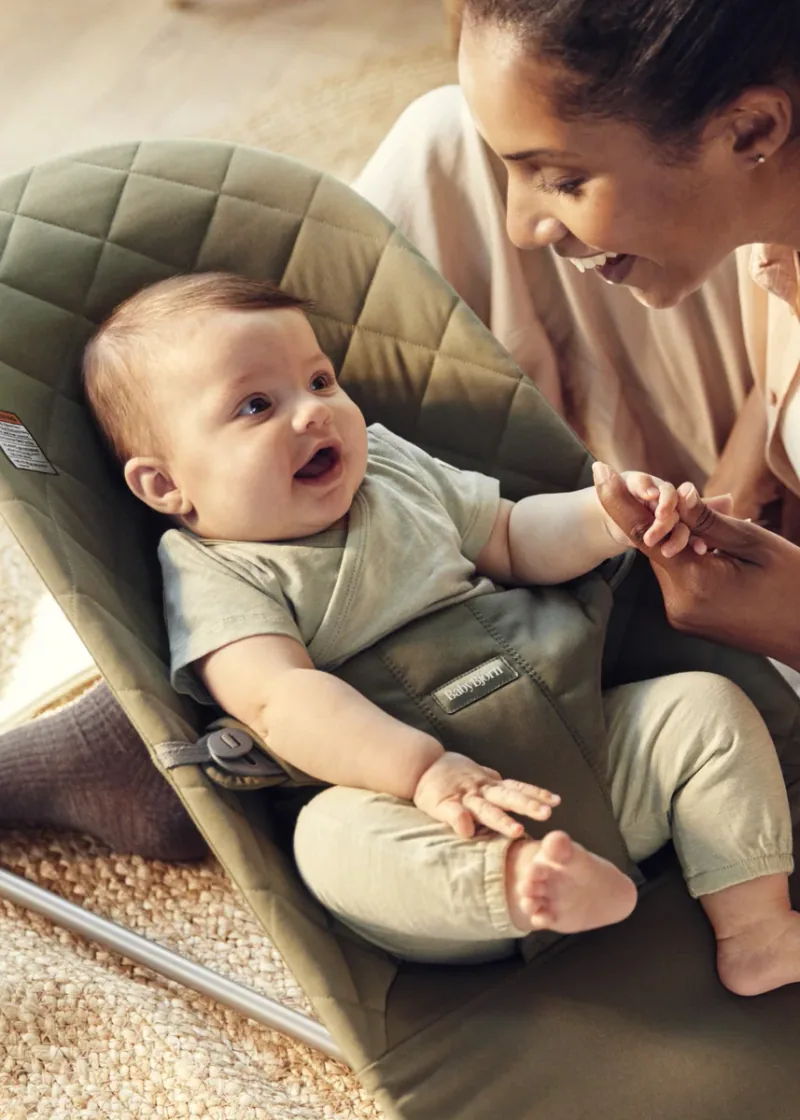
Bouncer Bliss moves with an adult’s gentle input or the baby’s movement instead of an electric swing motor. It folds for storage and has removable fabric, so it suits a comparison focused on moving a seat between rooms and cleaning it. The headline upper weight describes the later chair mode, not permission to use the infant restraint until that weight. BabyBjörn’s infant-bouncer instructions stop that mode when the child reaches its limit or starts trying to sit up. Keep the seat on the floor and use it only for supervised awake time.
- Natural rocking without a motor
- Folds flat; three height positions
- Infant bouncer: up to 20 lb or attempts to sit up
- Later chair mode has separate readiness rules and 29 lb limit
Where it fits
- No motor or charging routine
- Removable washable seat
What to weigh up
- Infant and chair modes have different limits
- Toy accessories sold separately
Start with the three products most shoppers mean
“Baby Bjorn” can mean the brand, a carrier or a bouncer. Baby Carrier Mini, Baby Carrier Harmony and Bouncer Bliss are three distinct products with different jobs. The photographs and manufacturer links above help you identify them without relying on a retailer’s shortened listing title. If you already own a product, use its sewn-in label or frame label to identify the exact model and version.
Mini is a compact front carrier for the early months. Harmony adds a waistbelt, padded shoulder straps and additional carrying configurations. Bliss is a floor bouncer that moves naturally and later converts into a chair under separate rules. A fabric accessory described only as “fits BabyBjörn” is not enough information to establish compatibility with any of them.
Mini and Harmony: the meaningful comparison
Ask whether your priority is short early carries or a longer carrying window with more adult support. Mini’s small size and opening front can simplify repeated use, while Harmony’s waistbelt and adjustable panel offer a different way to distribute a growing child’s weight. Try the buckle arrangement instead of assuming one will be easier because it looks simpler in a photograph.
Read Mini’s current guidance carefully: the brand recommends it mainly for the first six months and around 15 pounds for wearer comfort, while separately stating a safety-tested limit of 24 pounds. Harmony has its own limits and position-specific readiness rules. Age estimates are a shopping aid; the exact manual, the child’s fit and developmental requirements determine permitted use.
Bliss: infant bouncer and later chair are separate modes
Bliss’s larger advertised upper weight belongs to its later chair use. The infant-bouncer mode has an earlier limit and stops when the baby begins trying to sit up, even if the child has not reached the weight threshold. The fabric is changed around for the later configuration according to the instructions. Do not simply stop using the restraint because the child looks big enough.
A toy bar or spare fabric seat can be useful, but check the specific model compatibility. Compare how the fabric comes off for washing and how the empty seat folds before adding accessories. Keep the bouncer on the floor and use a separate approved sleep space if the baby falls asleep.
What to keep after purchasing
Save the exact product page, manual, purchase receipt and a photograph of the identifying label. Register the item if the manufacturer provides that option. For a secondhand product, check that all required parts are present, the fasteners work and the manufacturer can still supply the appropriate instructions.
When contacting support, name the model and describe the relevant part: carrier shoulder buckle, head-support adjustment, bouncer restraint or fabric seat. That makes the conversation more productive than asking about “the Baby Bjorn.” Our BabyBjörn carrier comparison goes deeper on Mini versus Harmony, while the bouncer guide compares Bliss with a concrete alternative.
Start with the official brand website
Use BabyBjörn's official website to identify current product names and the region you are shopping in. Similar colors across the range can make photographs look related even when the products have different purposes or instructions.
If you already have an item, find its label rather than identifying it from fabric alone. Record the exact product and save the matching official manual. This is especially important for gifts and secondhand items whose original packaging is missing.
Understand the carrier range
The Mini and Harmony are distinct carrier designs. Compare their current instructions and intended stages, rather than assuming a higher model name simply means “better.” The appropriate choice depends on your baby's measurements and development, your body and the carrying you expect to do.
A carrier can be worth trying in person. Practice fastening it and adjusting between caregivers. Ask whether you can reach the controls comfortably and see the baby clearly while wearing it. Your experience during a fit check is more useful than selecting the fabric that looks best in a nursery photograph.
Understand the bouncer range
Bouncer Bliss and Balance Soft belong to a different category. Check the exact version and its use modes in the manual, including the criteria for stopping infant-bouncer use. Do not assume that a product's later chair configuration means the infant mode can be used beyond its stated limits.
Use a bouncer only for supervised awake time. The American Academy of Pediatrics identifies swings, bouncers and similar inclined products as unsuitable for infant sleep. If your baby falls asleep, transfer them to an appropriate flat sleep surface. See AAP guidance on baby products and sleep.
Compare the complete purchase
Check what comes in the box and which pictured accessories are optional. For a carrier, focus on the model, fabric and fit. For a bouncer, consider the seat cover, storage and any approved accessory you actually intend to use.
If choosing a secondhand item, inspect the frame or fasteners, confirm that all parts are original and check current recall information. Do not solve missing parts with improvised replacements. A low purchase price is less useful if the item cannot be confidently identified or assembled according to its instructions.
Make your next step specific
For shopping, narrow the task to one question: “Which carrier fits both caregivers?” or “Will this bouncer fit our floor space and laundry routine?” That gives you a manageable comparison instead of browsing the entire brand indefinitely.
For ownership, locate the manual and review the current setup before buying accessories. For troubleshooting, contact official support with the product identification and a clear description of the issue. Those steps usually provide more useful answers than searching the broad brand name again.
A few more details
Your questions, answered
Is Baby Björn the same as BabyBjörn?
Yes. Baby Björn is a common way of typing the brand name, which the company styles BabyBjörn.
Can a BabyBjörn bouncer be used for naps?
No. Infant bouncers are for awake, supervised use. Move a sleeping baby to an appropriate firm, flat sleep surface.
Are BabyBjörn accessories interchangeable?
Not automatically. Confirm compatibility with the exact carrier or bouncer model. A spare fabric seat, bib, toy bar or cover must be approved for the product it will attach to.
Does Bouncer Bliss’s twenty-nine-pound limit apply to infant mode?
No. The higher figure belongs to later chair use. Infant-bouncer use has its own earlier weight and developmental stopping rules, including when a baby begins trying to sit up.
Sources & product information
Follow the original sources for current product details, instructions, and guidance.
- BabyBjörn Baby Carrier Mini — official product details and photographs
- BabyBjörn Baby Carrier Harmony — official product details and photographs
- BabyBjörn Bouncer Bliss — official product details and photographs
- BabyBjörn official product overview
- BabyBjörn product manuals
- AAP baby-product sleep guidance