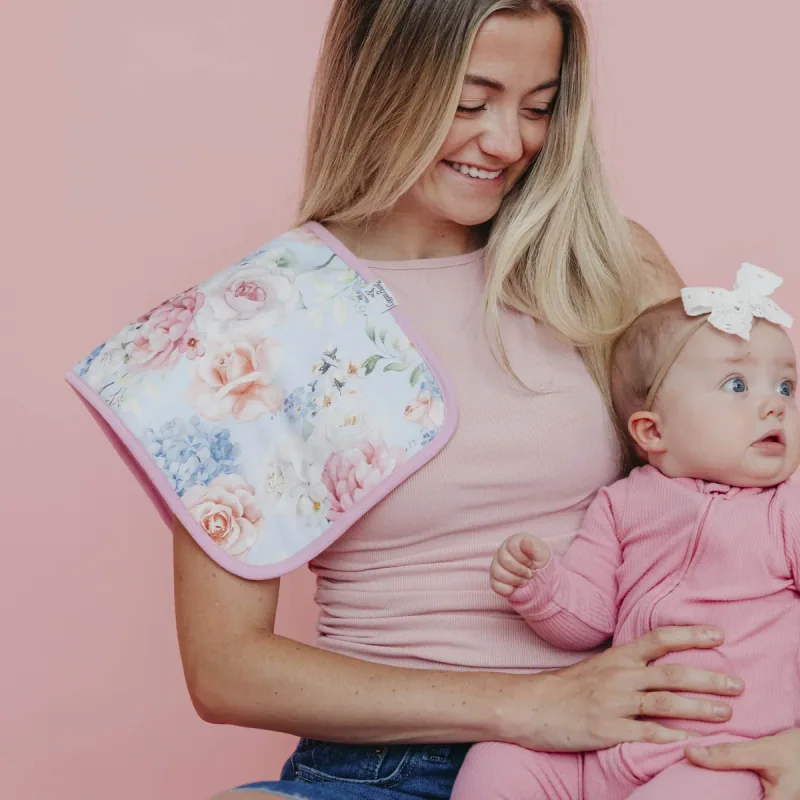
Photo: Photo: Copper Pearl · Copper Pearl’s layered Genevieve burp cloths allow cold washing and low tumble drying. Always check the care label before treating a stain.Jump to a section
The quick answer
For washable fabric, remove excess spit-up, start with a cool rinse, and pretreat with a laundry product allowed by the garment and product labels. Wash at the permitted temperature, then check the stain before drying. Dried stains may need another treatment; wool, silk, trims, and waterproof layers need their own care instructions.
Start with the fabric label, including trims and backing layers.
Cool initial rinsing and the machine’s wash temperature are separate decisions.
An enzyme treatment may suit milk stains on compatible fabrics; it is not a universal choice for every material.
Check the cleaned item before using dryer heat, and keep laundry products away from children.
Spit-up on a favorite shirt can be frustrating, especially when the baby outfit and burp cloth already need changing. For ordinary washable clothing, a useful sequence is to remove the excess, rinse cool, pretreat appropriately, wash, and inspect before drying. The fabric label decides which treatments and temperatures are suitable.
You do not need to buy a separate cleaner for every bib and bodysuit. You do need to distinguish a washable cotton shirt from a delicate sweater, a fabric-backed bib, or a cloth that cannot go in the dryer. This guide focuses on clothing and feeding textiles; upholstery and dry-clean-only garments need their own care instructions.
At a glance
The details that make a difference when you’re deciding.
Item or situation
Starting decision
Drying decision
Fresh stain on ordinary washable clothing
Cool rinse, then compatible pretreatment
Inspect the stain before using dryer heat
Old formula or milk mark
Consider a labeled enzyme treatment if fabric-compatible
Repeat suitable treatment if the stain remains
Copper Pearl Genevieve burp cloth
Manufacturer: cold machine wash; no bleach
Manufacturer: tumble dry low
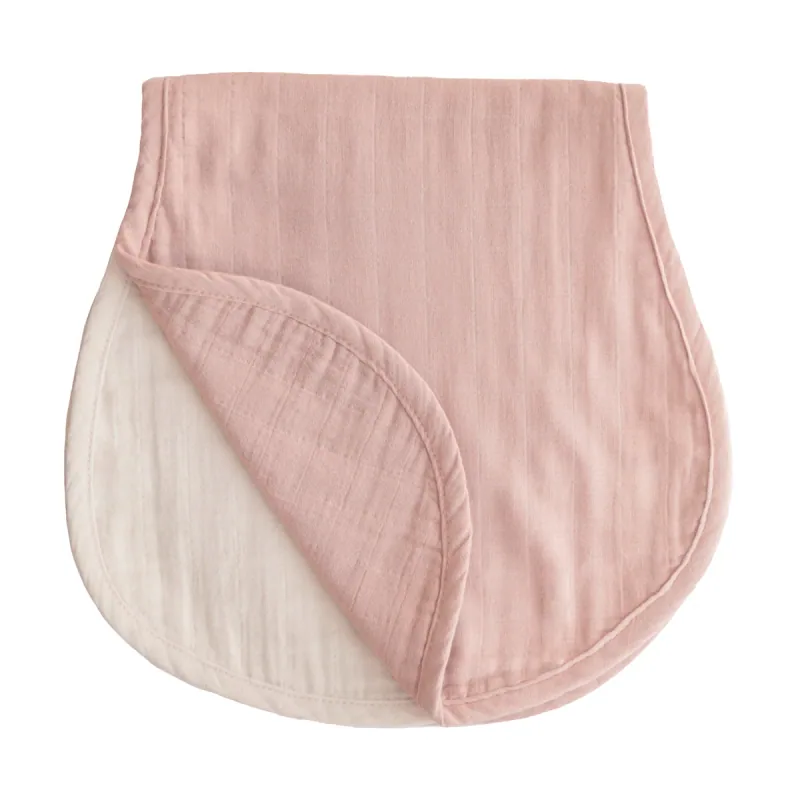
Mushie Organic Cotton Muslin Burp Cloth
Manufacturer: cold machine wash; no bleach
Manufacturer: lay flat; do not tumble dry
Wool, silk, or dry-clean-only item
Follow its specific care label and cleaner compatibility
Follow the item’s own drying instructions
Read the two labels before treating the stain
Check both the garment's care label and the laundry product's directions. Look for the allowed washing temperature, whether bleach is permitted, and whether the item can tumble dry. For a bib, check the care instructions for the whole item, including its backing, fasteners, and any insert.
Then read the cleaner's directions for compatible fabrics, colorfastness testing, amount, and contact time. A product that works in a normal wash is not automatically suitable for leaving concentrated on fabric overnight. The American Cleaning Institute’s fabric-care guidance starts with reading the label rather than guessing.
Remove the garment before applying a treatment. Set up the laundry step when the baby is safely settled or another adult is helping, so you are not handling a wet shirt and an open cleaning product while holding them.
For fresh spit-up, use a short, gentle sequence
Start once you can deal with the clothing without interrupting necessary care. A stain can wait while you settle your baby.
Lift away excess milk or solids without grinding them into the fabric.
Blot remaining liquid with a clean cloth, then rinse the washable area with cool water.
Apply a compatible laundry pretreatment according to its directions. Test it in an inconspicuous area when required.
Let it work for the labeled time; do not substitute an overnight soak.
Wash using the fabric's allowed cycle and temperature.
Inspect the area before drying. If the mark remains, repeat an appropriate treatment first.
This approach draws on Tide’s milk-stain guidance, which separates cold initial treatment from a later wash at a temperature the garment allows. The first rinse and the washing-machine setting are different decisions. “Always wash everything hot” is not a useful rule for a mixed pile of baby clothes.
For dried milk stains, add time rather than force
An old stain may have dry residue on top and a discolored patch underneath. Gently lift any loose residue, taking care not to pull a delicate knit. Then choose a compatible pretreatment rather than attacking the area with a stiff brush.
Dreft’s breast-milk stain guide also distinguishes surface residue from the remaining stain and recommends pretreating before washing. A mark that has already been through the dryer can be harder to remove. It is reasonable to try another fabric-safe treatment, but no method guarantees that every old stain will disappear.
A different care routine: Mushie specifies cold washing and laying these organic cotton muslin cloths flat to dry, with no tumble drying. Source: Photo: Mushie
Change the method for delicate or layered items
A soft baby garment may contain more than one material. Lace, embroidery, elastic, printed decorations, waterproof backing, and attached padding can impose limits even if the main fabric is cotton.
For wool and silk, use a product specifically approved for that fabric instead of transferring a cotton-clothing recipe. Detergent manufacturer Heritage Park explains why some enzyme formulas can damage protein-based fibers. If an item is dry-clean-only or has no readable care label, seek advice from the maker or a professional cleaner before soaking it.
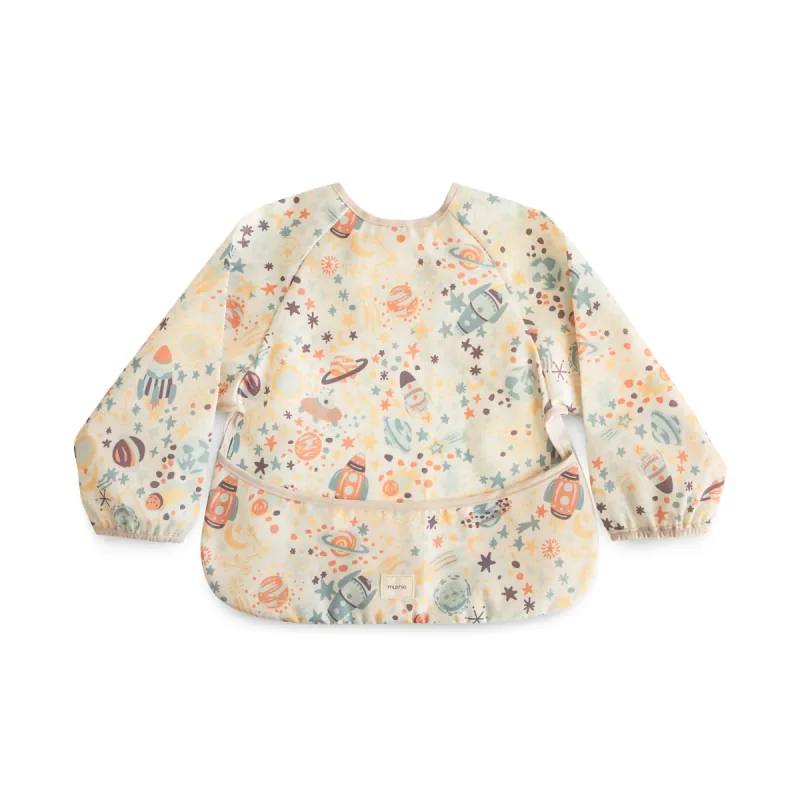
With a structured bib, check whether an insert is removable and whether the maker gives separate instructions for it. Do not pull apart sealed seams or assume a silicone component makes the whole product dishwasher-safe.
Two real burp cloths, two different drying instructions
Copper Pearl’s Genevieve Premium Burp Cloths have cotton surfaces and a fleece middle layer. Their current care instructions specify cold machine washing, no bleach, and low tumble drying. That is a practical example of a layered cloth with a permitted dryer setting.
Mushie’s Organic Cotton Muslin Burp Cloths are also machine washable, but their instructions call for cold washing and laying flat to dry, with no tumble drying or bleach. The word “washable” does not mean both products belong in the same drying load.
These are examples of published care instructions, not a stain-removal test or a claim that one cloth cleans better. Follow the label supplied with your particular item if its instructions differ from an online page.
Make the laundry handoff obvious
After rinsing a stained item, keep it separate from the clean stack and make sure the next adult knows it still needs washing. An easy household convention is one designated collection place for used feeding textiles. Do not put a damp cloth back into a drawer just because the visible milk has rinsed away.
If the garment still needs checking after the wash, mention it before someone transfers the entire load to the dryer. You can also wash items that need air-drying together when their care requirements are compatible. This reduces the need to remember which small cloth was the exception.
Measure detergent using the product instructions for your machine and load. Keep cleaners in their labeled packaging and away from children; avoid experimenting with mixtures of stain removers or household chemicals. More products create more variables without telling you which step helped.
Inspect before returning the item to use
Look at both sides of the stained area in good light after washing. For a layered cloth, check that it has dried through before putting it away. A dry-feeling surface does not tell you much about a folded or bunched middle.
If the item still has visible residue or a persistent odor, reassess the treatment, loading, and drying instructions rather than covering it with fragrance. Set it aside from the ready-to-use stack while you decide the next step. For routine bib cleaning between stains, see how to wash baby bibs.
Prevent the next clothing change where you can
The location of coverage matters as much as the size of the laundry pile. A bib on your baby’s chest may not protect your back during a shoulder burp. Our guide to protecting clothes from spit-up helps you identify where the spill travels and position an absorbent cloth accordingly.
As a mom of two, I want mybetterbib to make this routine easier for both baby and the adult. The prelaunch design changes direction for baby or mom, using a separate parent strap, an absorbent shelf, and a cushioned silicone interior intended to reduce repositioning. Non-toxic materials and easy washing are design goals; final materials and care instructions are still being developed. Meet mybetterbib and join the Kickstarter update list.
A few more details
Your questions, answered
Should I use cold or hot water for spit-up stains?
A cool initial rinse is a useful starting point for washable milk-stained fabric. The later washing temperature must follow the garment and treatment labels. Do not assume a hot cycle is suitable for every baby garment or layered bib.
Can an old yellow milk stain still come out?
It may improve with a compatible pretreatment and another wash, but results depend on the fabric, age of the stain, and previous drying. Avoid promising a complete removal or escalating to stronger chemicals beyond the label directions.
Can I use the same enzyme stain remover on cotton and wool?
Only if the product explicitly permits both. Some enzyme formulas can damage wool or silk. Follow the exact fabric label and cleaner directions, and use a treatment approved for the material rather than a general cotton-clothing method.
Are all washable burp cloths safe to tumble dry?
No. Current Copper Pearl Genevieve care instructions allow low tumble drying, while Mushie’s Organic Cotton Muslin Burp Cloth instructions say to lay flat and avoid tumble drying. Check the label for the exact item you own.
Sources & product information
Follow the original sources for current product details, instructions, and guidance.
Compare two-use bib designs, the aden + anais Burpy Bib, and separate bibs and cloths. Check conversion, coverage, care, and what mybetterbib is developing.